Nusa Penida Weather And Best Time To Go
Nusa Penida sits in a dry corridor off Bali's south coast, and the difference between its two seasons decides almost everything about a visit: whether the fast boats run on schedule, whether Manta Point is reachable, and whether the sea at Crystal Bay is glass or chop.
Short answer
The best time to visit Nusa Penida is April to October, the dry season, when seas are calm and underwater visibility runs 15 to 30 metres. July and August add peak crowds. Manta rays are seen year-round, and mola mola appear at Crystal Bay from July to October, peaking in August and September.
Nusa Penida weather is really two stories told at once. The first is the island's own: a dry, sun-baked limestone plateau that sits in the rain shadow of Mount Agung, so it gets noticeably less rain than most of Bali even in the wet months. The second is the sea around it, and that story is the one that matters to visitors, because rough swell in November to March can cancel boat crossings, close Manta Point to snorkelers and turn a Kelingking viewpoint photo session into a wind-battered scramble.
The island has no real shoulder-season secret. What it has is a dry season from April to October, a wet season from November to March, and a set of underwater calendars, manta rays year-round, mola mola from July to October, that pull different travelers into different months. This guide lays out the verified numbers for every month, then matches each month to the trips that work best in it, drawing on the manta snorkeling tours, island day tours and boat-bundled packages listed on this site.
What Is The Weather Like On Nusa Penida?
Nusa Penida has two seasons rather than four: a dry season from April to October and a wet season from November to March. Annual rainfall averages about 1,570 millimetres, heavily weighted to January and December, while August sees just 35 millimetres and a single rainy day on average. Sea temperature barely moves, holding between roughly 26 and 29 degrees Celsius all year.
The dry season is the island's reliable window. Rainfall drops from 193 millimetres in March to 123 in April, then collapses to 47 millimetres in June and 35 in August. Long-term averages give August one rainy day per month, July three, September one. The sky is not cloudless every day, but all-day rain is rare and the sea state, not the sky, becomes the planning variable that matters.
The wet season reverses the pattern. January averages 288 millimetres of rain across 20 rainy days, December 254 across 16, and February 272 across 19. Rain typically arrives in heavy afternoon or overnight bursts rather than continuous drizzle, so wet-season days are not written off, they are just less predictable. The bigger cost is at sea: swell at the island's exposed southern and western sites grows rougher from November onward, and fast boat crossings from Sanur face more delays and cancellations between December and March.
Because the island is small, about 200 square kilometres, and has almost no tree cover inland, the same weather reaches everywhere on it within the same hour. There is no "drier side" to retreat to on a given day, only sheltered bays, which is why snorkel operators reroute to Gamat Bay or Crystal Bay when Manta Point is blown out, a pattern covered below.
When Is The Best Time To Visit Nusa Penida?
April to October is the best time to visit Nusa Penida for almost every purpose: calmer seas, 15 to 30 metres of underwater visibility at the snorkel sites, and the lowest chance of a cancelled fast boat crossing. Within that window, May, June and September trade near-dry-season conditions for thinner crowds, while July and August add peak visitor numbers on top of the best sea state.
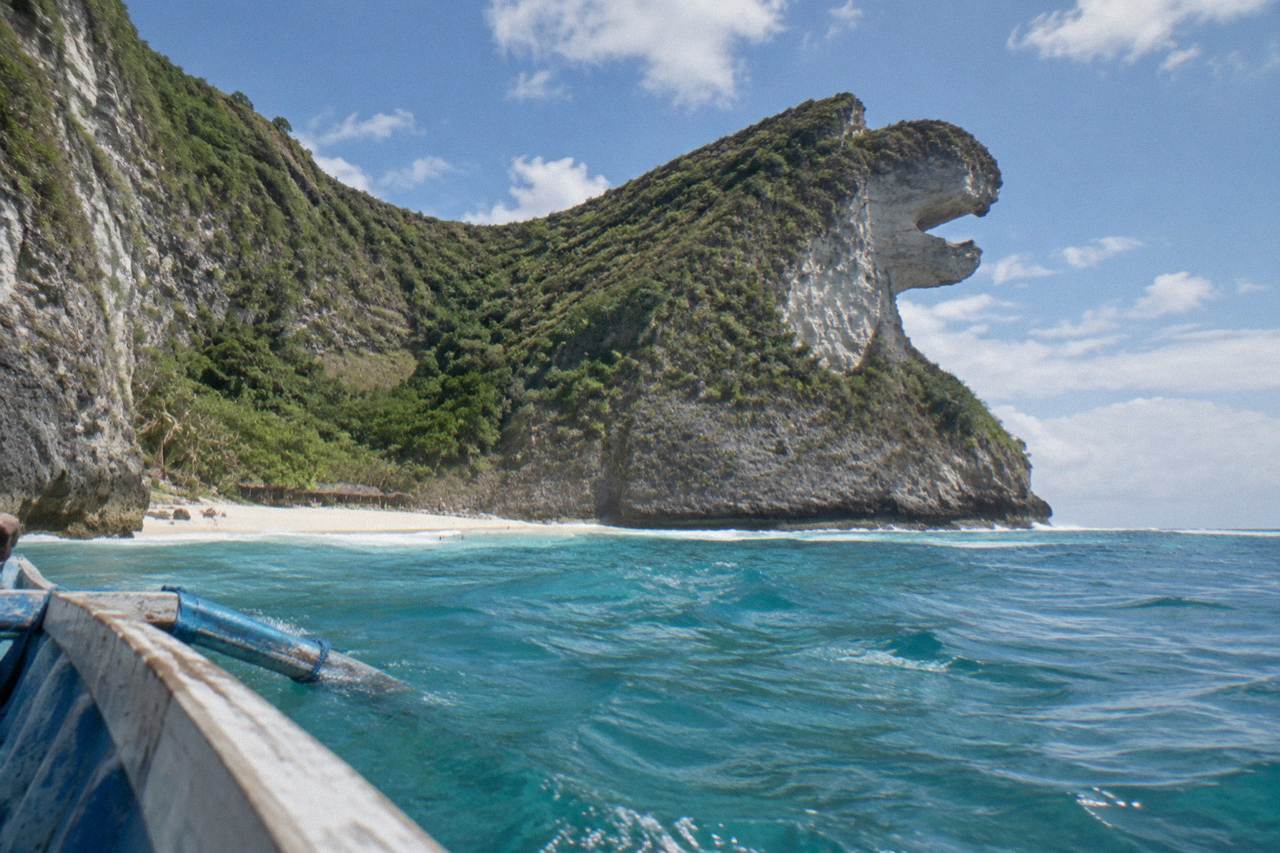
If the trip is built around Kelingking Beach, Broken Beach and the west-coast viewpoints, any dry-season month works, and the practical differences between them are crowd density and road dust rather than weather. July and August are the busy months, when the cliff-edge photo spots at Kelingking fill early and the west coast tour itineraries start earlier to beat the queues. May, June and September deliver nearly the same light with fewer people at the railings.
If the trip is built around the water, the calendar sharpens. Manta sightings are reported year-round, with operator-reported success rates of about 85 to 95 percent at Manta Point and 60 to 85 percent at Manta Bay, but the sea conditions that let boats actually reach those sites are a dry-season gift. Between April and October the crossing from Sanur is smoother, visibility at the manta sites runs 15 to 30 metres, and exposed Manta Point is cancelled far less often. From November to March, operators reroute to Manta Bay or sheltered bays more frequently.
The mola mola calendar adds a second, narrower peak inside the dry season. Oceanic sunfish gather at Crystal Bay from July to October, with August and September the peak months, pulling divers and snorkelers into a window that overlaps the July-August crowd peak. A September visit is the quiet way to catch both seasons at once.
For a first visit that mixes land and water, the manta snorkeling and land tour from Bali, rated 4.9 from 2,660 reviews and priced from $70, bundles both halves of the island into one day and runs year-round, and it is the single listing this site points most wet-season and dry-season visitors toward when they want the full experience without planning it themselves.
Nusa Penida Weather Month By Month
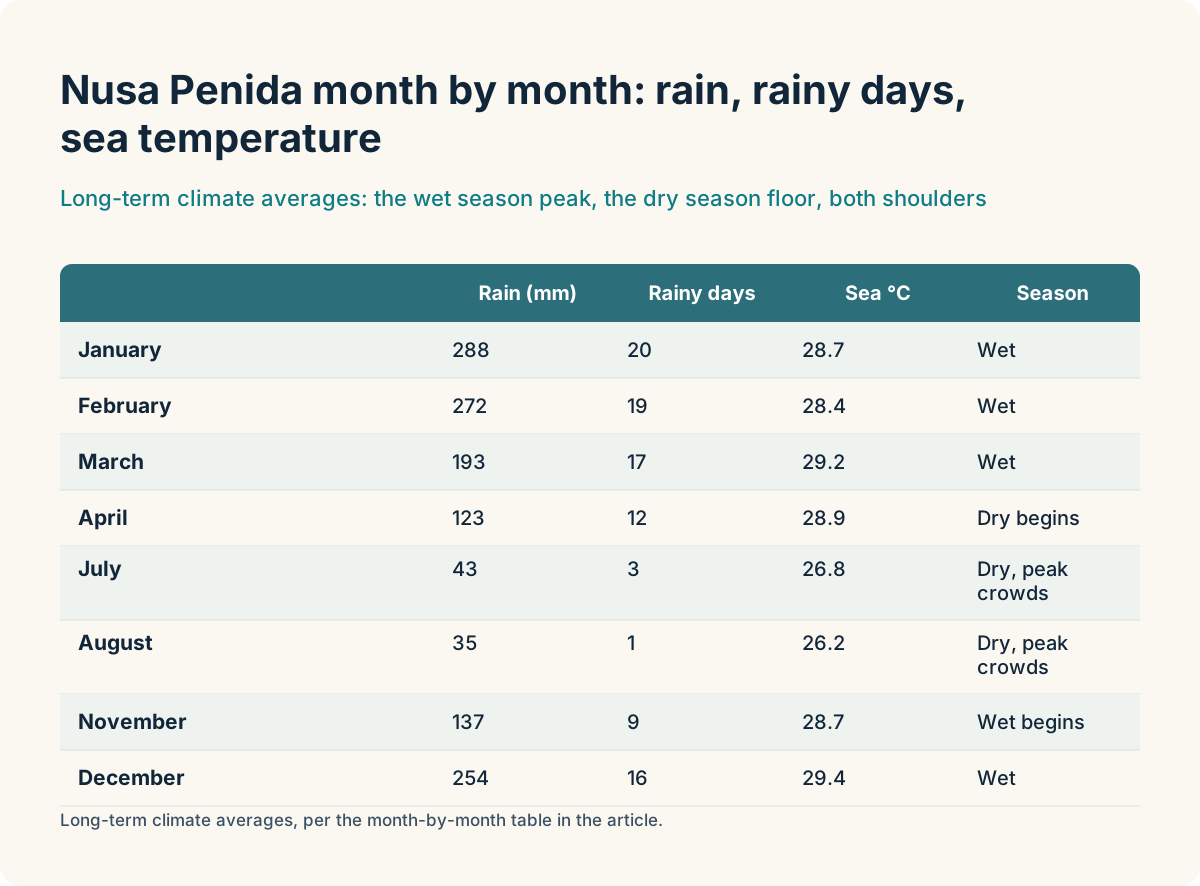
January is the wettest month at 288 millimetres of rain over about 20 rainy days, with sea temperature at 28.7 degrees. August is the driest at 35 millimetres and one rainy day, sea at 26.2 degrees. Every month's rainfall, rainy-day count and sea temperature sits in the table below, drawn from long-term climate averages rather than any single year.
The pattern inside the numbers is a steep wet-season ramp and an equally steep dry-season drop. Rainfall halves between January and March, halves again by April, and bottoms out from June to September before climbing back through November and December. Sea temperature runs the opposite, subtle curve: warmest in the wet months, around 28.4 to 29.4 degrees, and coolest in August at 26.2, which is exactly when divers report the thermoclines that bring mola mola up from deep water.
| Month | Rainfall (mm) | Rainy days | Sea temp (°C) | Season |
|---|---|---|---|---|
| January | 288 | 20 | 28.7 | Wet |
| February | 272 | 19 | 28.4 | Wet |
| March | 193 | 17 | 29.2 | Wet |
| April | 123 | 12 | 28.9 | Dry begins |
| May | 66 | 7 | 28.5 | Dry |
| June | 47 | 6 | 27.8 | Dry |
| July | 43 | 3 | 26.8 | Dry, peak crowds |
| August | 35 | 1 | 26.2 | Dry, peak crowds |
| September | 47 | 1 | 26.5 | Dry |
| October | 67 | 3 | 27.7 | Dry ends |
| November | 137 | 9 | 28.7 | Wet begins |
| December | 254 | 16 | 29.4 | Wet |
Two cautions belong beside the table. First, these are long-term averages, so a wet-season week can still deliver five dry days and a dry-season week can still deliver one soaking afternoon. Second, rainfall is not the number that decides a Nusa Penida day, sea state is: a rain-free January day with a big swell still closes Manta Point, while a showery September morning can still deliver a perfect snorkel. The rainfall data comes from long-term precipitation records for Nusa Penida, and the sea temperatures from monthly sea-satellite averages for the Bali strait.
When Can You Snorkel With Manta Rays On Nusa Penida?
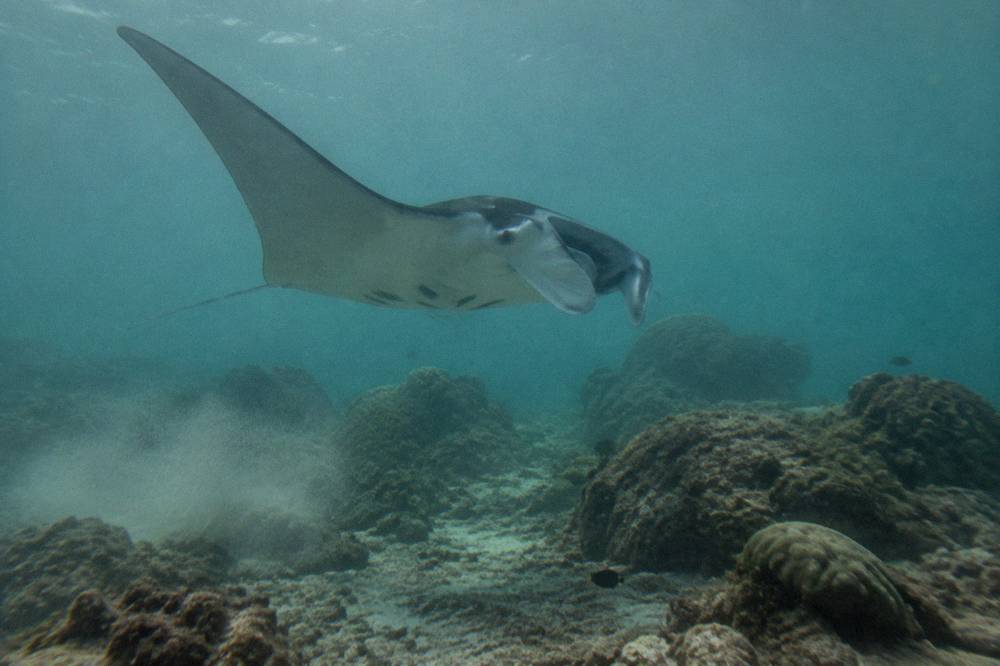
Manta rays are present around Nusa Penida every month of the year, because they hold to cleaning stations and plankton rather than a migration. Operator-reported sighting success runs about 85 to 95 percent at Manta Point and 60 to 85 percent at Manta Bay, but sea conditions make April to October the most reliable window, since swell frequently shuts the exposed Manta Point site from November to March.
The year-round presence is the genuinely counterintuitive part. Most manta destinations have a season, and Nusa Penida does not, in the sense that matters for whether the animals are there. What it has instead is an access season. Manta Point sits on the island's exposed southwest tip, and when the dry-season trade winds ease and the swell drops, boats reach it comfortably. When swell rises in the wet months, operators reroute to Manta Bay, which is shallower, more sheltered and often the better site for snorkelers anyway, a trade-off local operators explain in detail when comparing the two sites.
Visibility follows the same curve. Dry-season conditions deliver 15 to 30 metres at the manta sites, wet-season conditions more often 5 to 12 metres with plankton-rich green water, which is precisely what the mantas feed on, so a lower-visibility month is not a no-manta month. The protected-area rules stay constant year-round: stay at least 3 metres from the animals, no touching or chasing, no flash photography, and supervision by a guide, per the local code of conduct for swimming with mantas.
The same access logic applies across every underwater site on the island, and it is worth seeing the whole picture in one place before choosing a month.
| Site | Exposure | Best months | Wet-season fallback |
|---|---|---|---|
| Manta Point | Exposed southwest tip | April to October | Often cancelled or rerouted November to March |
| Manta Bay | Sheltered, shallower | Year-round, peaks October to December per operator reports | Primary wet-season manta site |
| Crystal Bay | Sheltered bay | April to September calmest, mola mola July to October | Snorkelable most of the year |
| Gamat Bay | Sheltered, quiet | Year-round | Quieter alternative to Crystal Bay |
| Kelingking Beach | Cliff and viewpoint, no swimming | Any month, dry mornings best | Viewpoint only, wet path caution |
For travelers who want the manta experience with the least weather exposure, the Manta Point snorkeling and west coast tour, rated 4.6 from 1,674 reviews and priced from $28 per person, is the budget-format option, with a wide 3 to 9 hour range depending on the option booked. The premium yacht alternative, from $73.87 and rated 4.9 from 10,655 reviews, spends the crossing on a yacht rather than a snorkel boat, which matters more in the shoulder months than in flat August. Both carry free cancellation, so a swell forecast can be reacted to without losing the fare.
When To See Mola Mola At Crystal Bay?
Mola mola, the oceanic sunfish, appear at Crystal Bay and nearby deep-water sites from July to October, with August and September the peak months. They rise from deep water on cold thermoclines, which is why the season coincides with the year's coolest sea temperatures, 26.2 to 26.8 degrees, and why sightings cluster in the early morning before the water column warms.
Crystal Bay itself is the staging point. The bay is sheltered with mild to moderate currents, visibility commonly 20 to 30 metres, and at its calmest from April to September, which overlaps the sunfish season almost perfectly. The mola mola themselves are typically spotted by divers on the outer reef slopes rather than by snorkelers inside the bay, so the honest framing for a snorkel-only visitor is that July to October delivers the best odds, not a guarantee, and that no listing on this site or anywhere else promises a sunfish sighting.
Divers get the sharper calendar. The three-dive trip to Manta Point, Mola and the reef, rated 4.8 from 31 reviews, a small pool, and priced from $248 per person, runs 8 to 9 hours and targets exactly this window. Snorkelers who want to be in the water during the same weeks without a certification can take the manta point snorkeling itineraries, which visit Crystal Bay and the manta sites on the same day.
The rest of the year is not empty water. Turtles and healthy coral hold at Crystal Bay and Gamat Bay year-round, and Gamat Bay in particular stays quieter than its famous neighbor in every month, as this site's Crystal Bay guide sets out in more detail. The sunfish simply leave, descending back to depth, and the calendar starts again the following July.
What About Crowds, Boats, And The Wet Season?
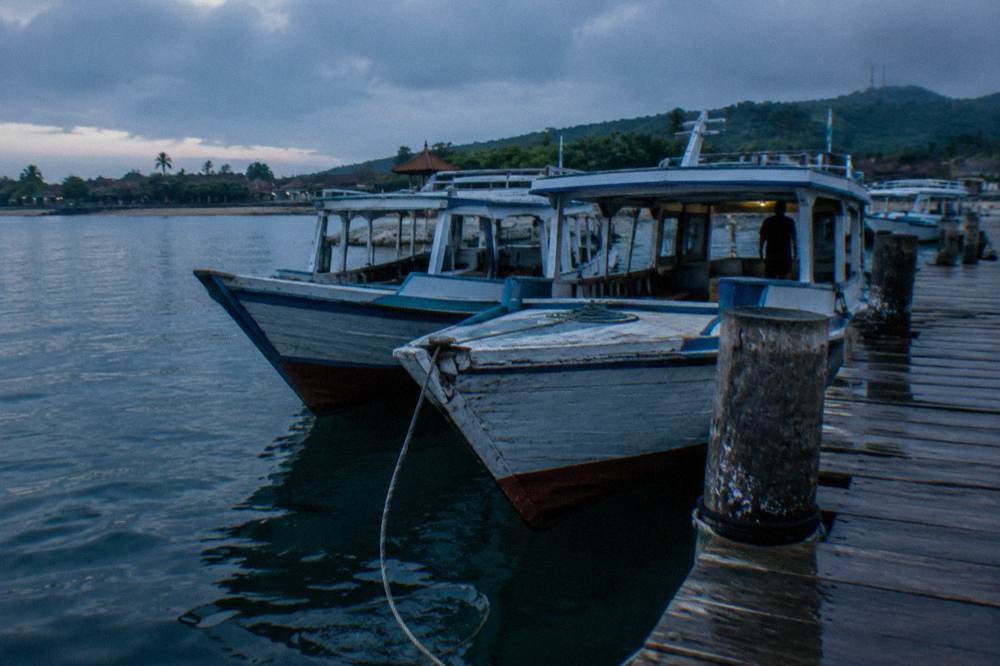
July and August are the peak crowd months on Nusa Penida, when the dry season's best weather coincides with European summer holidays. The wet season from November to March thins the crowds sharply but raises the odds of delayed or cancelled fast boat crossings, with 20-plus daily departures from Sanur running on schedules that bend to the sea state.
The Sanur crossing is the choke point every visitor passes through. More than 20 departures run daily across operators from roughly 07:30 to 17:00, one-way fares commonly IDR 150,000 to 250,000, crossing times of 25 to 60 minutes depending on the boat and the sea. In the dry months this is a routine ferry ride. From December to March, conditions can be rough and cancellations climb, which is why many travelers in the wet season book a bundled day tour with hotel pickup and a boat ticket included rather than assembling the crossing themselves, a trade-off this site's fast boat to Nusa Penida guide covers in full.
Wet-season travel is not a mistake, it is a different trip. Rain arrives in bursts, prices soften, Kelingking's cliff path is quieter, and the island's free things to do and viewpoints can be had nearly alone on a clear morning. The planning discipline is different: build a loose itinerary, keep one flexible day, and accept that a Manta Point attempt may become a Manta Bay or Crystal Bay snorkel instead.
The crowd curve also has a shoulder people miss. Late March and April sit inside the dry season's opening weeks with rainy-day counts already down to 12 to 17, yet none of the July-August queueing at the viewpoints. September is the other quiet optimum: dry, warm, thin crowds, and the mola mola peak still running. Anyone choosing between those two months should read the site's itinerary guide alongside this one, because what you do with a calm day matters more than which calm month you picked.
Which Trip Suits Which Month On Nusa Penida?
The dry season from April to October suits every listing on this roster, from the $28 manta and west coast tour to the premium yacht trips. November to March favors sheltered-water snorkeling, land tours and flexible bookings, while July to September is the only window that combines mola mola season, manta season and calm seas, at the cost of peak crowds in the first two of those months.
The table below matches each month to the trip format that handles its conditions best, using the tour categories this site carries: island day tours, manta and snorkeling trips, private car and custom tours, and yacht, diving and multi-day products.
| Month | Conditions | Best-fit trip format |
|---|---|---|
| January | Wettest month, swell risk high | Land tour or private car with driver, flexible booking |
| February | Heavy rain, rough southern sites | West coast viewpoints by car, sheltered Gamat Bay snorkel |
| March | Rain easing, 17 rainy days | Private car tour, first manta attempts at Manta Bay |
| April | Dry season begins, 123 mm | Full east-and-west day tour, manta snorkel trips resume full routes |
| May | 66 mm, calm seas, thin crowds | Manta snorkeling and land tour, private guided trips |
| June | 47 mm, excellent visibility | Any full-day tour, manta and west coast combo |
| July | Near-dry, mola season opens, crowds peak | Early-start day tours, manta plus mola dive trips |
| August | Driest month, coolest sea, peak crowds | Premium yacht manta trip, dive trips targeting mola mola |
| September | Dry, mola peak, crowds easing | Full manta snorkeling and land tour, three-dive packages |
| October | Dry season's last calm month | Yacht and all-inclusive day trips before the swell returns |
| November | Wet season begins, swell rising | Manta Bay snorkeling, private car hire with driver |
| December | 254 mm rain, rough crossings | Land-focused day tours, multi-day trip with accommodation |
Two budget anchors sit at the bottom of the roster and both flex with the season. The private car hire with driver, rated 4.8 from 2,740 reviews and priced from $27 per person, is the wet-season workhorse, because a car itinerary can be reshaped on the day around a burst of rain in a way a fixed boat schedule cannot. The premium yacht manta and land tour, from $73.87 and rated 4.9 from 10,655 reviews, sits at the other end and earns its price most in the shoulder months, April to June and September to October, when a stable platform and an experienced crew turn a marginal sea day into a good one.
For travelers weighing a longer stay against the weather gamble of a single day, the two-day trip with accommodation and meals, rated 4.9 from 34 reviews, a small pool, and priced from $102 per person, is the wet-season hedge: it buys a spare morning, so one cancelled crossing or one blown-out snorkel does not end the trip. The site's guide to how many days in Nusa Penida is enough works through the same question from the time side.
How Does The Weather Affect The Kelingking Descent And The Viewpoints?
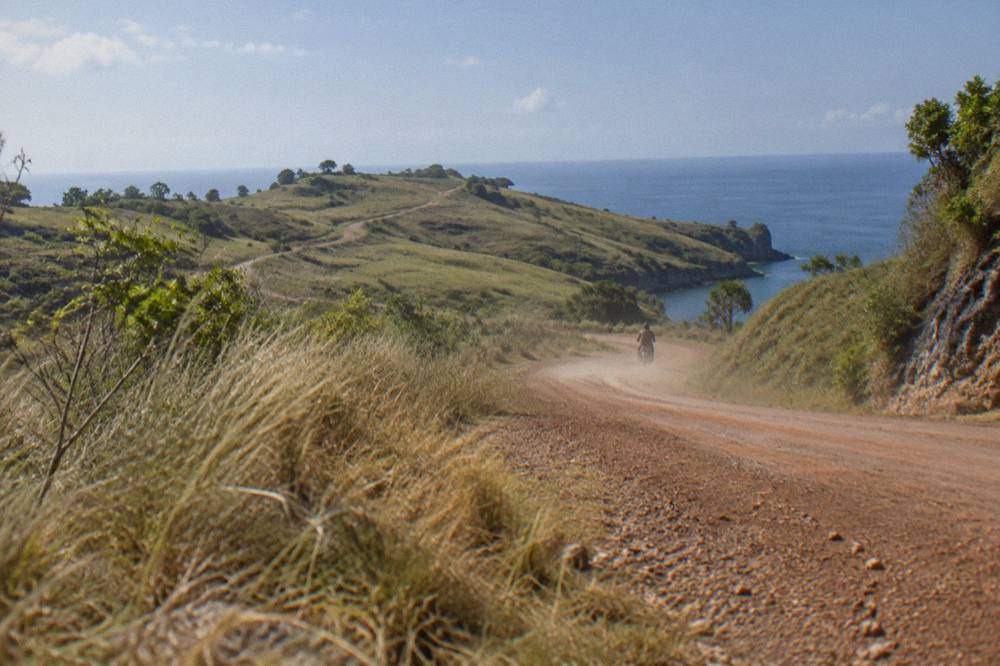
The cliff path down to Kelingking Beach is safest and most comfortable in the dry season, when the rock and gravel surface is dry and the bamboo handrail sections are not slick. Rain makes the steep trail treacherous within minutes, and swimming at the beach below has been banned year-round since February 2023 regardless of how calm the water looks.
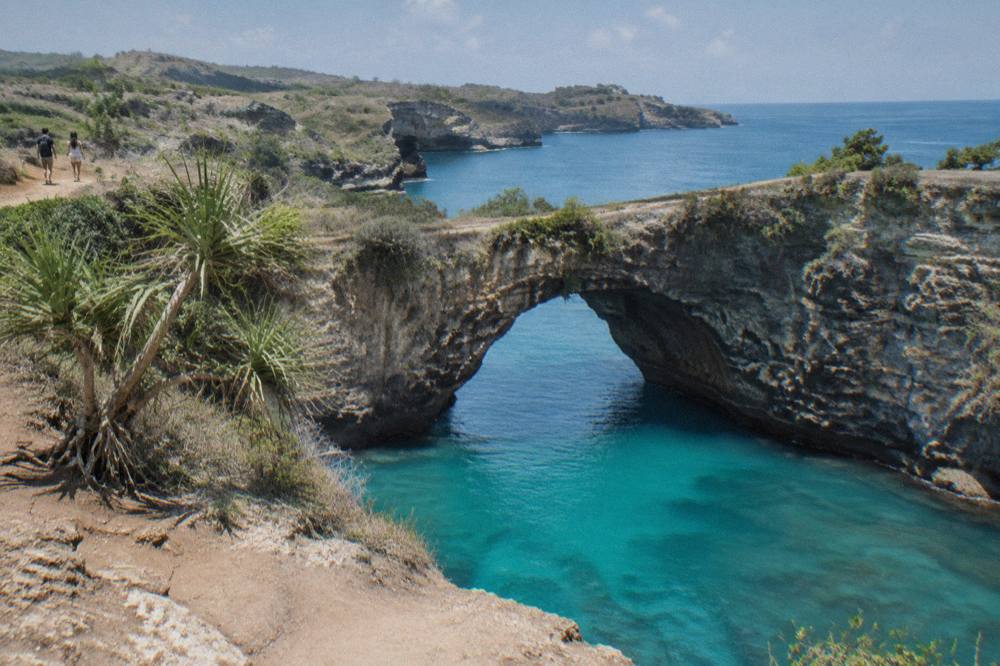
Weather shapes the viewpoints differently from the water sites. Kelingking's famous cliff, Broken Beach's arch and Angel's Billabong are all dry-land experiences, so they survive a wet-season visit far better than a snorkel does, and the Kelingking Beach stairs and lift situation is unchanged by season: access is on foot only, the descent takes about 20 minutes down and much longer back up, and no lift exists or has an opening date. What changes with the calendar is the trail surface and the light. Dry-season mornings give the postcard clarity; wet-season afternoons give dramatic cloud and a wet, loose path.
The practical rule is to flip the wet-season day. Do the viewpoints and the cliff walk in the morning, before the conventional burst of afternoon rain, and leave the sheltered-water snorkel, or the long lunch, for the hours after it. Angel's Billabong is at its calmest at low tide, and the natural pool there is closed to swimming entirely, so the tide matters more than the season for that one spot.
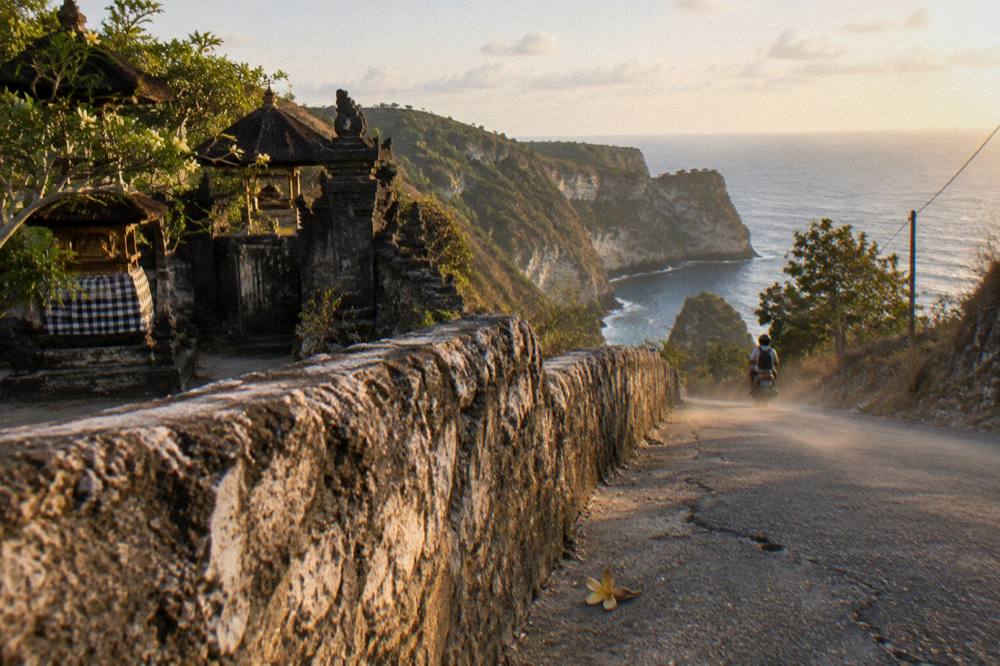
Roads are the quiet seasonal factor. The main loop roads are now largely asphalted, and 2026 roadworks on the Kelingking access road and the Diamond Beach and Atuh routes have upgraded the busiest stretches, but side and coastal routes stay narrow, steep and potholed in sections year-round. In the wet months those sections get slick, which is one more argument for a driver rather than a self-drive scooter in November to March, a decision the site's scooter rental and road safety guide covers in depth.
Common Questions About Nusa Penida Weather And Seasons
What Is The Best Month To Visit Nusa Penida?
September is the strongest single month: rainfall averages 47 millimetres with one rainy day, the sea is calm, crowds have eased after August, and the mola mola peak of August and September is still running. May and June are close runners-up with even thinner crowds, and April works well if you want the driest possible start to the season.
Is Nusa Penida Rainy In The Wet Season All Day?
No. Wet-season rain, November to March, typically arrives in heavy bursts, often in the afternoon or overnight, rather than falling continuously. Long-term averages show 20 rainy days in January, but many of those are single showers. The bigger wet-season cost is at sea, where swell raises delays and cancellations on the Sanur crossing and at exposed sites like Manta Point.
Can You Snorkel With Manta Rays In The Wet Season?
Yes. Manta rays are present year-round, with operator-reported sighting success of about 60 to 85 percent at Manta Bay, which is the sheltered site operators reroute to when Manta Point is closed by swell. Visibility drops to roughly 5 to 12 metres in the wet months, but the plankton that reduces visibility is also what the mantas feed on, so the animals do not leave.
When Is Mola Mola Season At Crystal Bay?
Mola mola appear from July to October, peaking in August and September. They rise on cold thermoclines in the early morning, which is why the season matches the year's coolest sea temperatures, 26.2 to 26.8 degrees in July and August. Divers on the outer reef slopes see them most; no operator guarantees a sighting.
Is July Or August Too Crowded On Nusa Penida?
July and August are the peak crowd months, when the best weather coincides with the European summer holidays. The viewpoints, especially Kelingking, are busiest from mid-morning, so early-start tours avoid the worst of it. September delivers nearly identical conditions with noticeably fewer people.
Do Fast Boats Get Cancelled Because Of Weather?
Yes, mainly between December and March, when swell at the Sanur crossing is more frequent and exposed sites like Manta Point face more cancellations and reroutes. More than 20 departures run daily in normal conditions, so a cancelled sailing usually means taking the next one rather than losing the day. Booking a tour with free cancellation keeps the weather risk off your wallet.
Whatever month the calendar hands you, Nusa Penida Tours lists the island's bookable day tours, manta snorkeling trips and private options with verified prices and free cancellation, so a forecast can be reacted to rather than feared. Pick the month that matches what you came for, the cliffs, the mantas or the sunfish, and the weather table above will tell you what the sea is likely to do about it.