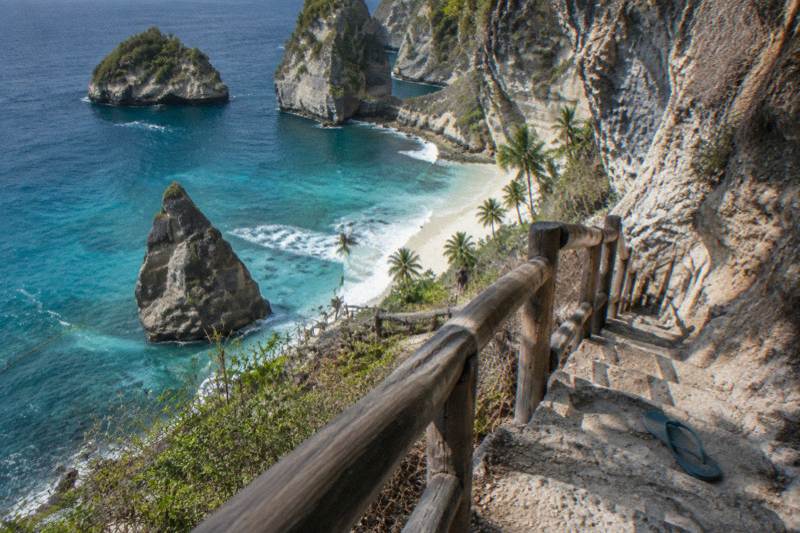
Is Nusa Penida Really Worth It?
An honest verdict on Nusa Penida: what a day actually costs, what the cliffs and manta snorkelling deliver, what disappoints, and who should skip the island.
Is Nusa Penida Really Worth It?
Yes, for most first-time visitors to Bali, Nusa Penida is worth the day, with two honest caveats: it is a long, tiring day built around viewpoints rather than beach time, and the peak months of July and August squeeze those viewpoints with crowds. A full-day tour from $33 per person, plus about IDR 25,000 in island fees, delivers cliffs and snorkelling that mainland Bali simply does not have.
The honest answer depends less on the island than on what kind of traveller is asking. Nusa Penida is a rugged, 200 square kilometre island south of Bali with no public transport, newly asphalted but still steep and narrow roads, and a handful of landscapes that have carried Bali's Instagram image for a decade. Kelingking Beach, Broken Beach, Angel's Billabong, Diamond Beach and the manta cleaning stations off the south coast are the reason roughly 20-plus fast boats leave Sanur every day between about 07:30 and 17:00.
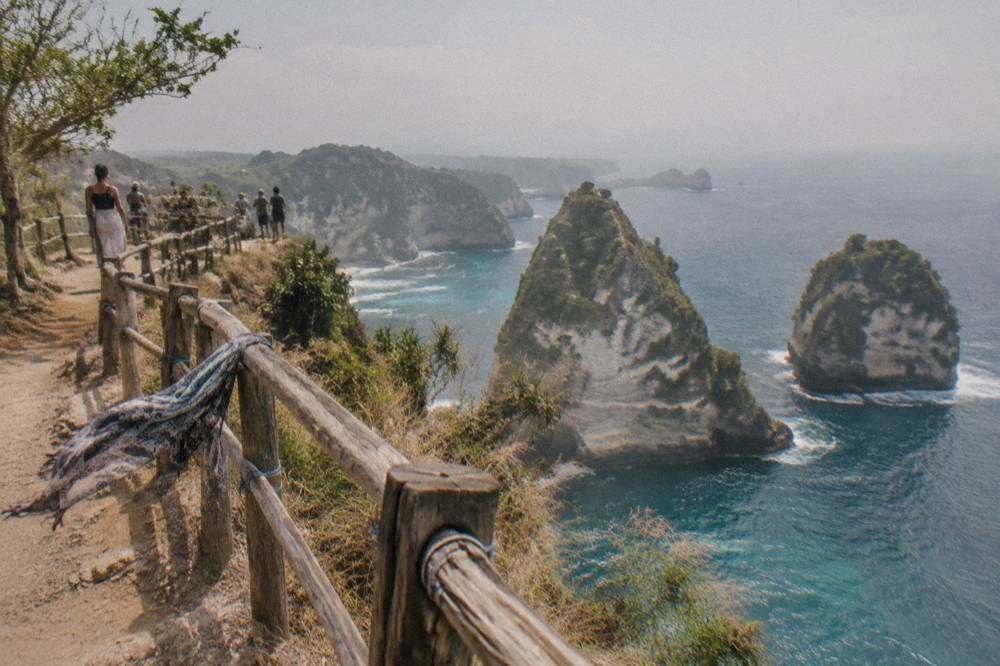
What the photograph does not show is the logistics. The crossing from Sanur takes 25 to 60 minutes depending on the operator and the sea, one-way fares run about IDR 150,000 to 250,000, and the day is built around a drive between viewpoints rather than hours on sand. Most people who love Nusa Penida love it as a scenery-and-snorkelling day, not a beach holiday. Most people who regret it expected the second thing.
This verdict walks through what the day actually costs, what it genuinely delivers, what disappoints, and who should skip it. The short version: the island earns its fame, and the cheapest clean way to test that fame is a bundled day tour such as the East and West Highlights full-day tour, which folds the boat, the island driving and the main entry tickets into one price from $33 per person, with Check availability on the operator's live listing.
Is It Worth Going To Nusa Penida?
For a first trip to Bali lasting a week or more, yes: the island's cliff coastline and manta snorkelling are unlike anything on the mainland, and a bundled day tour makes the logistics manageable. For a short trip, or for travellers who want relaxation over scenery, the honest answer is no, the day is too long and too crowded to be worth the trade.
The case for going rests on two things the mainland cannot match. The first is the west coast's cliff architecture: Kelingking's T-rex headland, the natural arch at Broken Beach and the tidal pools of Angel's Billabong sit within about 30 to 60 minutes' drive of each other, and no mainland beach compares. The second is the water. Manta rays are present year-round at the island's cleaning stations, with operator-reported sighting rates of roughly 85 to 95 percent at Manta Point and 60 to 85 percent at Manta Bay, and no tour ever guarantees a sighting, but the odds are better than almost anywhere in the region.
The case against is equally real. The viewpoints are busy by mid-morning, the walking is limited to short, steep descents, and the roads between sites, though much improved by 2026 upgrades, still involve long stretches of narrow, hilly driving. A day tour runs 8 to 11 hours door to door. That is a full commitment for a place where the two headline beaches, Kelingking and Diamond, both ban swimming outright for safety reasons.
A useful benchmark: Nusa Penida Tours, this site's own comparison of the 23 bookable day tours, manta trips and private options, exists precisely because the worth-it question is mostly a logistics question. Travellers who book a tour with the boat, the driver and the entry tickets bundled almost never report regret at the price; travellers who self-assemble the day with a scooter and separate tickets more often do.
What Does A Nusa Penida Day Actually Cost?
A bundled group day tour starts at $33 per person and typically runs $33 to $50 with the boat and entry tickets included; the private all-inclusive version runs from $94.09. On top of any tour price, budget the Bali tourist levy of IDR 150,000 once per trip and the Nusa Penida island retribution of IDR 25,000 per adult. If you're wondering how these extras compare to mainland prices, the full cost comparison between Nusa Penida and Bali explains what actually ends up costing more.
The island retribution is the fee most visitors do not expect. It is charged at the harbour on arrival, applies to all visitors, and costs IDR 25,000 per adult, IDR 15,000 for children aged 4 to 13, with infants free. One voucher covers a single entry and includes Kelingking, Broken Beach and Angel's Billabong the same day with no re-payment, according to the official retribution portal. The Bali foreign tourist levy is separate, IDR 150,000 per person once per trip, paid online before travel at the official Love Bali site or at airport and port counters.
The table below shows the real cost of the three most common ways to take the day, using this site's verified tour prices. Note that some listings state their price basis only at booking, so the figures below are printed as the listings state them.
| Way of taking the day | Price from | What is included | Rating and pool |
|---|---|---|---|
| East and West highlights group tour | $33 per person | Fast boat option, island transport, entry fees to Diamond Beach, Kelingking and Angel's Billabong | 4.7 from 8,370 reviews |
| Manta snorkelling and land tour | $70 | Round-trip fast boat, guide, full snorkel gear, lunch, all marine park and attraction entries | 4.9 from 2,660 reviews |
| Private all-inclusive day trip | $94.09 | Private car, driver-guide, lunch, all entry tickets, return public fast boat | 4.8 from 3,705 reviews |
Travellers assembling the day independently should add the fast boat fare of about IDR 150,000 to 250,000 each way plus a private driver at roughly IDR 600,000 to 800,000 per car for a full day, per local operator pricing, at which point a bundled tour from $33 is almost always the cheaper arithmetic. The full fee picture, including what is verified and what is not, is laid out in the site's Nusa Penida entrance fee guide.
Is Nusa Penida Better Than Bali?
No, and the comparison is a category error: Bali is a full island holiday with beaches, temples, rice terraces and nightlife, while Nusa Penida is a dramatic day trip or two built around cliffs and snorkelling. Nusa Penida's coastline beats Bali's for spectacle, but Bali wins on everything that makes a holiday comfortable, from food to roads to swimming beaches.
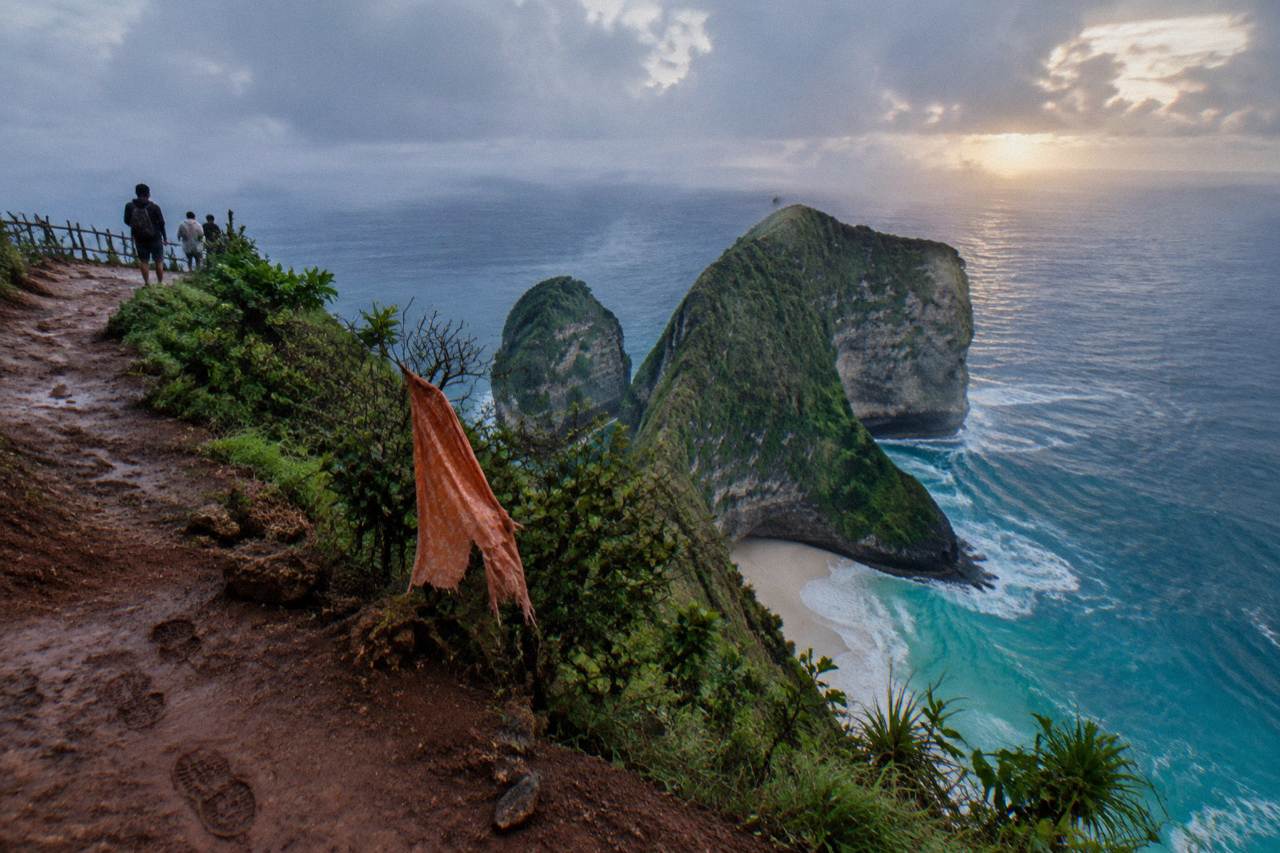
The honest framing is that Nusa Penida is what Bali's south coast looked like before development, minus the swimmable beaches. Kelingking Beach, the most photographed cliff in Indonesia, is viewpoint and trail rather than a beach day: swimming has been banned there since February 2023 for strong currents and shore break, and the descent is a steep, partly roped path that takes about 20 minutes down and considerably longer back up, as the site's Kelingking stairs and lift guide explains in detail.
Bali, by contrast, offers dozens of beaches where swimming is safe and lifeguards exist. Where Nusa Penida wins is scale and wildness: the 200 square kilometre island has no traffic lights, no malls and a coastline that drops sheer into the Indian Ocean. The manta snorkelling has no mainland equivalent at all. Crystal Bay holds 20 to 30 metres of visibility in the dry season and a chance of mola mola, the ocean sunfish, between July and October. Other pages covering the same trip are gathered on Nusa Penida Tours.
The practical verdict most travellers land on: base in Bali, and give Nusa Penida one or two of your days. The question of how many days the island deserves is covered in the site's how many days in Nusa Penida guide, but the short answer for worth-it purposes is that one well-bundled day covers the west coast highlights, and a second adds the east and the manta sites.
What Is Nusa Penida Famous For?
Nusa Penida is famous for Kelingking Beach, the T-rex shaped cliff that became Bali's defining photograph, and second for swimming with manta rays at Manta Point and Manta Bay. Broken Beach's natural arch, Diamond Beach's white sand below a carved cliff staircase and the mola mola season at Crystal Bay complete the island's five famous sights.
The fame is genuinely earned, which is the part that surprises sceptics. Kelingking's headland is a real cliff of folded limestone, not a camera trick, and the viewpoint is free to walk to with only a small parking fee, per the local guide page for Kelingking. Broken Beach is a collapsed cave roof forming a perfect tidal arch reachable on foot in minutes. Angel's Billabong, next door, is a rock pool that fills and drains with the tide, though swimming there is also prohibited after a fatal accident.
The underwater fame matters just as much. The island sits inside a marine protected area of roughly 20,000 hectares, and its cleaning stations host reef manta rays year-round, with no migration season. The rules are strict and worth knowing: stay at least 3 metres from the animals, no touching, no chasing, no flash photography, per the local code of conduct. A manta-focused trip such as the manta snorkelling and land tour, rated 4.9 from 2,660 reviews and priced from $70 with boat, gear, lunch and entries included, is the most reliable way to reach them.
What Disappoints Visitors On Nusa Penida?
Three things disappoint consistently: crowds at the viewpoints between July and August, the sheer length of a day tour at 8 to 11 hours, and a rough fast boat crossing during the wet season from November to March. None of these break the trip for most visitors, but each one explains most of the negative reviews the island collects.
The crowd problem is seasonal and predictable. July and August are the peak months, when the Kelingking viewpoint and the Diamond Beach staircase fill by mid-morning and the parking areas overflow. Outside those two months the sites are busy but walkable, and in the shoulder months of April to June and September to October the combination of dry-season calm and thinner crowds is the island at its best. The wet season brings a different disappointment: swell on the Sanur crossing, rougher seas at the exposed south-coast snorkel sites, and a higher chance a manta stop is rerouted or cancelled.
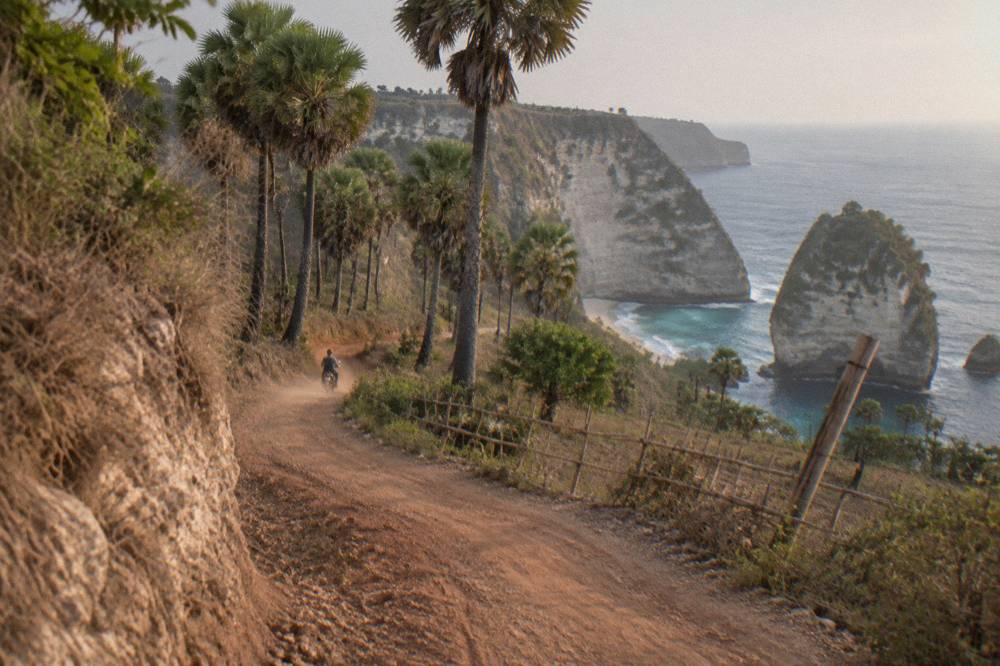
The length of the day is the second complaint. A tour that leaves Sanur in the morning and returns in the evening spends two to three hours of its 8 to 11 hours on the boat and the road, which surprises visitors who imagined a beach day. The honest fix is to treat the island as a scenery tour, take the earliest departure available, and pick a tour that bundles the driving rather than fighting it on a rented scooter, a choice with real safety weight given the island's steep, narrow side roads.
| Common disappointment | When it bites hardest | The honest fix |
|---|---|---|
| Crowds at Kelingking and Diamond Beach viewpoints | July and August, mid-morning onward | Travel April to June or September to October, and start on the earliest boat |
| Day length of 8 to 11 hours | Every full east-and-west itinerary | Pick a single-coast tour, or accept the day as a sightseeing expedition, not a beach day |
| Rough crossing and swell | November to March | Book a tour with free cancellation, check the operator's weather-reroute policy, and favour morning departures |
| No swimming at the headline beaches | Year-round, especially for beach-focused visitors | Plan swimming at sheltered snorkel stops such as Crystal Bay or Gamat Bay instead |
Is The Crossing To Nusa Penida Rough?
The Sanur to Nusa Penida crossing takes 25 to 60 minutes and is usually calm and flat between April and October; between November and March the swell builds, more sailings run rough, and cancellations become common enough to plan around. Most visitors never notice the crossing in the dry season, and most wet-season complaints trace back to it.
The sea state is the single biggest variable in how the day feels. Fast boats from Sanur reach the Banjar Nyuh and Toyapakeh area harbours in about 45 minutes typically, with the range depending on the operator and the conditions. In the dry season the strait is famously calm. In the wet season, swell at the harbour entrance and on the south coast can make the ride bumpy and can shut down the exposed manta sites even when the boats still run.
Two practical rules follow. First, book the earliest departure available: the sea is calmer in the morning, and the viewpoints are emptier, which solves two problems with one decision. Second, if travelling between November and March, choose a tour with free cancellation, which every listing on this site's roster carries, and check the operator's policy on weather reroutes before booking. The site's fast boat to Nusa Penida guide covers operators, fares and timing in detail.
Who Should Skip Nusa Penida?
Skip Nusa Penida if the trip is shorter than five nights, if mobility or heat makes steep cliff paths and long drives unappealing, or if the goal is a relaxing beach day rather than a sightseeing expedition. Also skip it in peak July and August if crowds ruin scenery, and consider it carefully in the wet season when the crossing and the snorkel sites turn unreliable. For a fuller rundown of the traps that catch visitors off guard, from scooter risks to temple dress codes, see what to avoid in Nusa Penida.
The mobility point deserves more honesty than most travel writing gives it. Kelingking's descent is steep with loose rock and crude railings, and the climb back up takes far longer than the way down. Diamond Beach requires a long carved cliff staircase. Broken Beach and Angel's Billabong are gentler, but the day still involves hot, dusty walking and hours in a car on winding roads. Visitors who cannot comfortably manage stairs in tropical heat should plan the viewpoints from the top only, which is entirely possible and still delivers the famous views.
The short-trip point is arithmetic. A Nusa Penida day costs 8 to 11 hours of a Bali holiday. On a five-night trip that is a fifth of the entire holiday spent in transit and viewpoints. On a ten-night trip it is an easy call. Travellers with limited time who still want the island's signature scenery should pick a single-coast tour, such as a west-only day from $35.5 per person, rather than the full east-and-west marathon.
The Honest Verdict On Nusa Penida
Nusa Penida is worth it for most visitors with a week or more in Bali who accept it as a long sightseeing and snorkelling day, not a beach day. The cliffs and the manta experience are unique in the region, the cost is modest from $33 with fees on top, and the disappointments, crowds, hours and seasonal swell, are all predictable enough to plan around.
Weighing both sides, the island's defenders and its critics are each right about a different island. The critics describe the July crowds, the 11-hour days and the wet-season swell accurately. The defenders describe a coastline with no mainland equal and a manta encounter priced from $70 with everything included, also accurately. The difference is almost entirely in expectations and in which month the visit falls.
For a first visit, the lowest-risk test is a bundled highlights tour: the group version from $33 per person, rated 4.7 from 8,370 reviews, or the private version from $94.09, rated 4.8 from 3,705 reviews. If the day wins you over, the manta and snorkel trips and the two-day options with accommodation are the natural second visit. If the crowds and the hours defeat you, nothing else in Bali requires that trade again.
The island is not a paradise and it is not a scam. It is a genuinely spectacular, genuinely demanding day out, priced fairly, and best taken early, out of peak season, with the logistics handled by someone who drives those roads daily.
Common Questions About Whether Nusa Penida Is Really Worth It
Is Nusa Penida Really Worth It?
Yes, for most visitors with a week or more in Bali. The cliff coastline and the year-round manta snorkelling have no mainland equivalent, and a bundled day tour from $33 per person keeps the cost modest. It is not worth it for very short trips, for travellers seeking a relaxed beach day, or for anyone unwilling to spend 8 to 11 hours on a sightseeing day.
Is It Worth Going To Nusa Penida?
For a first trip to Bali of a week or longer, yes. The west coast viewpoints and the manta sites justify one full day, and a second day adds the east coast and more snorkelling. For shorter trips, the day's length and the peak-season crowds usually outweigh the scenery.
Is Nusa Penida Better Than Bali?
They are different categories. Bali is a full holiday island with swimmable beaches, temples, restaurants and nightlife; Nusa Penida is a dramatic day-trip island built around cliffs and snorkelling, where the two most famous beaches ban swimming. Most travellers base in Bali and give Nusa Penida one or two days.
What Is Nusa Penida Famous For?
Kelingking Beach, the T-rex shaped cliff that became Bali's defining photograph, and swimming with manta rays at Manta Point and Manta Bay. Broken Beach's natural arch, Diamond Beach and the mola mola season at Crystal Bay from July to October complete the island's famous sights.
What Does A Nusa Penida Day Tour Cost?
Group day tours with the fast boat and entry tickets included start at $33 per person and typically run to about $50; private all-inclusive versions run from $94.09. Add the Bali tourist levy of IDR 150,000 once per trip and the island retribution of IDR 25,000 per adult at the harbour.
What Disappoints Visitors On Nusa Penida?
Crowds at the viewpoints in July and August, the 8 to 11 hour length of a full-day tour, and a rough fast boat crossing between November and March. All three are predictable and avoidable with an early start, shoulder-season timing and a bundled tour.