What Should I Avoid In Nusa Penida?
The honest avoid-list for Nusa Penida: banned swims, cliff paths, scooters, the island retribution QR, temple dress and wet-season seas, each with what to do instead.
What Should I Avoid In Nusa Penida?
Avoid swimming at Kelingking, Diamond Beach and Angel's Billabong, leaving marked cliff paths, riding a scooter without experience, arriving without the island retribution QR voucher, entering temples without a sarong, trusting the wet-season sea, and sleeping in past the earliest fast boat. Each risk has a simple fix, and most fixes cost nothing but planning.
The island has earned its reputation the hard way. In September 2026 a tourist died after leaving the marked path above Kelingking Beach, a fall that rescue teams reached only by descending the same steep stairs that make this stretch notorious. Swimming below the famous cliff has been banned since February 2023 because of currents and shore break, and no lifeguard patrols the sand. None of this makes Nusa Penida a place to skip. It makes it a place to treat like what it is: a rugged island with poor roads, real surf and a thin safety net, best visited on a structured day rather than an improvised one. Some visitors also wonder whether bad luck follows the island itself, and our look at the Nusa Penida curse rumour separates that myth from the actual rules you should follow.
The good news is that almost every serious risk on the island collapses into a single decision: how you move and who is driving. The full-day tours on this roster, from the 4.7-rated East and West Highlights tour at from $33 per person to the private all-inclusive trips, hand the driving, the boat timing and the fee paperwork to people who do it daily. Independent travel works too, but it borrows the island's risks directly.
The three options below cover the safest ways to structure a first visit: an all-inclusive with transfers, a fully private day trip, and a private car with driver for independent exploring.
Which Beaches Ban Swimming On Nusa Penida?
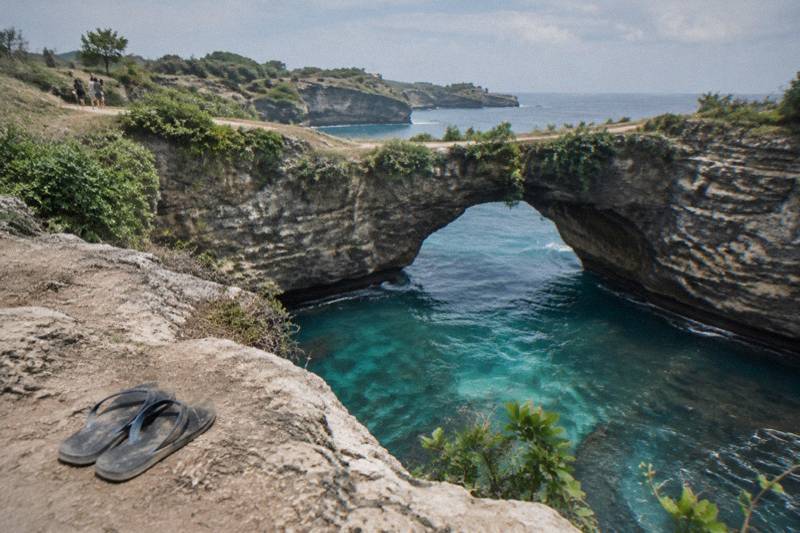
Swimming is banned at Kelingking Beach (since February 2023) and Angel's Billabong (after a fatal accident), and prohibited at Diamond Beach, where strong waves and rip currents have caused several drownings. Broken Beach has no water access at all, it is a viewpoint. The safe alternatives are Crystal Bay and Gamat Bay, both sheltered, both tour staples.
The bans are not bureaucracy, they are body counts. Kelingking's shoreline looks like a postcard from 200 metres up, but the same swell that photographs so well produces a shore break and currents with no lifeguard present. Angel's Billabong, the natural infinity pool on the west coast, became off-limits after a fatal surge incident in February 2023; at high tide waves wash straight over the rock shelf, and the calm that lures people in at low tide disappears in minutes. Diamond Beach on the east coast is reached by a steep carved cliff staircase, and its rip currents have killed swimmers since borders reopened. For the official detail on the west coast sites, the local guide to Broken Beach and Angel's Billabong records the prohibitions plainly.
What to do instead: swim at Crystal Bay, which is sheltered with mild to moderate currents and visibility that reaches 20 to 30 metres, or at Gamat Bay, which is quieter still and suitable year-round. Both appear on the snorkeling itineraries of the roster, including the One Day Nusa Penida Island West with Snorkeling tour from $66.96, rated 4.5 from 597 reviews. If your heart is set on the famous cliffs, view them from the top and let the manta and reef sites carry the water time.
| Site | Swimming status | Why | What to do instead |
|---|---|---|---|
| Kelingking Beach | Banned since February 2023 | Strong currents, shore break, no lifeguards | Viewpoint from the clifftop only |
| Diamond Beach | Prohibited | Strong waves, rip currents, several drownings | Staircase view and photos, no water entry |
| Angel's Billabong | Prohibited | Waves surge at high tide, fatal incident in 2023 | View at low tide from the rocks |
| Broken Beach | No water access | Viewpoint only, arch is boat-only | Walk the rim, photograph the arch |
| Crystal Bay | Allowed, sheltered | Mild currents, 20 to 30 m visibility | Swim and snorkel here |
| Gamat Bay | Allowed, sheltered | Quieter than Crystal Bay, year-round | Snorkel here for coral and turtles |
Why Should You Stay On Marked Cliff Paths At Kelingking?
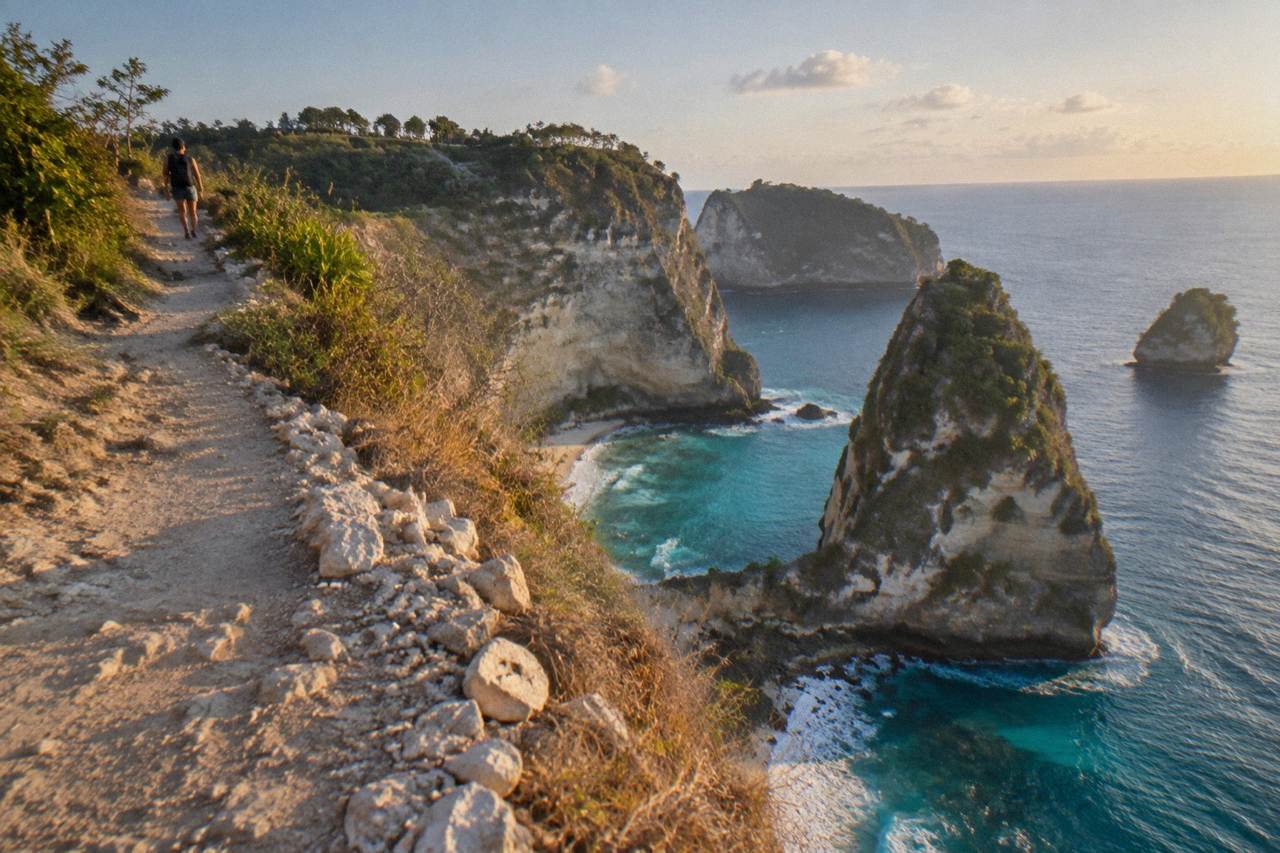
Because the September 2026 death at Kelingking happened after a visitor left the marked path, and the descent itself is steep with loose rock and crude railings. The trail takes about 20 minutes down and far longer back up. Stay behind the viewpoint railings at the top, and if you descend, do it in sensible shoes with time to spare.
The cliff lift that once promised to change all this is not coming soon. Construction was halted in October 2025 over planning, environmental and safety breaches; in September 2026 the investor won an administrative court case in Denpasar, the provincial government appealed, and no work has restarted. The unfinished structure still stands, with no opening date. Anyone selling you a lift ticket is selling something that does not exist. The full story is tracked at the safety and lift report on the cliff falls.
The stairs themselves are the island's most demanding short walk. The top section has built steps; below that it is rock and trail with a low bamboo handrail. Reports vary on timing, but the honest version is: about 20 minutes down, and the ascent takes considerably longer, anywhere from 45 minutes to over 90 depending on fitness and heat. The view from the railing at the top is the one in every photograph anyway.
What to do instead: if you only want the T-Rex silhouette photo, the clifftop platform delivers it without the descent. If you want the beach angle, go early before the midday heat, carry water, and turn back the moment the path feels beyond you. The dedicated Kelingking Beach stairs and lift guide covers the descent in detail.
Should You Ride A Scooter On Nusa Penida's Roads?
Only if you are an experienced rider. The main loop roads are mostly asphalted now, but side and coastal routes remain narrow, steep and potholed, and there is no public transport and a thin emergency response. A private car with driver costs IDR 600,000 to 800,000 per car for a full day, and it is the fix most visitors should take.
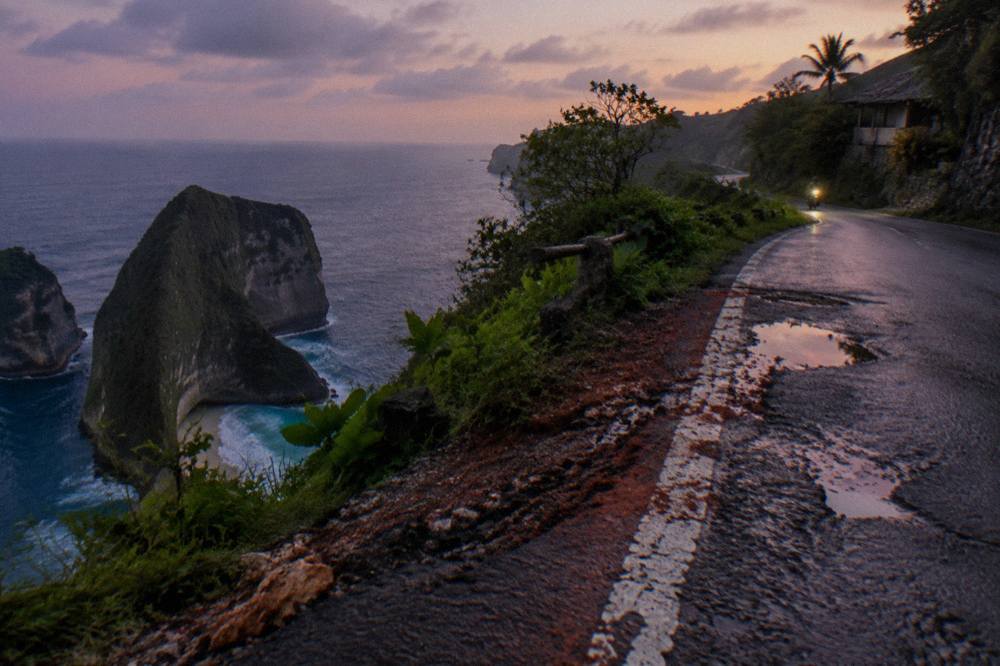
The island is about 200 square kilometres with no bus network, so the scooter temptation is real: rental is cheap and the distances look short on the map. The map lies. Toyapakeh to Kelingking is 30 to 60 minutes of driving depending on the road, Kelingking to Diamond Beach takes one to one and a half hours, and the gradients between viewpoints are steep enough that inexperienced riders regularly abandon the plan halfway. The local guidance is blunt about this, and the getting-around guide for the island recommends a driver over a rental for most visitors.
Roadworks add a second layer of friction. A roughly 2 km upgrade of the Kelingking access road began in July 2026, and a 7.35 km upgrade of the Diamond Beach, Atuh and Peguyangan routes began in August 2026. The work is good news long term, but it means loose surfaces, machinery and delays on exactly the roads a first-time visitor will be using.
What to do instead: hire a car with a driver, or book a tour that includes island transport. The private car hire with driver listing on this roster runs from $27 per person, rated 4.8 from 2,740 reviews, fuel and driver included, and it converts the island's worst driving into someone else's job. For a deeper look at the trade-offs, the scooter rental and road safety guide weighs costs honestly.
What Happens If You Forget The Island Retribution QR?
You pay at the harbour counter or you delay your whole group. Nusa Penida charges an island retribution of IDR 25,000 per adult and IDR 15,000 per child aged 4 to 13, infants free, paid online with a QR voucher scanned on arrival. It applies to all visitors, domestic and foreign, and it is separate from the Bali tourist levy of IDR 150,000. Once you've sorted the fee, the full guide to catching a boat from Bali to Nusa Penida covers the Sanur departure options and where the QR voucher gets scanned.
Two payments, two systems, and confusing them is the most common paperwork mistake on the route. The Bali foreign tourist levy is paid once per trip at the official Love Bali portal before you travel, with exemptions for diplomatic, crew and KITAS/KITAP holders. The island retribution is a different scheme entirely: one voucher covers a single entry and, usefully, also covers Kelingking, Broken Beach and Angel's Billabong the same day with no re-payment at those sites. The official details, including the Klungkung Regency Regulation No. 8 of 2023 legal basis, sit on the official retribution portal.
One quirk worth knowing: Diamond Beach is currently barred from collecting entry fees while its site operator sorts out licensing, so the fee situation there can change without warning. Do not budget around a Diamond Beach ticket price, and check what your tour price already includes before paying anything twice.
What to do instead: pay both online the night before, screenshot both QR vouchers, and check whether your tour includes entrance fees. The all-inclusive tours on this roster, like the East and West Highlights tour from $33 per person, list entrance fees to Diamond Beach, Kelingking and Angel's Billabong in the inclusions, which removes the guessing. The entrance fee and Bali tourist levy guide has the full breakdown.
Can You Visit Temples On Nusa Penida Without A Sarong?
Not inside them. Goa Giri Putri requires a sarong, shoulders and knees covered, and the rule is enforced, with sarongs rentable at the entrance and a fixed entry of IDR 50,000 per person. The cave temple also closes to tourists during major ceremonies, so check before you plan a visit around it.
The temple inside the cave is one of the east coast's genuine surprises, fifty-odd steps up from the road and then a cavern that opens far larger than the entrance suggests. It is also a working religious site, and the dress standard is not a suggestion. A priest-led purification precedes entry for worshippers, and tourists are guests in someone's place of worship, a distinction that shows up in every dispute about behaviour on the island.
The same logic applies across the island's temples. Pura Penataran Ped and the smaller shrines expect a sarong and sash and a donation; no verified fixed fee exists for them, so carry small notes and follow the local lead. The Goa Giri Putri guide records the hours, about 07:00 to 17:00 daily, and the ceremony closures.
What to do instead: carry or rent a sarong, dress modestly, and treat ceremony closures as a reason to return rather than an obstacle. Most east-coast tours, including the East Nusa Penida private tour from $65.86 per person, rated 4.9 from 80 reviews, build the temple into a day that also covers Diamond Beach and Atuh.
Is The Wet Season Sea Really A Problem?
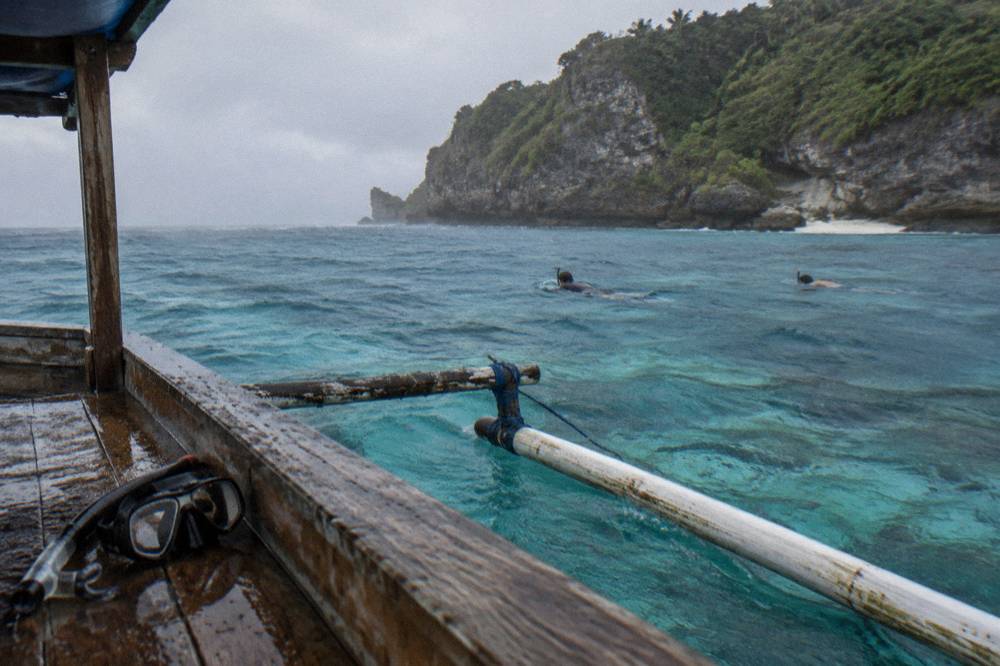
Yes, between November and March. The wet season brings rougher swell, reported visibility of 5 to 12 metres against 15 to 30 in the dry season, and a higher chance that exposed snorkel sites get cancelled. Manta sightings continue year-round, but the sea state, not the mantas, is what cancels your day.
The south-coast sites take the swell directly. Manta Point, the deeper of the two manta stations, becomes the first casualty of a big swell, and operators reroute to Manta Bay or cancel outright. Even the Sanur crossing itself gets lumpier, 25 to 60 minutes of fast boat depending on conditions, and the rough end of that range lands in the wet months. The rainfall numbers tell the story: January averages 288 mm across 20 rainy days, while August averages 35 mm across one.
The fix is calendar-based. April to October is the dry season, with the calmest sea and the best visibility, and July to October adds the chance of mola mola, the ocean sunfish, at Crystal Bay. Within the wet season, November and December are milder than January to March, and operators still run, they just choose the sheltered sites.
What to do instead: travel April to October if the trip is built around snorkeling, and if you are locked into wet-season dates, book a tour with a flexible itinerary and free cancellation, which every listing on this roster carries. The weather and best time to go guide has the month-by-month detail.
| Period | Sea state | Visibility | What it means for you |
|---|---|---|---|
| April to October (dry) | Calm, fewer cancellations | 15 to 30 m | Best window for mantas and crossings |
| July to October | Calm, busy | 20 to 30 m at Crystal Bay | Mola mola season at Crystal Bay |
| November to December | Moderate to rough | 8 to 20 m | Operators reroute to sheltered bays |
| January to March (wet) | Rough swell, most cancellations | 5 to 12 m | Expect itinerary changes and delays |
Why Does The Earliest Fast Boat Matter So Much?
Because the last Sanur departure is around 17:00 and the crossing runs 25 to 60 minutes, so a late start compresses everything. The first boats leave around 06:30 to 07:30, and 20-plus daily departures across operators means the early slots are there for the taking. A 07:30 arrival buys you a full day; a 10:00 arrival buys you a rushed half.
The arithmetic of a Nusa Penida day is unforgiving. Toyapakeh to Kelingking alone is 30 to 60 minutes of driving, Kelingking to Diamond Beach another one to one and a half hours, and each viewpoint deserves more time than a compressed schedule allows. Every hour lost at Sanur harbour is an hour taken from the island, and the return boats fill from mid-afternoon onward. Fares run about IDR 150,000 to 250,000 one way, and the schedule detail sits with the how-to-get-there guide.
The alternative mistake is worse: trying to see both coasts on a late arrival. The east and west highlights are roughly two hours of driving apart, and the tours that cover both, like the East and West Highlights full-day tour, run 8 to 10 hours precisely because the island does not compress.
What to do instead: book the earliest boat, or better, book a tour that bundles the boat and holds the schedule for you. The all-inclusive day trips on this roster, including the Nusa Penida All-Inclusive Day Trip from $94.09, rated 4.8 from 3,705 reviews, include round-trip fast boat tickets in the price so the timing is the operator's problem, not yours. The fast boat to Nusa Penida guide covers operators and fares.
What I Wish I Knew Before Going To Bali?
The wish-list is mostly paperwork and timing: the Bali tourist levy of IDR 150,000 must be paid online before travel, the island retribution QR is scanned at the Penida harbour, the dry season runs April to October, and the famous beaches ban swimming. Knowing these four things before booking changes the whole trip from reactive to relaxed.
Bali's side of the journey is where most avoidable mistakes happen. The levy is paid at the official portal or at airport and port counters, and unpaid visitors get directed to pay on the spot at checkpoints rather than refused entry, but the queue is the penalty. In-flight announcements now remind international arrivals, and spot checks happen at major attractions. It is a five-minute online task the night before departure, and it is the difference between walking out of the airport and standing in a counter line.
The second wish-list item is structural: Nusa Penida does not reward improvisation the way Bali's mainland does. Canggu forgives a late start; Toyapakeh does not. The island's tours are popular precisely because the driving, the boats and the fees are the hard parts, and the roster reflects that, from the $27 private car hire to the $100 premium yacht trips with lunch at a beachfront restaurant. A guest review on the live listings repeatedly notes the same thing: the day felt short and the logistics felt invisible.
What to do instead: pay the levy, screenshot the QR codes, book a structure, and read the Nusa Penida day trip from Bali guide before choosing between independent and guided. The homepage comparison on Nusa Penida Tours puts the tour options side by side.
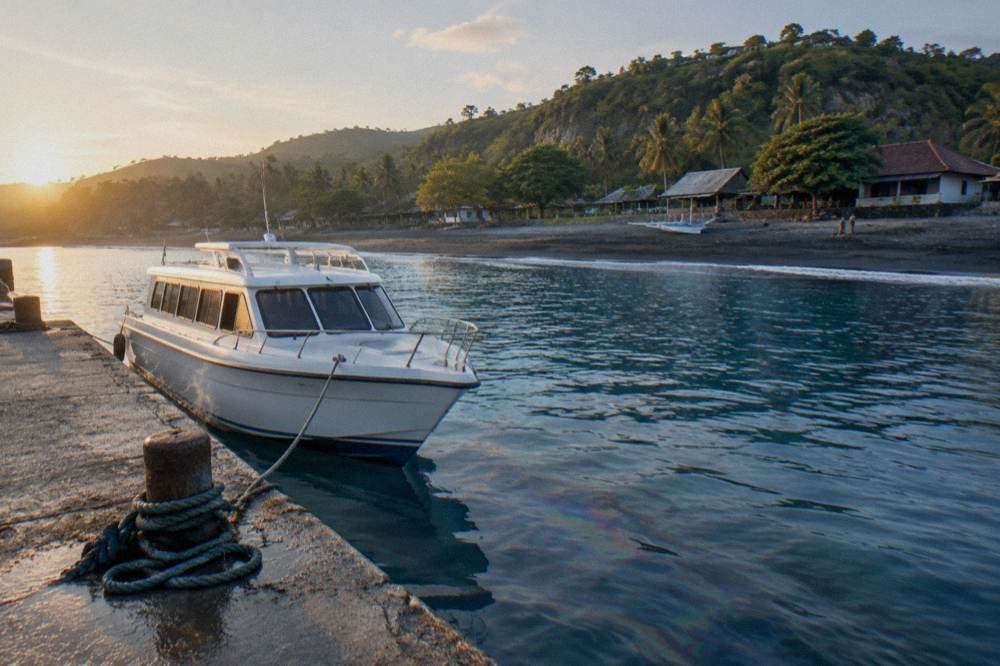
The pattern across every item on this list is the same: the island is not dangerous, it is unforgiving of shortcuts. Pick the structure that suits you, an all-inclusive tour with transfers from $42 per person, a fully private day trip, or a car with driver from $27 per person, and the avoid-list mostly takes care of itself.
Common Questions About Avoiding Trouble On The Island
What Should I Avoid In Nusa Penida?
Avoid swimming at Kelingking, Diamond Beach and Angel's Billabong, leaving marked cliff paths, riding a scooter without experience, arriving without the island retribution QR, entering temples without a sarong, trusting the wet-season sea, and missing the earliest fast boat. Each has a simple alternative, from sheltered swim bays to hiring a driver.
Is Nusa Penida Safe For Tourists?
Yes, for visitors who respect the bans and the roads. The serious incidents on the island involve banned swims, cliff edges off the marked path and inexperienced scooter riding. Booked tours with local drivers carry the risk well, and every listing on this roster offers free cancellation.
What I Wish I Knew Before Going To Bali?
Pay the IDR 150,000 Bali tourist levy online before travel, screenshot the QR voucher, travel in the April to October dry season for the calmest sea, and know that Nusa Penida's famous beaches ban swimming. These four facts, known in advance, remove most of the friction from the trip.
Can You Swim At Kelingking Beach?
No. Swimming has been banned at Kelingking since February 2023 because of strong currents and shore break, with no lifeguards on the sand. The clifftop viewpoint is the safe way to see it, and Crystal Bay or Gamat Bay are the swimming alternatives on tour itineraries.
Do I Need To Pay The Island Retribution If My Tour Includes Fees?
The harbour retribution, IDR 25,000 per adult and IDR 15,000 per child aged 4 to 13, applies on arrival to all visitors, though some tours list attraction entrance fees in their inclusions. Check your listing's inclusions before paying anything twice, and keep the QR voucher handy for the harbour scan.
What Is The Best Month To Visit Nusa Penida?
April to October, the dry season, brings calmer seas and visibility of 15 to 30 metres. July to October adds the mola mola season at Crystal Bay, though crowds peak in July and August. November to March is rougher, with more cancellations at exposed snorkel sites.