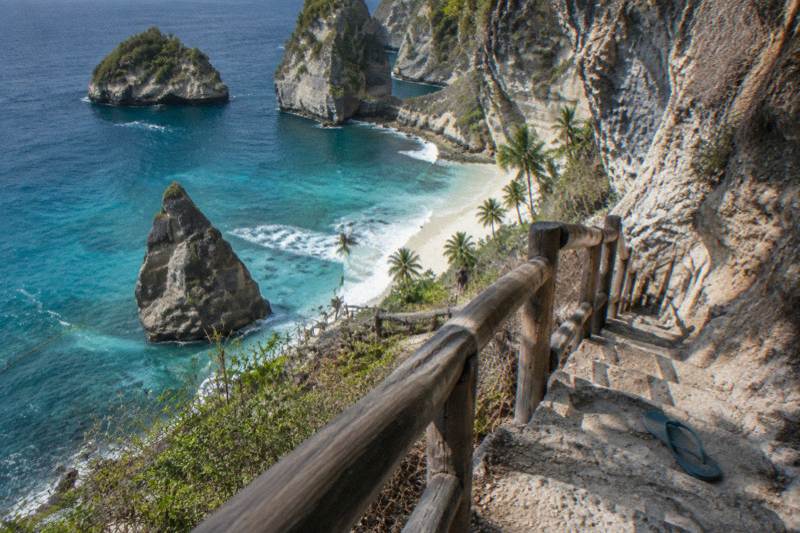
Is Nusa Penida Cursed For Tourists?
No verified source supports a curse on Nusa Penida. This article separates the online rumour from the real rules: temple dress, the Goa Giri Putri fee, island levies and respectful etiquette.
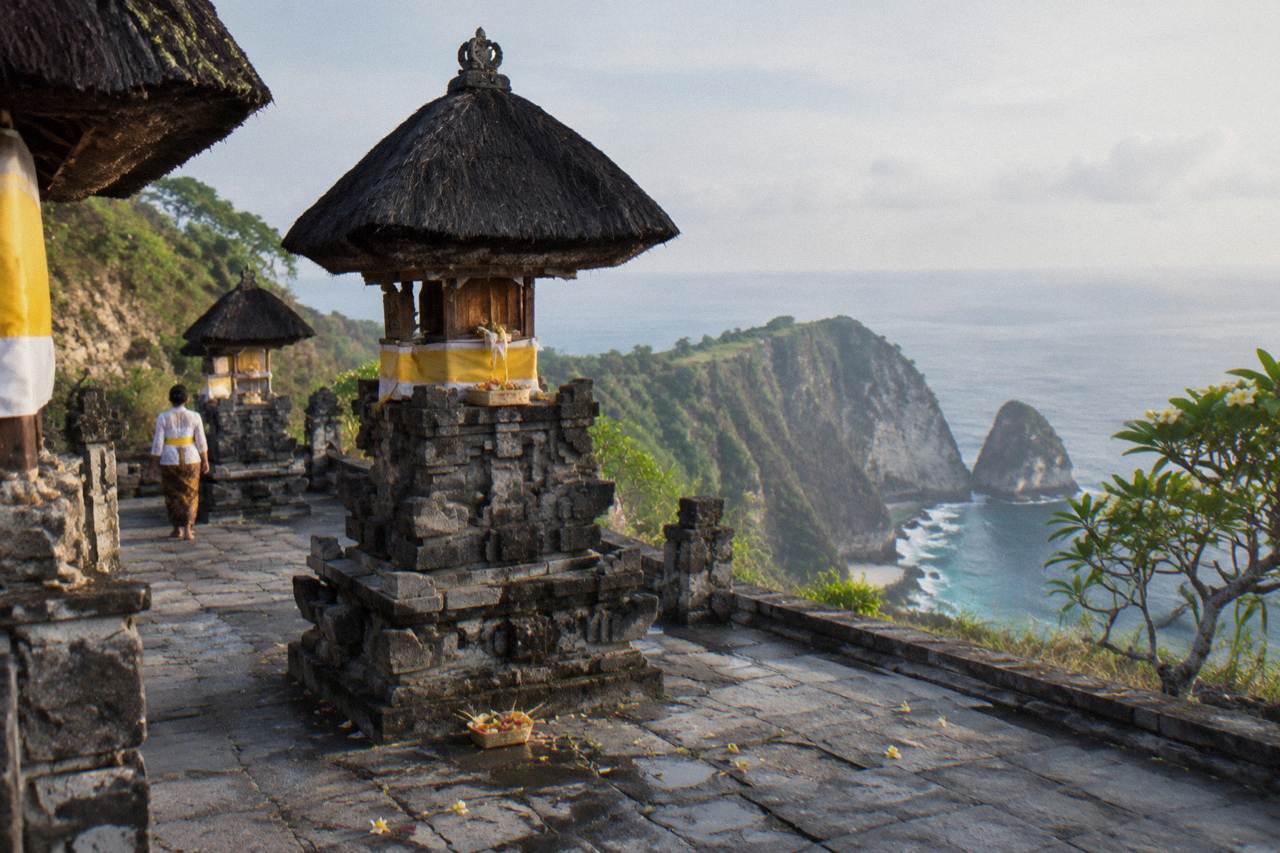
Is Nusa Penida Cursed For Tourists?
No, and no verified source supports the claim. The curse idea circulates as an online rumour, usually attached to dramatic cliff photos and second-hand story fragments, but there is no official record, no local regulation and no documented tradition that describes Nusa Penida as cursed. What the island does have is a living temple culture, fixed visitor rules and a set of fees, and those are the things worth understanding before a visit. For a practical rundown of the banned swims, risky cliff paths, scooter rules and temple dress codes, read what to avoid in Nusa Penida before you plan the trip.
The rumour tends to travel in the same packaging as the island's most shared photographs. Someone posts the T-Rex silhouette of Kelingking Beach, a caption mentions bad luck or spirits, a comment thread amplifies it, and within a few reshuffles the phrase "cursed island" starts appearing in search suggestions. None of that chain involves a primary source. It involves repetition.
We compared the island's documented visitor framework against the rumour, and the gap is wide. The verified record covers temple dress standards, a fixed entrance fee at Goa Giri Putri, an island retribution collected at the harbour, a Bali tourist levy paid before travel, and swimming bans at specific beaches backed by real safety incidents. Every one of those is checkable. The curse is not.
That distinction matters for planning. A traveller who arrives worried about a curse may skip the etiquette that actually governs visits, like carrying a sarong or waiting when a temple closes for a ceremony, and instead spend energy on something no one on the island is asking of them. The respectful path is documented, mundane and easy to follow.
For travellers comparing day trip options, the practical question is not luck but logistics: which coast, which inclusions, which pickup. A private guided west coast option such as the West Nusa Penida Kelingking and Broken Beach tour bundles entrance tickets, lunch and a guide driver, which removes most of the guesswork at the sites the rumour usually clings to.
Where Does The Curse Rumour Come From?
The rumour appears to grow out of the island's dramatic landscape and its genuine dangers, retold online as folklore. Steep cliffs, banned swimming areas and real accidents give storytellers material, and social platforms compress that into a "cursed island" label. No verified legend, spirit name or documented tradition behind the claim exists in any source we reviewed, so it should be treated strictly as internet lore rather than local belief.
Nusa Penida's cliffs are genuinely extreme, and the island's safety record at certain spots is genuinely serious. Swimming has been banned at Kelingking Beach since February 2023 because of strong currents and shore break, with no lifeguards on duty. Angel's Billabong closed to swimming after a fatal accident. Diamond Beach prohibits swimming because of rip currents. These are documented, physical reasons for caution, and the local guidance is published openly.
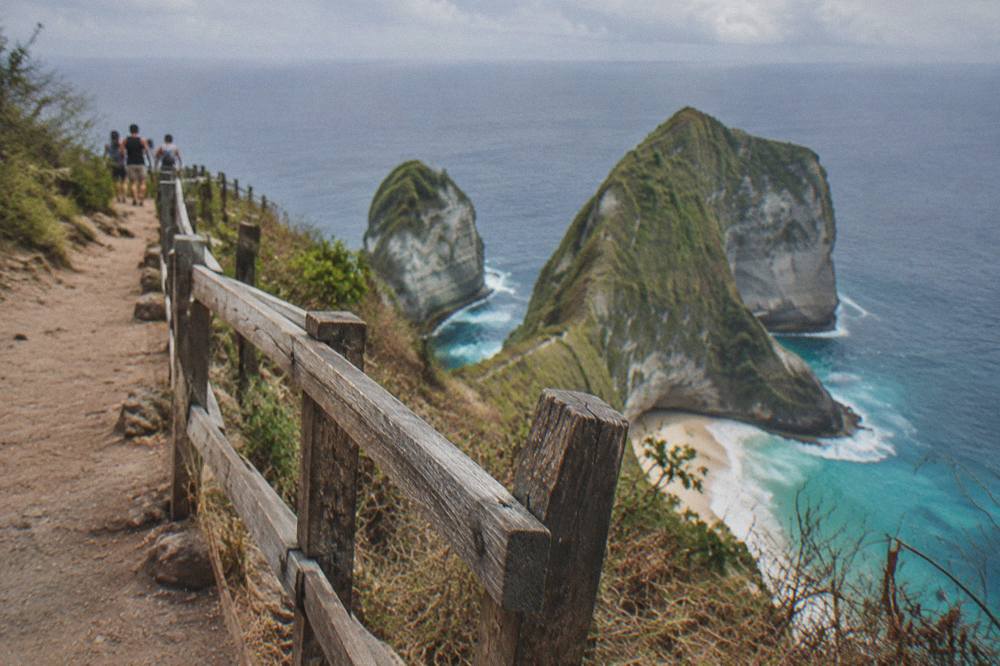
When those facts travel without their context, they can mutate. A drowning caused by a rip current becomes, two retellings later, a story about vengeful spirits. A cliff fall becomes a warning about bad luck. The physical explanation, currents and unguarded drops, is both simpler and more useful, and it is the one the local guides and the official guidance actually give.
There is also a quieter source of the rumour: the island's history as a place of exile in Balinese kingdoms, which online summaries sometimes dress up in supernatural language. The historical record of exile is real and interesting, but nothing in it describes a curse, and inventing spirit stories on top of it would be exactly the kind of fabrication this article is written to avoid. If a source cannot name where a legend comes from, treat it as decoration, not fact.
For a grounded, incident-free structure to a day on the west coast, a private guide driver arrangement like the West Nusa Penida private guided tour is a reasonable way to stay on the marked paths at the viewpoints the rumours love most.
What Do Manta Ray Tattoos Symbolize?
Manta ray tattoos generally symbolize grace, freedom and navigation, drawn from the animal's gliding movement and from ocean symbolism in Pacific and tropical cultures. In Bali specifically, manta rays carry no documented curse association at all; they are simply the island's most famous marine residents, protected by a code of conduct. Any tattoo meaning beyond that is personal to the wearer rather than a fixed tradition.
The manta connection to Nusa Penida is real and well documented, which is probably why the tattoo question gets asked by visitors at all. Mantas are seen year-round at the island's cleaning stations, with operator-reported sighting rates of roughly 85 to 95 percent at Manta Point and 60 to 85 percent at Manta Bay. Snorkel tours to see them are among the most booked products on the island, and the marine protected area around the island enforces rules: stay at least 3 metres away, no touching, no chasing, no flash photography.
None of that is mystical. It is conservation practice, and it works because the animals are protected rather than feared. A traveller with a manta tattoo arriving in Nusa Penida is arriving at one of the best places on earth to see the animal that inspired it, which is a nicer story than any rumour.
The symbolism question is worth answering honestly rather than inventing lore: tattoo meanings vary by culture and by person, and no verified Balinese tradition assigns a specific meaning to a manta tattoo. What Bali does assign is protective status to the animal itself. Readers planning to snorkel with mantas can find the practical side, including the code of conduct, in the guide to manta point snorkeling.
How Should Tourists Dress At Nusa Penida Temples?
Standard temple dress applies: a sarong and sash, with shoulders and knees covered, and this is enforced rather than optional at working temples. Goa Giri Putri requires a sarong, which can be rented on site, and a priest leads a purification before visitors enter. Other temples expect a sarong and sash with a donation, and no fixed fee has been verified at most of them.
The dress code is the single most concrete piece of etiquette on the island, and it is the one travellers most often get wrong by simply not knowing. A sarong wraps the lower body, the sash ties at the waist, and the combination signals respect for a functioning religious site, not a photo prop. Shoulders and knees covered is the working minimum for both men and women.
| Requirement | Where it applies | What to do |
|---|---|---|
| Sarong and sash | All working temples, including Goa Giri Putri and Pura Penataran Ped | Rent on site if not carrying one; a small fee applies at Goa Giri Putri |
| Shoulders and knees covered | Temple grounds, including approach paths | Avoid sleeveless tops and short shorts on temple days |
| Purification before entry | Goa Giri Putri specifically | Follow the priest-led sequence; visitors wait if a ceremony is in progress |
| Donation | Temples other than Goa Giri Putri | Give what is appropriate; no fixed amount is verified, so do not rely on a posted price |
Closures matter as much as clothing. Goa Giri Putri, the cave temple in the island's interior, may close to tourists during major ceremonies, and the polite response is to wait or return, not to negotiate. The temple sits about fifty steps up from the road and is open daily roughly 07:00 to 17:00 outside ceremony days, with a fixed entrance fee of IDR 50,000 per person that replaced the older donation system. Details are published on the local temple guide.
This is where the curse rumour and reality part ways most clearly. Nothing about the dress code is supernatural. It is the same standard that applies across Bali, applied to island temples that happen to sit beside dramatic scenery, and following it is both easy and genuinely appreciated.
What Is The Goa Giri Putri Temple Experience Like?
Goa Giri Putri is a large cave temple reached by a short climb from the road, entered through a narrow opening that widens into a vast interior chamber. Visitors pay a fixed IDR 50,000 fee, wear a rented sarong, and are led through a purification by a priest before entering. The temple may close for major ceremonies, so timing matters.
The entrance is the memorable part: a slit in the rock face that looks barely wide enough for one person, opening into a cavern large enough to hold multiple shrine areas. The climb from the road is about fifty steps, modest by island standards, and the site sits roughly 30 minutes from Toyapakeh, which makes it a natural pairing with an east coast route or a full-day loop.
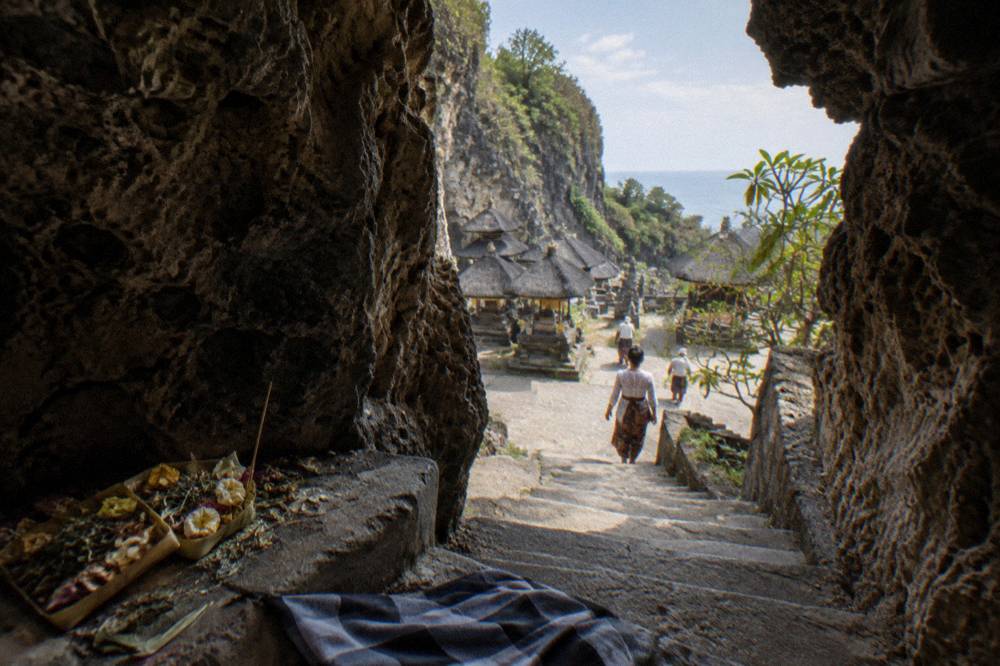
The priest-led purification is a small, quiet sequence, and visitors are expected to follow rather than photograph through it. This is a working temple with a resident religious community, not a staged attraction, and the IDR 50,000 fixed fee is what replaced the older donation arrangement. The fee, opening hours and dress standard are documented on the temple's information page, which is the right place to check before travelling, because ceremony closures are announced rather than predictable.
For itinerary planning, the cave temple pairs naturally with the east coast spots, and an east-and-west full-day structure like the Bali/Nusa Penida East & West Highlights full-day tour covers both sides of the island in one 8 to 10 hour run, with entrance fees to Diamond Beach, Kelingking and Angel's Billabong included in the listing. That inclusion matters here, because it removes the uncertainty around what is paid where, which is a genuine point of confusion for first-time visitors.
Which Fees And Rules Actually Apply To Visitors?
Three verified payments apply: the Bali foreign tourist levy of IDR 150,000 once per trip, the Nusa Penida island retribution of IDR 25,000 for adults and IDR 15,000 for children aged 4 to 13, and site-specific fees such as the IDR 50,000 Goa Giri Putri entrance. The retribution is paid once and covers Kelingking, Broken Beach and Angel's Billabong the same day. None of these is a curse; all are published official charges.
The Bali levy is paid before travel, online through the official Love Bali portal, or at airport and port counters, and it produces a QR voucher. The island retribution is separate: it applies to all visitors, domestic and foreign, and its QR voucher is scanned at the harbour on arrival. The official retribution portal states the amounts and the single-voucher basis, and a voucher bought once covers the three west coast headline sites that day without re-payment.
| Payment | Amount | Who pays | When and where |
|---|---|---|---|
| Bali foreign tourist levy | IDR 150,000 once per trip | Foreign tourists, with exemptions for diplomatic, crew and KITAS/KITAP holders | Online before travel or at arrival counters |
| Nusa Penida island retribution | Adult IDR 25,000, child 4 to 13 IDR 15,000, infants free | All visitors | QR voucher scanned at the harbour; covers Kelingking, Broken Beach, Angel's Billabong same day |
| Goa Giri Putri entrance | IDR 50,000 per person | All visitors | At the temple, sarong rental available |
| Kelingking parking | IDR 5,000 scooter, IDR 10,000 car | Anyone parking | At the site |
Beyond the headline fees, the honest answer about site fees is that some are simply unknown. No verified fee has been confirmed for Atuh, Tembeling or the Thousand Islands viewpoint, and Pura Penataran Ped has no verified fixed fee, only an expected donation. Diamond Beach is open, but the site operator has been barred from collecting entry fees while licensing is sorted out. The practical advice is to check what a booked tour includes, because many island tours bundle entrance tickets, and to carry modest cash for parking and donations.
The full breakdown of the levy and the island fee, including how the QR system works, is in the guide to the entrance fee and Bali tourist levy, which goes deeper than this article can.
Is Nusa Penida Safe For Tourists Beyond The Rumour?
Yes, with the same cautions as any dramatic coastline. The verified risks are physical: unguarded cliff edges, banned swimming zones with strong currents, and steep, narrow roads best handled by an experienced rider or a hired driver. No supernatural risk appears in any official guidance, and the documented safety rules are published openly, which is the opposite of a curse.
The safety record is worth stating plainly because the rumour distorts it. The bans at Kelingking, Angel's Billabong and Diamond Beach each trace to real incidents and real water conditions, and they are enforced with signage and local guidance. The cliff paths are steep with loose rock in places; the descent at Kelingking takes about 20 minutes down and much longer back up, and staying on the marked path is the entire safety briefing. The fuller picture, including the road situation, is in the article on whether Nusa Penida is safe for tourists.
Roads deserve their own honest note. The island has no public transport, most main roads are now asphalted, and side routes remain steep and narrow. Two upgrade projects, the roughly 2 km Kelingking access road and the 7.35 km Diamond and Atuh area resurfacing, began in mid-2026, so conditions keep improving, but a first-time visitor is generally better served by a driver than by a rented scooter. The private car hire with driver option runs from $27 per person with a 4.8 rating from 2,740 reviews, which for many travellers is cheaper than the risk.
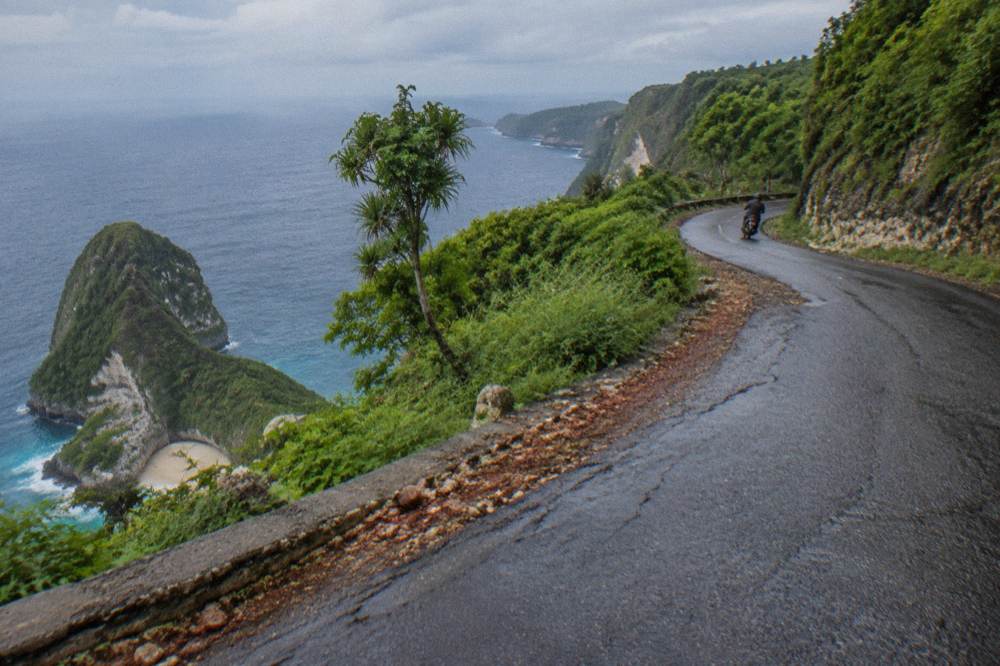
The temple etiquette side of safety is behavioural rather than physical: dress correctly, do not fly drones near temples or wildlife, and accept closures for ceremonies gracefully. Those rules are documented and stable. The Kelingking Beach stairs and lift guide covers the one site where the gap between rumour and record is widest, including the halted cliff lift structure that features in so many of the island's stranger headlines.
How Do You Visit Respectfully On A Day Tour?
Book a tour that includes entrance fees, follow the guide at temples, carry or rent a sarong, and keep to marked paths at viewpoints. Most full-day products on the island bundle tickets, transport and a local guide, which handles the logistics of respectful visiting for you. The etiquette itself is short: dress properly, arrive patient, and treat closures as part of the calendar rather than an inconvenience.
The practical case for a bundled day tour is exactly this. A listing that includes entrance tickets, a local driver-guide and hotel pickup removes the small frictions where uncertainty breeds rumours, and the island's roster has several. The all-inclusive Nusa Penida full-day tour with transfers runs from $42 per person with a 4.6 rating from 2,310 reviews, includes the fast boat, island transport, entrance fees and bottled water, and notes a local retribution line item for arrivals without a prepaid voucher.
Choosing between a shared and a private structure comes down to tempo. A private tour lets a small group linger at a viewpoint or wait out a ceremony; a shared tour keeps the price low and the schedule fixed. Either way, the guide handles the temple dress logistics and knows which sites are open on a given day, which matters more on this island than on most, precisely because its religious calendar is active.
One last respectful habit costs nothing: pay the levies through the official channels before arriving. The Love Bali levy and the island retribution both use QR vouchers, both are quick, and paying them properly means no scrambling at the harbour. Travellers weighing the overall budget question can start with the article on how much a Nusa Penida tour costs, which breaks down what the listed prices do and do not cover.
The honest summary for anyone asking the original question: Nusa Penida Tours and the island's own published rules give a visitor everything needed for a smooth, respectful trip, and none of it mentions a curse. The rumour is noise; the etiquette is the signal.
Common Questions About The Curse Rumour
Is Nusa Penida Cursed For Tourists?
No. No verified source, official record or documented local tradition supports a curse on Nusa Penida. The idea circulates as an online rumour built from dramatic scenery and real safety incidents, and it should be treated as internet lore rather than local belief.
What Do Manta Ray Tattoos Symbolize?
Generally grace, freedom and navigation, drawn from the animal's gliding movement and broader ocean symbolism. No verified Balinese tradition assigns a fixed meaning to a manta tattoo, and in Nusa Penida the animals are protected marine residents governed by a snorkeling code of conduct, not by any supernatural association.
How Should Tourists Dress At Nusa Penida Temples?
Wear a sarong and sash with shoulders and knees covered. Goa Giri Putri requires a sarong, rentable on site, and leads visitors through a priest-led purification before entry. Other temples expect a sarong and sash plus a donation, with no fixed fee verified at most of them.
Is Nusa Penida Safe For Tourists?
Yes, with ordinary coastal cautions. The verified risks are physical: unguarded cliffs, swimming bans at Kelingking, Angel's Billabong and Diamond Beach, and steep roads best handled by an experienced rider or a hired driver. No official guidance mentions any supernatural risk.
What Fees Do Visitors Actually Pay On Nusa Penida?
The Bali foreign tourist levy of IDR 150,000 once per trip, the island retribution of IDR 25,000 per adult and IDR 15,000 per child aged 4 to 13, and site-specific charges such as the IDR 50,000 Goa Giri Putri entrance. Some site fees remain unverified, so check what a booked tour includes.