Why Is Nusa Penida So Famous?
The real reasons Nusa Penida became famous: the Kelingking cliff, year-round manta rays, Diamond Beach and Crystal Bay, and the fact you can see it all on a day trip from Bali.
Why Is Nusa Penida So Famous?
Nusa Penida is famous for four things stacked on one small island: the T-Rex shaped cliff at Kelingking Beach, manta rays that can be snorkeled with year-round, the white sand of Diamond Beach and Crystal Bay, and the fact that all of it sits under an hour by fast boat from Bali, making the coastline doable in a single day. The photography boom of the last decade did the rest. A place that barely appeared in guidebooks a decade ago now anchors thousands of itineraries. If you want to see how those cliffs and bays stack up against the rest of the coast, the guide to Bali's prettiest beach and the runners-up covers what each spot actually offers.
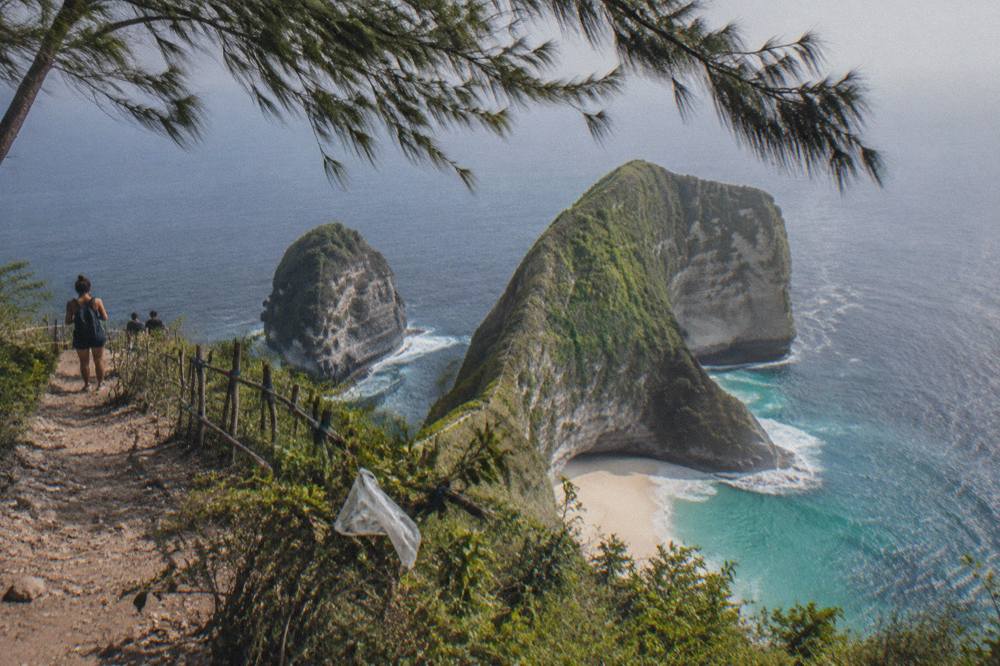
The island is about 200 square kilometres of limestone plateaus and steep cliffs off Bali's southeast coast, administratively part of Klungkung Regency. For most of its modern history it was better known for seaweed farming than tourism. What changed was not the island, it was the camera. The Kelingking viewpoint, where a headland drops into a cove in a shape most people read as a Tyrannosaurus profile, turned out to be almost impossible to photograph badly, and that single image carried Nusa Penida onto bucket lists worldwide as drone and social media photography spread.
Fame has consequences, and honest reporting means naming them. The island's roads, harbours and viewing platforms were built for a fraction of today's visitor numbers, and the 2026 roadworks program now reshaping the Diamond Beach and Kelingking access roads is a direct response to that pressure. A visitor who understands why the island is famous, and what that fame costs, plans a better trip. This article walks through each of the four pillars in turn, then the practical question almost every reader actually has: which of the famous sights can you realistically see in one day.
The fastest route to the headline sights is a combined east and west island tour, and the strongest-reviewed option on this roster is the East & West Highlights Full-Day Tour from operator Trip Gotik, rated 4.7 from 8,370 reviews and priced from $33 per person with free cancellation. It bundles the fast boat, island transport and entry fees at the three headline west-coast sites, which is the practical answer for anyone whose time on the island is measured in hours.
Why Is Kelingking Beach Famous?
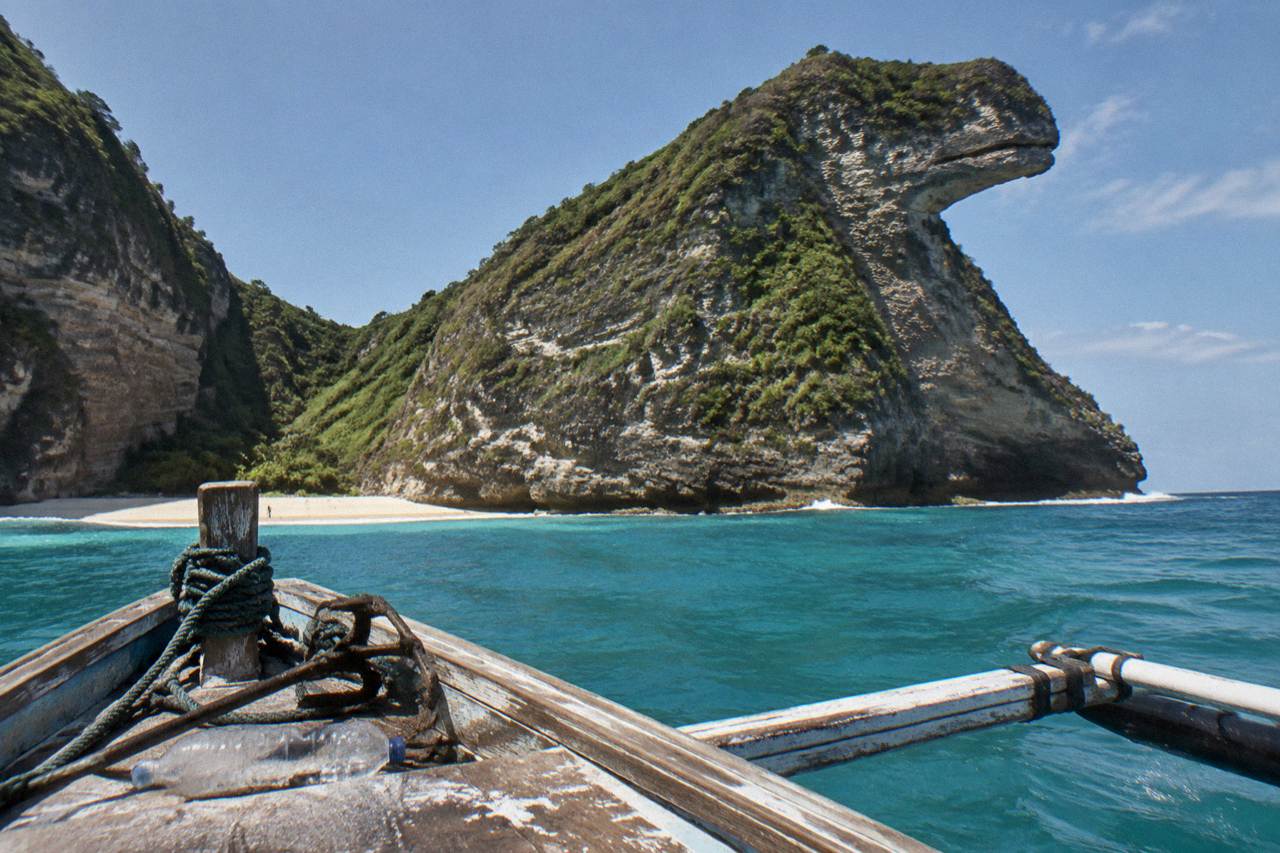
Kelingking Beach is famous for its cliff shape: a headland that ends in a narrow ridge, flanked by a steep drop on both sides, reads unmistakably as a Tyrannosaurus Rex profile rising over a white sand cove. The viewpoint photograph from the top became one of the most shared images in Indonesian tourism, and the beach below it, reachable only by a steep foot trail, became the island's signature destination. It is the single image most responsible for Nusa Penida's global recognition.
The viewpoint itself is free to stand at and requires no hike at all: the road from Toyapakeh takes roughly 30 to 60 minutes depending on traffic and roadworks, and the famous angle is a two minute walk from the parking area. What the photograph does not convey is scale. The trail down to the beach is on foot only, steep, with loose rock and a low bamboo handrail in the lower sections; a safe description is about 20 minutes down and considerably longer back up, with the ascent reported to take anywhere from 45 minutes to well over an hour depending on fitness. The site is documented in detail on the local guide page for Kelingking Beach.
Swimming at the beach has been banned since February 2023, and the ban is enforced for good reason: the shore break and currents beneath the cliff have no lifeguard cover. The trail itself demands respect too. In September 2026 a tourist died after leaving the marked path, a reminder that the same cliffs that make the viewpoint famous make the descent genuinely dangerous. Staying on the trail is not a formality here. If you're wondering whether the water is ever an option, our guide to swimming safely at Kelingking Beach explains the risks and where to take a dip instead.
There is also the unfinished lift. A glass elevator project intended to carry visitors down the cliff face was halted by the provincial government in October 2025 over planning, environmental and safety breaches; in September 2026 the investor won an administrative court case in Denpasar, but the province is appealing, no work has restarted and there is no opening date. The structure remains visible from the viewpoint, which has itself become a talking point. Anyone promising you a lift ride is promising something that does not exist.
For visitors who want the west coast headline without the full-day commitment, the One Day Nusa Penida Island West tour from Smile Nusa Penida, rated 4.7 from 197 reviews and from $35.5 per person, covers Kelingking, Broken Beach and Angel's Billabong in about 8 hours.
What Is The Most Famous Spot In Nusa Penida?
The most famous single spot is the Kelingking viewpoint, and it is not close: the T-Rex cliff photograph is the image that made the island's name, and it remains the one sight almost every visitor, tour and postcard converges on. Behind it, the most famous spot in the water is Manta Point, the cleaning station where snorkelers float above reef manta rays with wingspans of three metres or more. Between the two, land and sea, they define what people mean when they say Nusa Penida.
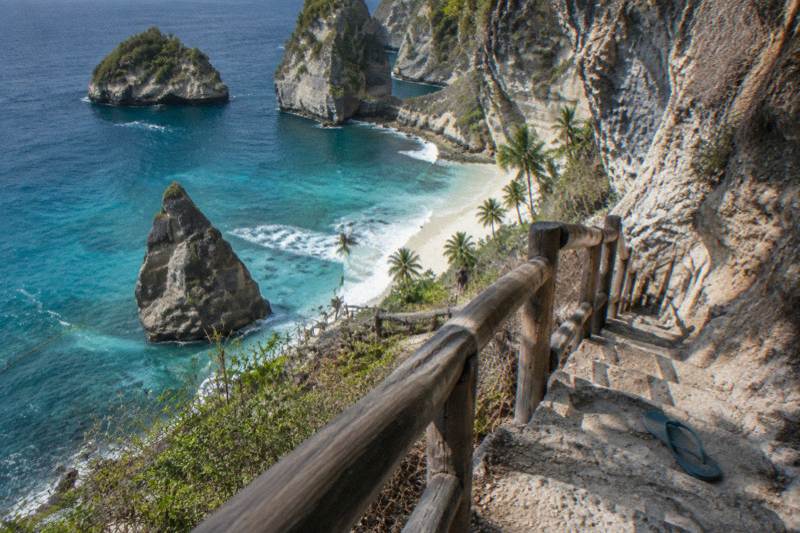
The pecking order matters for planning. Kelingking draws the biggest crowds and the earliest tour buses, which is why well-run tours time it for early morning or late afternoon. Broken Beach, the collapsed sea-cave arch twenty to thirty minutes further along the coast, is the second most photographed landform, and Angel's Billabong, a natural rock pool beside it, is third. On the east side, Diamond Beach holds the equivalent title: a strip of white sand under vertical cliffs, reached by a carved cliff staircase, with swimming prohibited because of rip currents.
If the viewpoint and its neighbours are the reason you are going, the combined east and west format is the one to lock in early, because the good boats and the good guides sell out first in peak season.
What Are The Must-Sees In Nusa Penida?
The verified must-sees are Kelingking Beach and viewpoint, Broken Beach, Angel's Billabong, Diamond Beach and Atuh Beach on land, and the manta snorkeling sites of Manta Point and Manta Bay in the water, with Crystal Bay and Gamat Bay as the calmer swimming and reef stops. That list is what nearly every tour on the island, from the $33 shared day trips to the $100 premium yacht products, is built around, and it fits comfortably into a well-run day.
The table below is the honest version of the must-see list: what each sight actually is, what you can and cannot do there, and the practical access notes that most listicles skip.
| Sight | What it is | What you can do there | Access notes |
|---|---|---|---|
| Kelingking viewpoint | T-Rex shaped cliff over a cove | Photograph from the top; steep trail to the beach | 30 to 60 minutes from Toyapakeh; trail on foot only, swimming banned |
| Broken Beach | Natural rock arch with a turquoise cove | Viewpoint only, no water access | About 40 minutes from Toyapakeh, 20 to 30 from Kelingking |
| Angel's Billabong | Natural rock pool | View at low tide; swimming prohibited | Same parking area as Broken Beach |
| Diamond Beach | White sand beach under cliffs | Viewpoint and carved staircase; swimming prohibited | Minutes from Atuh, shared parking; 1 to 1.5 hours from Kelingking |
| Manta Point and Manta Bay | Manta ray cleaning and feeding sites | Guided snorkeling, no touching, 3 m distance | Boat access only; conditions vary with swell |
| Crystal Bay | Sheltered bay with reef and turtles | Snorkeling and swimming, calmest April to September | Mola mola possible July to October |
Two practical notes keep that list honest. First, the island retribution: every visitor pays IDR 25,000 as an adult, IDR 15,000 for a child aged 4 to 13, infants free, paid online with a QR voucher scanned at the harbour, and one voucher covers Kelingking, Broken Beach and Angel's Billabong the same day with no re-payment. It is separate from the Bali foreign tourist levy of IDR 150,000, which most international visitors will already have paid before travelling. Second, many tours bundle entry fees into the ticket price, so check what your option includes before paying anything at a gate; the official details are on the island retribution portal.
Can You Really Snorkel With Manta Rays Year-Round?
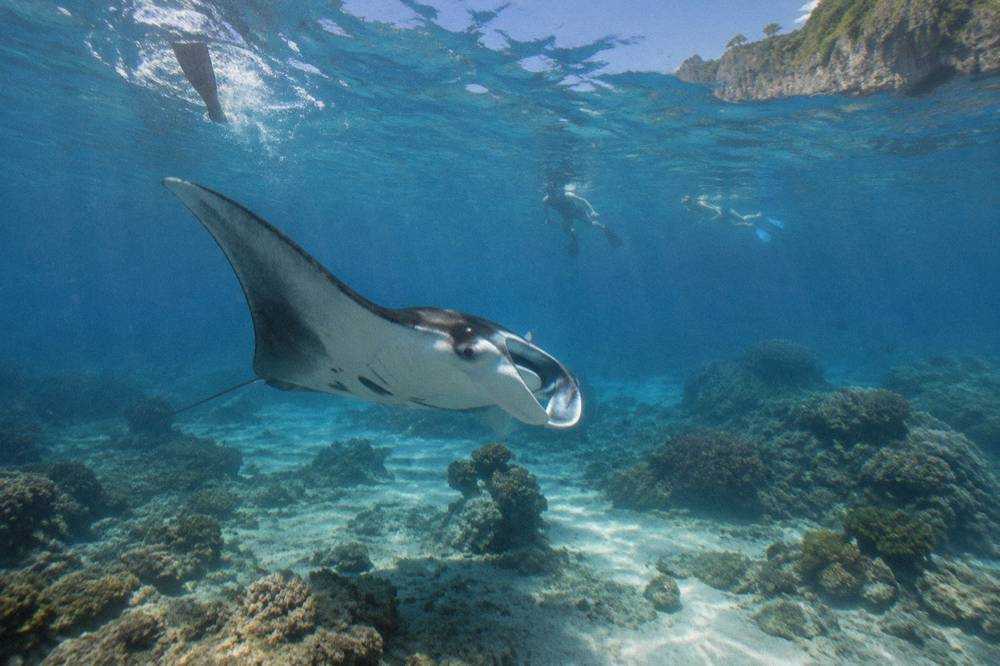
Yes, and this is the second pillar of the island's fame: reef manta rays are resident at Nusa Penida year-round, with no migration season, because they feed on plankton and visit fixed cleaning stations. Operators report sighting success of roughly 85 to 95 percent at Manta Point and 60 to 85 percent at Manta Bay, though no operator guarantees a sighting, and sea conditions, not the mantas, are what cancel trips. That reliability is rare in the world of big-animal snorkeling.
The distinction between the two sites matters. Manta Bay is shallower and more sheltered, built for snorkelers; Manta Point is the deeper cleaning station where mantas circle predictably but the swell is more exposed, which is why wet season trips from November to March reroute or cancel more often. Dry season, April to October, brings calmer seas and reported visibility of 15 to 30 metres; the wet season drops that to a rougher 5 to 12 metres. The comparison between the two sites is covered in detail by local operator guides to Manta Bay versus Manta Point.
The rules are strict and worth knowing before you book. The sites sit inside a protected marine area of roughly 20,000 hectares: snorkelers must stay at least 3 metres from the mantas, never touch, chase or block their path, and never use flash photography, and tours must be guide-supervised. The code of conduct is documented by the local manta ray code of conduct. A good tour briefs you on all of this on the boat; an operator that does not is an operator to reconsider.
For combining mantas with the famous land sights, the Manta Snorkeling & Land Tour from Bali by INDO COMPASS BALI is the roster's strongest performer in this family, rated 4.9 from 2,660 reviews and from $70 with fast boat transfers, full gear, lunch and all entry fees included. The wider set of guides lives on Nusa Penida Tours.
Why Did Diamond Beach And Crystal Bay Become So Photographed?
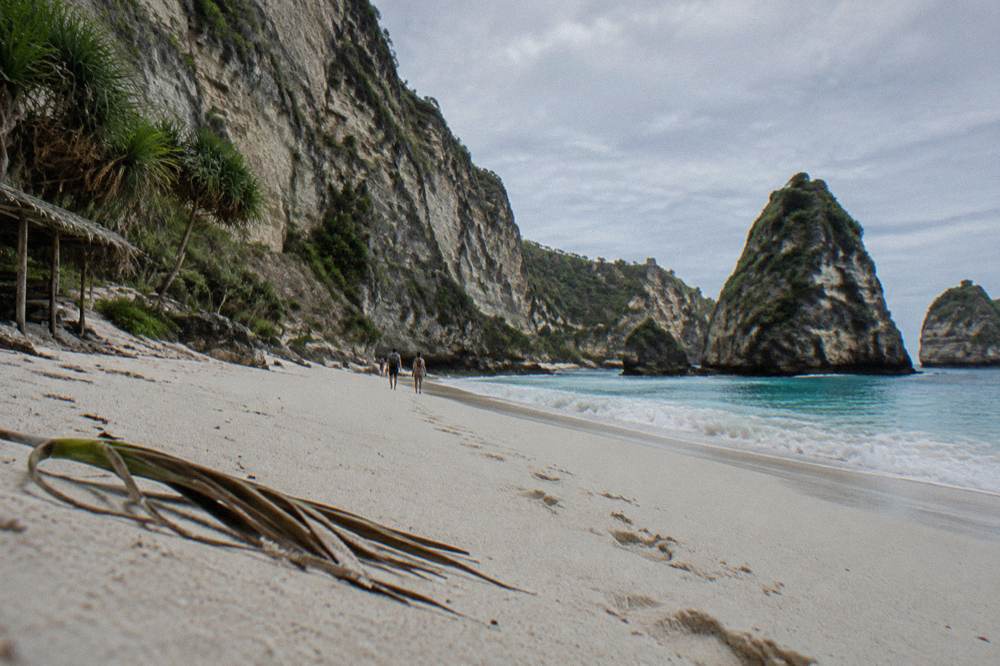
Diamond Beach became famous because it is the island's most perfect-looking beach, a strip of white sand between vertical limestone cliffs, reached by a staircase carved into the rock face, and because the viewpoint above it photographs spectacularly at almost any hour. Crystal Bay became famous as the calm, swimmable counterpart: a sheltered west-facing bay with a reef, turtles, and a seasonal chance of the ocean sunfish, the mola mola, between July and October. Together they give the island its two most usable beaches.
The honest caveat on Diamond Beach is the water itself. Swimming is prohibited because of strong waves and rip currents, and several drownings have been recorded there since borders reopened, which is why the staircase is treated as a viewpoint-and-beach walk rather than a swim trip. The site made local news in September 2026 when the Klungkung Tourism Office barred the site operator from collecting entry fees while its licensing is sorted, so the beach remains open; treat any fee you are asked for at the gate with caution and check what your tour already covers. The site details are documented on the local guide to Diamond Beach and Atuh.
Crystal Bay is the safer water stop, with reported visibility of 20 to 30 metres and its calmest conditions from April to September. It is also the mola mola site: those strange, deep-water sunfish rise toward the reef to be cleaned between July and October, peaking in August and September, which is why dive boats cluster there in late summer. Snorkelers see them less often than divers do, but the chance is real and seasonal, and it adds a second famous animal to the island's ledger alongside the mantas.
Is Nusa Penida Famous Because Of Social Media?
Partly, yes: the island's fame tracks the rise of drone and Instagram photography almost exactly, with the Kelingking image spreading worldwide as those platforms grew over the past decade, before which Nusa Penida was a seaweed-farming island that barely appeared in guidebooks. But the photography boom explains the speed of the fame, not the substance. The cliff, the mantas and the beaches were famous-worthy before anyone photographed them; social media simply removed the discovery lag that used to protect places like this.
The reporting voice matters here because the breathless version of this story, "the Instagram island", hides two things. First, the island earns its fame on substance: year-round manta snorkeling with those operator-reported success rates is genuinely rare, and the west coast cliff formations are geologically unusual, not just photogenic (see Manta Ray Seasons). Second, fame arrived faster than infrastructure. The 2026 roadworks, the harbour retribution system and the halted lift project are all symptoms of an island absorbing a decade of tourism growth in a few years, and a visitor who arrives expecting a polished resort island will be disappointed while a visitor expecting a rough-edged adventure will not be.
The practical takeaway is timing. Crowds peak in July and August, and the famous viewpoints are busiest between late morning and mid-afternoon when the day-trip buses from Bali converge. The dry season from April to October gives the best odds of calm seas for both the crossing and the manta sites; the wet season from November to March brings roughly 288 mm of rain in January against 35 mm in August, plus rougher swell at the exposed south-coast snorkel spots. The trade-off is thinner crowds and greener scenery.
Can The Famous Sights Be Done In A Day From Bali?
Yes, and this is the fourth pillar of the fame: the whole headline list is doable in a single day trip from Bali, because the fast boat crossing from Sanur takes roughly 25 to 60 minutes, with 20-plus departures daily across operators and one-way fares commonly between IDR 150,000 and 250,000. A day trip that would be impossible almost anywhere else in Indonesia is routine here, which is why the island anchors so many Bali itineraries.
The typical structure is simple. Most tours leave south Bali hotels between roughly 06:00 and 07:30, cross from Sanur to the Banjar Nyuh or Toyapakeh harbour area, then split the island day between the west coast cliffs and, on the longer options, the east coast beaches, returning on a late afternoon boat. The combined east and west products run 8 to 11 hours door to door. The east-only option is rare on this roster, only one listing covers it, while west-only and east-plus-west dominate, which tells you where the demand sits: Kelingking first, everything else second.
| Day trip format | Typical length | What it covers | Roster example |
|---|---|---|---|
| West coast day tour | About 8 hours | Kelingking, Broken Beach, Angel's Billabong | One Day Nusa Penida Island West, 4.7 from 197 reviews, from $35.5 per person |
| East and west combined | 8 to 11 hours | West cliffs plus Diamond Beach and Atuh | East & West Highlights, 4.7 from 8,370 reviews, from $33 per person |
| Manta snorkel plus land tour | About 8 hours | Manta Bay or Manta Point plus west coast sights | Manta Snorkeling & Land Tour, 4.9 from 2,660 reviews, from $70 |
| Private all-inclusive day trip | About 12 hours | Full island, private car, lunch, all entry fees | Nusa Penida All-Inclusive Day Trip, 4.8 from 3,705 reviews, from $94.09 |
The choice between formats is mostly a choice about the sea. If mantas are the priority, book a manta snorkel product and accept that the land sights will be trimmed. If the photographs are the priority, book a land tour and add snorkeling only if the swell forecast cooperates. Trying to do both fully in one day is where day trips go wrong: the island's roads are steep and narrow, Kelingking to Diamond Beach alone takes 1 to 1.5 hours of driving, and a schedule that ignores that geometry collapses by mid-afternoon. For a deeper look at the trade-offs, see how a one-day Nusa Penida trip actually runs and the site's own homepage comparison of the roster.
What Does The Fame Cost, And Is The Island Still Worth It?
The costs are real: crowded viewpoints in peak season, an unfinished lift structure visible at Kelingking, roadworks on the main access routes through 2026, and safety rules that exist because people have been hurt. The honest answer is that the island remains worth it for first-time visitors who plan around those costs, and the strongest single move is an early start that beats the tour bus wave to Kelingking. Fame degraded the edges of the experience, not the core.
The core is still there. The manta sites still deliver at operator-reported rates that most big-animal destinations cannot match. The cliff photographs still look exactly as they do online, because geology does not degrade. The water is still 26 to 29 degrees year-round, per the monthly sea temperature record for the island. What has changed is the frame around the core: more boats, more fees, more rules, and a local government visibly playing catch-up, from the retribution QR system at the harbour to the road upgrades started in July and August 2026 on the Kelingking access road and the 7.35 km Diamond Beach and Atuh corridor.
For visitors weighing the island against its calmer neighbour, the comparison in Nusa Lembongan versus Nusa Penida is the honest read: Lembongan is easier, Penida is the one with the cliffs and the mantas. The fame is concentrated on one island for a reason.
Which Tour Best Matches The Famous Sights?
For the full headline list in one booking, the combined east and west day tours are the answer, led on this roster by the East & West Highlights Full-Day Tour from Trip Gotik, rated 4.7 from 8,370 reviews and from $33 per person, which includes the fast boat, island transport and entry fees at the three west-coast sites. For manta-first visitors, the snorkel-plus-land products from INDO COMPASS BALI and Golden Horizon carry the highest ratings in their families.
The premium end deserves a mention because it explains part of the island's fame too: the yacht products, from $73.87 for the Bluuu Tours premium day rated 4.9 from 10,655 reviews to the Golden Horizon yacht tour from $100 per person, turned the manta trip itself into a shareable experience, with GoPro photos, fruit platters and infinity pool lunches built into the ticket. That tier did not create the island's fame, but it widened it well beyond the backpacker audience that first carried the Kelingking image.
The budget end is equally real. At from $27 per person, the private car hire with driver product from Trip Gotik, rated 4.8 from 2,740 reviews, lets a group build its own route around the famous sights without a fixed itinerary, which suits photographers who want the viewpoint at golden hour rather than at bus o'clock. What matters is matching the format to the priority, mantas, photographs or freedom, rather than paying for a tour whose headline list does not match your own.
Common Questions About Why Nusa Penida Is Famous
Why Is Nusa Penida So Famous?
Nusa Penida is famous for the T-Rex shaped cliff at Kelingking Beach, year-round manta ray snorkeling, the beaches at Diamond Beach and Crystal Bay, and the fact that all of it is reachable on a day trip from Bali via a fast boat crossing of roughly 25 to 60 minutes. The Kelingking photograph, spread widely as drone and social media photography took off, carried the island onto global bucket lists.
Why Is Kelingking Beach Famous?
Kelingking Beach is famous for its cliff shape: a narrow headland with a roughly 200 metre drop on both sides that reads as a Tyrannosaurus Rex profile over a white sand cove. The viewpoint photograph became one of the most shared images in Indonesian tourism. The beach below is reachable only by a steep foot trail, and swimming has been banned there since February 2023.
What Is The Most Famous Spot In Nusa Penida?
The Kelingking viewpoint is the most famous single spot, followed by Broken Beach and Angel's Billabong on the west coast and Diamond Beach on the east. In the water, Manta Point and Manta Bay are the most famous sites, where operators report manta sighting success of roughly 85 to 95 percent and 60 to 85 percent respectively.
What Are The Must-sees In Nusa Penida?
The verified must-sees are Kelingking viewpoint, Broken Beach, Angel's Billabong, Diamond Beach and Atuh Beach on land, plus manta snorkeling at Manta Point or Manta Bay and a reef stop at Crystal Bay or Gamat Bay. Nearly every tour on the island is built around this list, and a well-run day trip can cover most of it.
Can You See Manta Rays All Year In Nusa Penida?
Yes. Reef manta rays are resident year-round with no migration season, feeding on plankton and visiting fixed cleaning stations. Operators report sighting success of roughly 85 to 95 percent at Manta Point and 60 to 85 percent at Manta Bay, but no tour guarantees a sighting, and sea conditions from November to March cause more cancellations at the exposed sites.
Can The Famous Sights Be Done In One Day From Bali?
Yes. The fast boat from Sanur takes roughly 25 to 60 minutes with 20-plus departures daily and one-way fares commonly between IDR 150,000 and 250,000, and combined east and west day tours of 8 to 11 hours cover Kelingking, Broken Beach, Angel's Billabong and, on the longer options, Diamond Beach. Trying to add a full manta snorkel to the same day is where schedules collapse.