Nusa Penida Island Guide
Nusa Penida is a roughly 200 km2 island southeast of Bali, visited mostly on fast-boat day tours that thread the west cliffs, the east beaches, the south snorkel bays and a handful of temples into a single long loop.
Short answer
Nusa Penida sits about 20 km southeast of Bali and covers roughly 200 km2. Nearly all visitors arrive by fast boat from Sanur, a crossing of roughly 25 to 60 minutes, and most see the island on a packaged day tour from $27 to $130 per person covering the west cliffs, east beaches and snorkel bays.
Nusa Penida is a limestone island of roughly 200 km2 sitting southeast of Bali, and almost everything written about it falls into one of two registers: the cliff-photo register and the complaint register, where the crowds and the roads get the ink. Both are true at once. The cliffs at Kelingking and the beaches at Diamond Beach are genuinely as dramatic as the photos suggest, and the island is genuinely awkward to move around independently, with no public transport and steep, narrow side roads. That tension is exactly why the packaged tour dominates: the east and west highlights full-day tour from $33 per person, rated 4.7 from 8,370 reviews, is the single most-reviewed product on this site's roster, and it exists because most visitors would rather buy the logistics than fight them. If the crowds on land start to feel like the real obstacle, the guide to diving around Nusa Penida explains why most visitors find the island's best moments underwater.
This guide covers the island as a whole: where it is, what the four stop clusters actually contain, what the verified fees and boat facts are, and how the booking decision usually shakes out. Practical detail on specific spots lives in the dedicated pages, linked throughout.
Where Is Nusa Penida And How Big Is It?
Nusa Penida is the largest of three islands off Bali's southeast coast, covering about 200 km2, roughly 45 minutes by fast boat from Sanur. It sits in Klungkung Regency alongside the smaller Nusa Lembongan and Nusa Ceningan, and despite its size it has no public transport, so every visitor moves by tour vehicle, private driver or scooter. Most of the island's famous sights sit on its outer edges, clustered at four distinct points.
The island is bigger than most day-trippers expect. Bali's mainland tourist strip, from Kuta to Ubud, is a short hop away, but once the fast boat docks at the Banjar Nyuh or Toyapakeh harbour area you are on an island where a full loop of the main sights takes a full day of driving even without stopping. The interior is quiet farmland and forest; the sights are coastal, which is what creates the four-cluster geography that shapes every itinerary on the roster.
The clusters are: the west cliffs, Kelingking Beach, Broken Beach and Angel's Billabong, all within 20 to 40 minutes of each other; the east beaches, Diamond Beach, Atuh Beach and the Tembeling natural pools; the south snorkel bays, Manta Point, Manta Bay, Crystal Bay and Gamat Bay, which is where the manta ray trips run; and the scattered temple sites, most notably the cave temple Goa Giri Putri near the island's center. A realistic day tour covers two of those clusters. The east-plus-west products cover the two cliff-and-beach clusters; the manta products pair a south-bay snorkel session with a west-coast land loop.
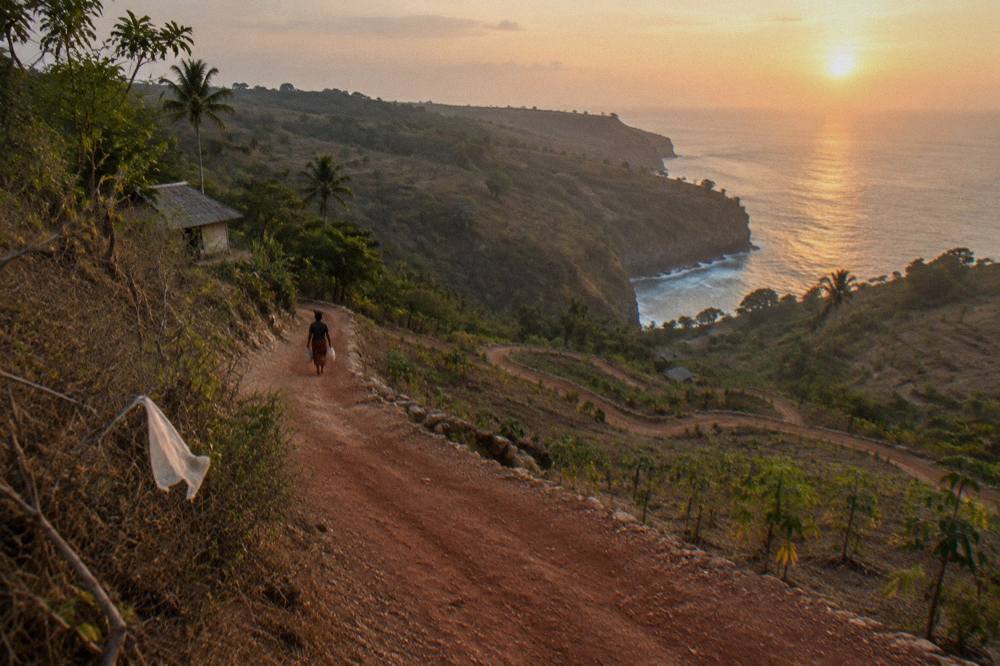
Roads are better than their reputation, and improving. Local news reports dated roadworks in 2026 on the Kelingking access road (about 2 km, begun July 2026) and a 7.35 km upgrade of the Diamond Beach, Atuh and Peguyangan routes (begun August 2026), and the main loop roads are now mostly asphalted. The side routes to the beaches remain steep, narrow and potholed in places, which is the honest reason most visitors book a tour vehicle rather than a scooter. The scooter rental and road safety guide covers that trade-off in detail.
How Do Most Visitors See The Island In One Day?
Most visitors see Nusa Penida on a packaged day tour from Bali, typically 8 to 11 hours door to door, bundling the fast boat ticket, island transport, a driver or guide and often entrance fees. On this roster those tours run from $27 to $130 per person, and the booking decision is really three questions: east or west or both, shared or private, and whether to add snorkeling.
The packaged tour is not a Bali cliché here, it is the working default, because the alternative is assembling the same day yourself: a fast boat ticket bought separately, a car with driver hired at the harbour for roughly IDR 600,000 to 800,000 per car for a full day, entrance logistics handled at each stop, and the return boat timed to the last sailing. Plenty of independent travelers do exactly that, and the private tour guide explains when it wins. But for a single-day visit the bundle is usually cheaper and always simpler, and the roster reflects that: the biggest products are all bundles.
The three formats on offer:
| Format | Typical price | What it suits | Example from the roster |
|---|---|---|---|
| Shared east-plus-west day tour | $33 to $50 per person | First-timers wanting the headline cliffs and beaches in one day | East & West Highlights Full-Day Tour, from $33, 4.7 from 8,370 reviews |
| West-only or east-only day tour | $35 to $66 per person | Return visitors, slower pace, one cluster done properly | One Day Nusa Penida Island West, from $35.5, 4.7 from 197 reviews |
| Manta snorkel plus land tour | $28 to $130 | Swimmers who want the water day as well as the viewpoints | Manta Snorkeling & Land Tour from Bali, from $70, 4.9 from 2,660 reviews |
One structural fact worth knowing before booking: only a handful of products on the roster cover the east coast at all, and only one, the private Tembeling tour from $65.86 per person (4.9 from 80 reviews), is east-only. The west has three dedicated products. Everything else is east-plus-west, manta-focused, private or multi-day. If the east beaches, Diamond Beach in particular, are your priority, check the itinerary line carefully: the cheaper east-plus-west options often give the east a compressed afternoon slot.
The other decision is where the day starts. Most products depart from Sanur, either meeting at the harbour or including hotel pickup from south Bali depending on the option selected. A few, notably the private car hire with driver from $27 per person (4.8 from 2,740 reviews), start on Nusa Penida itself and suit travelers already staying on the island or on Lembongan.
What Does A Day On Nusa Penida Actually Cost?
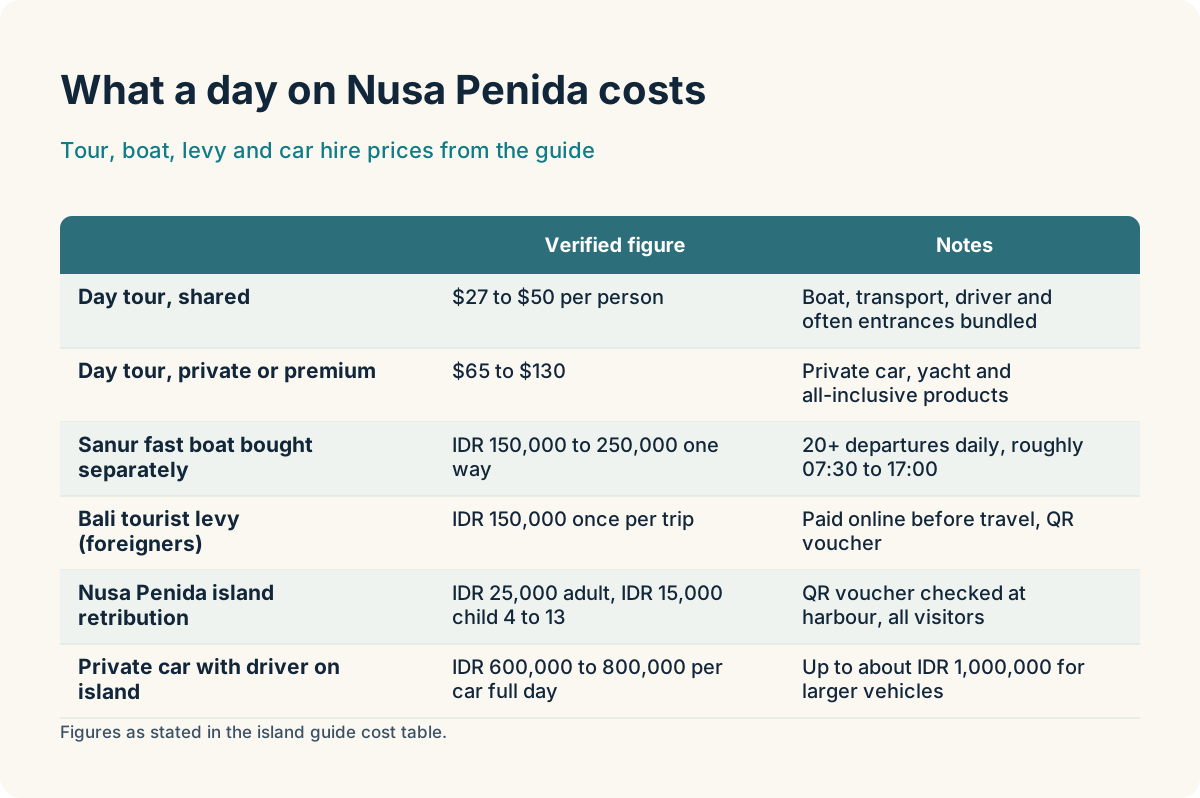
A packaged day tour runs $27 to $130 per person on this roster, boat and transport included. On top of that, foreign visitors owe the Bali tourist levy of IDR 150,000 once per trip, and every visitor owes the Nusa Penida island retribution of IDR 25,000 for adults, IDR 15,000 for children aged 4 to 13, paid via a QR voucher checked at the harbour. Budget meals and extras sit on top.
The two levies are the part travelers most often miss. The Bali levy is paid online at the official Love Bali portal or at airport and port counters, and it covers your whole Bali trip, not the island. The Nusa Penida retribution is separate, and the official retribution portal confirms the amounts and the mechanics: one voucher, scanned at the harbour, valid for a single entry and covering Kelingking, Broken Beach and Angel's Billabong the same day with no re-payment. Children under 4 are free. Some tour listings note that the retribution is not included in their price, so check the inclusions line before assuming.
The rest of the budget picture:
| Cost item | Verified figure | Notes |
|---|---|---|
| Day tour, shared | $27 to $50 per person | Boat, transport, driver and often entrances bundled |
| Day tour, private or premium | $65 to $130 | Private car, yacht and all-inclusive products |
| Sanur fast boat, if bought separately | IDR 150,000 to 250,000 one way | 20+ departures daily, roughly 07:30 to 17:00 |
| Bali tourist levy (foreigners) | IDR 150,000 once per trip | Paid online before travel, QR voucher |
| Nusa Penida island retribution | IDR 25,000 adult, IDR 15,000 child 4 to 13 | QR voucher checked at harbour, all visitors |
| Private car with driver, if hired on island | IDR 600,000 to 800,000 per car full day | Up to about IDR 1,000,000 for larger vehicles |
Attraction-level fees are murkier than the internet suggests. Kelingking Beach has no entrance fee, only parking (IDR 5,000 for a scooter, IDR 10,000 for a car). Broken Beach and Angel's Billabong have no big ticket office, just small on-site collections. Diamond Beach is open but, per local news, the site operator was barred from collecting entry fees while its licensing is sorted out. For Atuh, Tembeling and the Thousand Islands viewpoint, no verified fee figure exists, so check what your tour price includes and treat anything else as a small cash cost. The entrance fee and levy guide carries the full breakdown.
What Are The West Cliffs Really Like?
The west cluster, Kelingking Beach, Broken Beach and Angel's Billabong, is the postcard side of Nusa Penida: a T-rex-shaped cliff, a natural rock arch over a cove, and a tidal infinity pool. All three are viewpoints first and beaches second. Kelingking's sand is reachable only by a steep, rough descent, swimming there is banned, and Broken Beach has no water access at all.
Kelingking is the famous one, and the viewpoint above it is a two-minute walk from the parking area, which is why every tour stops there. Going down to the sand is a different proposition: a steep trail with loose rock, a low bamboo handrail and a climb back up that takes far longer than the descent, 30 to 90 minutes reported depending on fitness. Swimming at Kelingking has been banned since February 2023, and the ban is enforced signage, not decoration; the currents and shore break are serious. The full story, including the halted cliff lift project, is in the Kelingking Beach stairs and lift guide.
Broken Beach is a short drive on, a natural arch enclosing a turquoise cove, and it is strictly a viewpoint; there is no path to the water. Angel's Billabong next door is a rock pool that looks swimmable in every photo, and swimming is prohibited there too, after a fatal accident. At low tide it is calm and photogenic; at high tide waves surge over the rim. Tours typically give the cluster 45 to 90 minutes total, which is enough for the viewpoints and not enough for the Kelingking descent.
The west-only products handle this cluster at a saner pace. The One Day Nusa Penida Island West tour from $35.5 per person (4.7 from 197 reviews) spends its full 8 hours on these stops plus Crystal Bay, and the private guided version from $39.51 per person (4.7 from 57 reviews, a small pool) adds lunch and a dedicated guide-driver.
What About The East Beaches: Diamond, Atuh And Tembeling?
The east cluster is the beach side: Diamond Beach at the foot of a steep carved cliff staircase, Atuh Beach beside it with the same parking, and the Tembeling natural pools and forest further south. Diamond Beach is the visual standout, but swimming is prohibited there, strong waves and rip currents, and the descent is a real staircase with real effort attached. Atuh carries the same strong-wave caution.
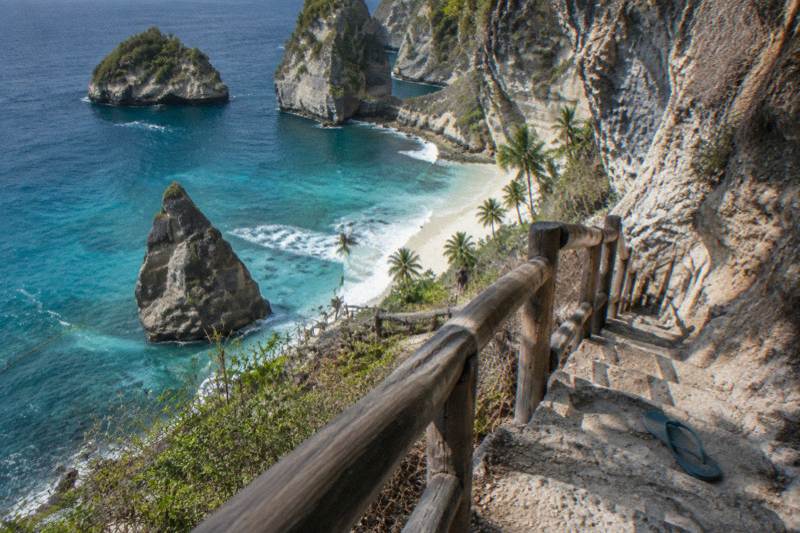
Diamond Beach was barely accessible until operators cut a cliff staircase into the rock, and it now appears on nearly every east itinerary. The staircase is steep but built, unlike Kelingking's trail, and the reward is a white-sand cove framed by cliffs. The water, though, is off-limits: swimming is prohibited and the ban has history behind it. Atuh Beach shares the same access road and parking, sits minutes away, and offers a longer crescent of sand with a handful of simple warungs. The Diamond Beach guide covers the descent and what to expect at each time of day.
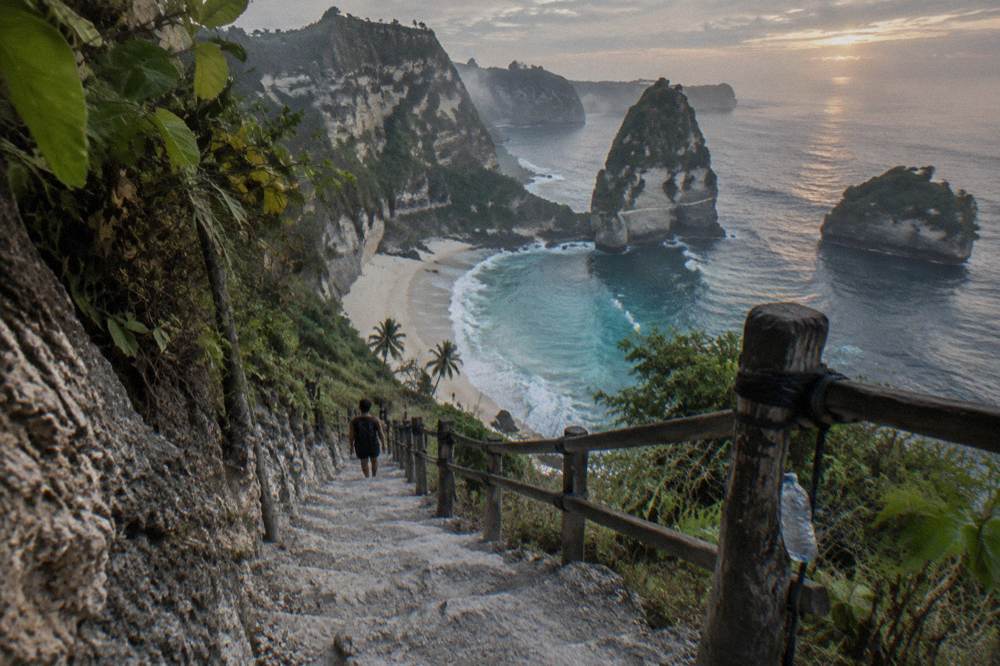
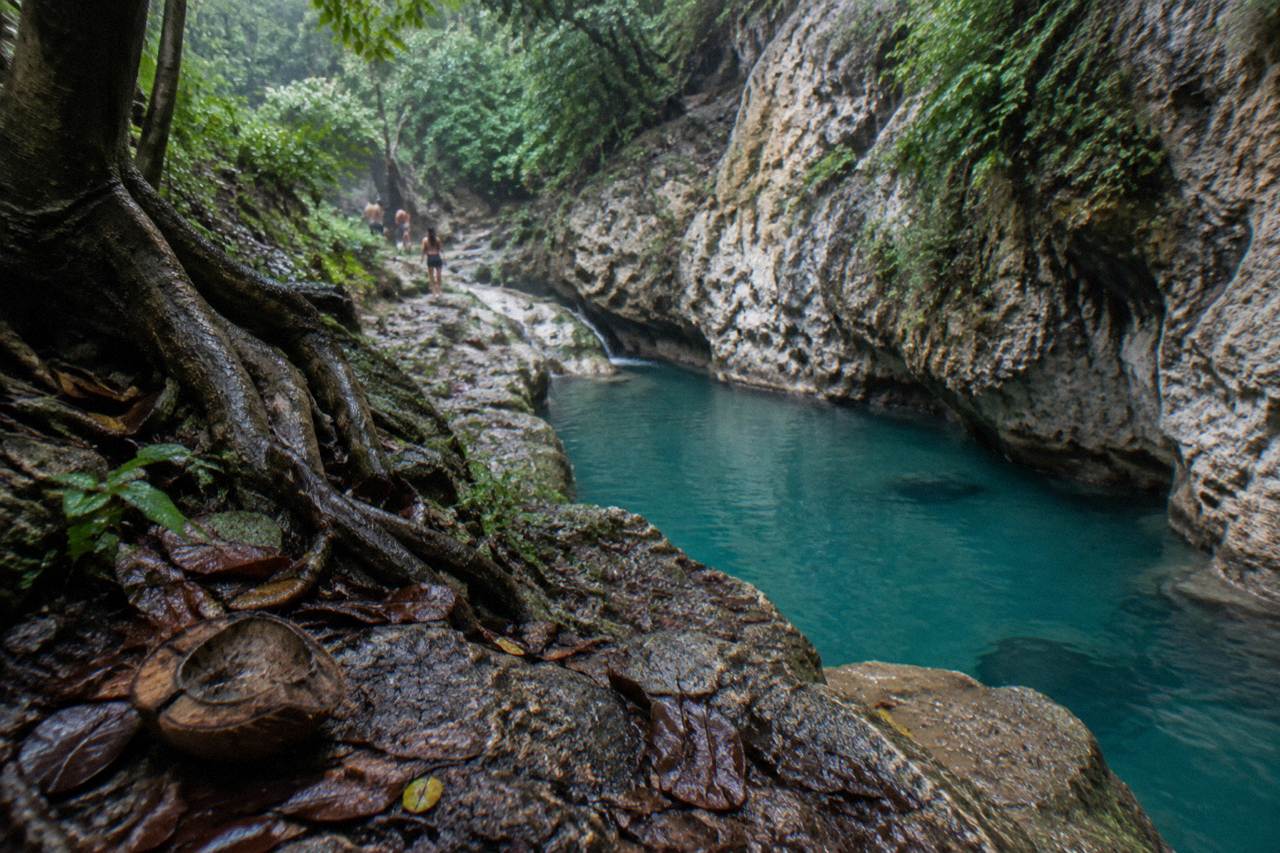
Tembling, the natural pools and a small spring-fed swimming spot reached on foot through forest, is the quietest of the three, and it anchors the only east-only product on the roster: the private tour with Gede Prema, from $65.86 per person, rated 4.9 from 80 reviews. That listing includes the round-trip fast boat, an air-conditioned car with an English-speaking driver, bottled water and hotel pickup, with entrance tickets included in one package option and excluded in a cheaper one, a distinction worth checking at booking.
The practical warning for the east side is timing. East-plus-west day tours usually reach Diamond Beach in the mid-afternoon, after the west cluster, which means arriving with the crowds rather than ahead of them, and the roadworks on the 7.35 km access route can add minutes. If the east beaches are your priority, an east-focused or private itinerary that reverses the order is the better buy.
Where Do You Snorkel With Manta Rays?
The south and west bays are the water side of Nusa Penida: Manta Point and Manta Bay for manta rays, Crystal Bay and Gamat Bay for coral, turtles and, in season, the mola mola sunfish. Mantas are seen year-round, there is no migration season, but operator-reported sighting rates run about 85 to 95 percent at Manta Point and 60 to 85 percent at Manta Bay, and no tour guarantees a sighting.
The manta trips are the roster's second big family, six products from $28 to $70, and they all work the same protected area. Manta Point is the deeper, more exposed site; Manta Bay is shallower and more sheltered, which makes it the backup when the swell is up. The rules inside the marine protected area are firm: stay at least 3 m from the animals, no touching, no chasing, no flash photography, and snorkelers are supervised by guides. The code of conduct is worth reading before you get in the water, because operators enforce it.
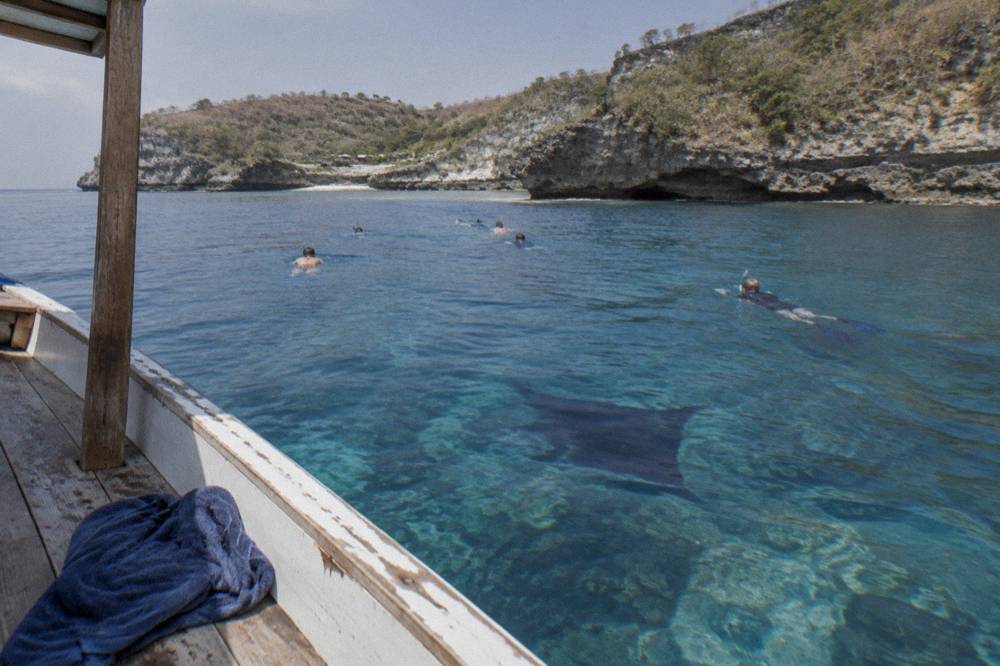
Crystal Bay and Gamat Bay are the gentler alternative. Crystal Bay is sheltered with reported visibility of 20 to 30 m in good conditions, calmest April to September, and it is the site for mola mola sightings July to October. Gamat Bay is quieter than Crystal Bay, sheltered, and workable year-round. Conditions matter more than calendar: dry season April to October brings calmer seas and 15 to 30 m visibility, while the wet season November to March brings rougher swell, lower visibility and a higher chance that exposed Manta Point is rerouted or cancelled. The month-by-month detail is in the weather and best time guide.
| Site | What it offers | Conditions | Verified sighting notes |
|---|---|---|---|
| Manta Point | Deeper manta cleaning station | Exposed; best in dry season | Operator-reported 85 to 95 percent |
| Manta Bay | Shallower, sheltered manta site | Lower swell; wet-season backup | Operator-reported 60 to 85 percent |
| Crystal Bay | Coral, turtles, mola mola in season | Sheltered, 20 to 30 m visibility | Mola mola July to October |
| Gamat Bay | Coral, turtles, seagrass | Sheltered, quieter, year-round | Steady wildlife without the crowds |
The product range runs from the Manta Point Snorkeling & West Coast Tour at $28 per person (4.6 from 1,674 reviews) through private boat options at $65 (4.6 from 516 reviews) up to premium yacht products from $73.87 and $100. The mid-tier benchmark is the manta snorkeling and land tour from Bali, from $70, rated 4.9 from 2,660 reviews, which bundles the round-trip fast boat, full gear, lunch and all marine park entry fees, and pairs the snorkel session with a land loop.
What Else Is On The Island: Temples And The Interior?
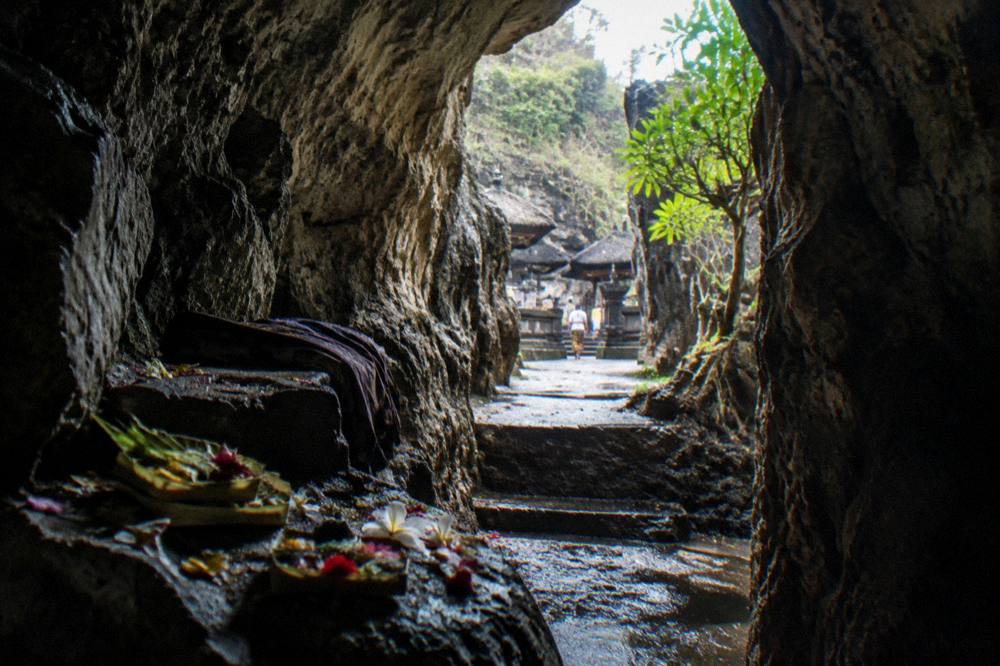
Beyond the cliffs and bays, Nusa Penida's inland sights are its temples, above all Goa Giri Putri, a cave temple near Sampalan entered through a narrow fissure, with a fixed IDR 50,000 fee, compulsory sarong and opening hours of roughly 07:00 to 17:00. Pura Penataran Ped on the coast is the island's most important temple. Both are working religious sites, not photo stops, and ceremonies close them to tourists without notice.
Goa Giri Putri is the one inland sight that earns a place on most itineraries, and it is genuinely unusual: a large cave chamber entered through a crack in the rock, wide enough inside to hold several shrines. The fee is a fixed IDR 50,000 per person, sarongs are compulsory and rentable on site, and the temple may close for ceremonies, so a morning visit is safer than a late one. The local guide page confirms the current details, and the fifty-odd steps up from the road are worth knowing about if anyone in your group struggles with stairs.
The interior between the sights is quiet farmland, and honest advice is that it is driving country, not a destination. Day tours rarely build temple stops into the main loop, because the west and east clusters eat the day; the temple visits belong to private itineraries, to second days, or to travelers staying on the island. That is also the honest case for the two-day trip with accommodation and meals, from $102 per person (4.9 from 34 reviews, a small pool), which spreads the clusters over two days instead of one compressed loop.
For travelers who want the temple-and-interior side at their own pace, the private car hire with driver from $27 per person (4.8 from 2,740 reviews) is the flexible option: a private air-conditioned vehicle, a local driver and fuel, with an option that adds entrance fees, booked per car rather than per seat.
How Do You Actually Get To The Island?
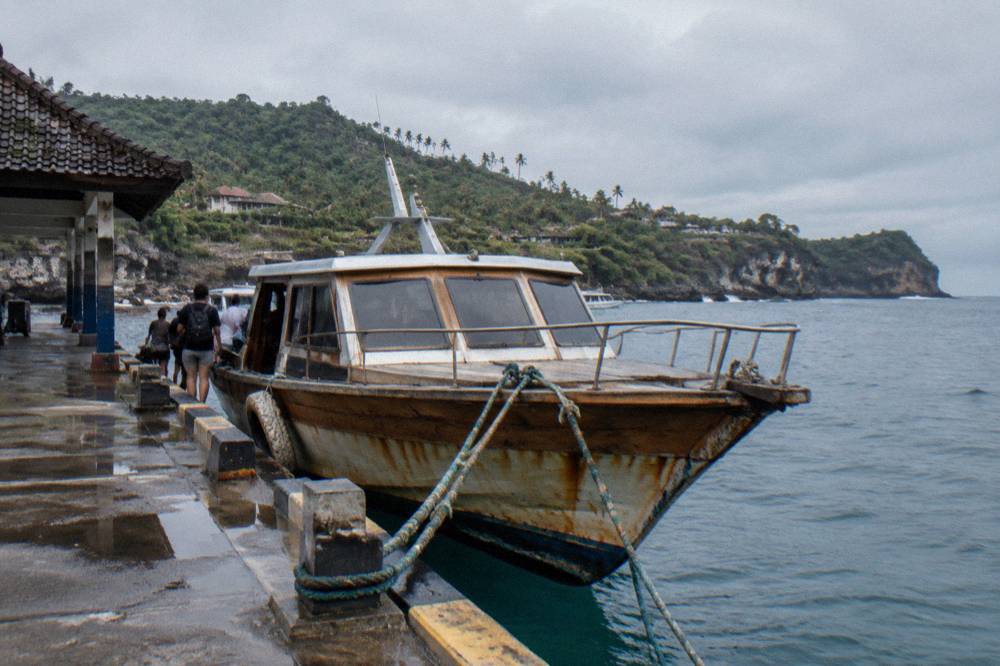
Nearly everyone reaches Nusa Penida by fast boat from Sanur, a crossing of roughly 25 to 60 minutes with more than 20 departures daily across operators, first sailings around 07:30 and the last around 17:00. One-way fares run about IDR 150,000 to 250,000. Alternatives exist, the Kusamba crossing and the Padangbai ferry, but the Sanur fleet is the system the whole day-tour economy is built on.
Sanur's harbour is the island's front door. The operator names change, the mechanics do not: buy a ticket online or at the counter, board, cross, arrive at the Banjar Nyuh or Toyapakeh area on Nusa Penida's northwest coast, where tour vehicles and drivers wait. The crossing is short enough that sea state matters more than distance; in the rainy season, December to March, swell makes the ride rougher and occasionally cancels sailings. The Sanur to Nusa Penida fast boat guide has the operator-by-operator detail, and the island access guide covers the Kusamba and Padangbai alternatives, including the vehicle ferry to Sampalan with its limited schedule and frequent delays.
The reason most visitors never deal with any of this directly is that the day tours absorb it. The east and west highlights tour, for instance, includes the round-trip public fast boat ticket in its bundled options, along with hotel pickup from south Bali depending on the option selected, entrance fees to Diamond Beach, Kelingking and Angel's Billabong, an air-conditioned vehicle and mineral water. The trade is simple: the tour costs more than a self-assembled boat-plus-driver day in many cases, and removes every timing decision. Meeting points vary by booking option, with the main one at the Angkal Fast Cruise terminal in Sanur.
One practical note that catches people: the last boats back to Bali leave mid-to-late afternoon. A day tour that runs 8 to 11 hours fits inside that window by design; an independent day that drifts can find itself needing an unplanned night on the island.
How Many Days Are Enough, And Should You Stay Over?
One long day tour covers the headline sights, the west cliffs plus the east beaches, but it is a compressed loop with more driving than dwelling. Two days is the comfortable number, one cluster per day plus a snorkel session, and it is what the overnight products on the roster are built for. Staying on the island also puts you ahead of the day-trip crowds at every stop.
The one-day question has an honest answer and it is yes, with an asterisk. The can it be done in one day breakdown covers the arithmetic: the crossings, the drive times between clusters, 30 to 60 minutes from the harbour to Kelingking, another 20 to 30 to Broken Beach, an hour or more from Kelingking to Diamond Beach, and the last boat back. It works, and hundreds of tours make it work daily, but the asterisk is that you will see the viewpoints at tour pace, in tour crowds.
Staying over changes the character of the visit entirely. The day-trippers arrive mid-morning and leave mid-afternoon; overnighters get Kelingking's viewpoint in soft light with a fraction of the crowd, and get to pair a manta snorkel morning with a land afternoon without racing the boat. The overnight product on the roster, the 2-day trip with accommodation and meals from $102 per person, bundles a night of lodging, lunches on both days and optional Bali transfers. The where to stay guide covers the areas, and the how many days post works the trade-off in full.
For a first visit with limited time, the pragmatic pick on this roster is still the big east-plus-west bundle: the Trip Gotik highlights tour from $33 per person, 4.7 from 8,370 reviews, with free cancellation, or its all-inclusive sibling from $42 that adds the Molateng Treehouse and shared hotel transfers. It is the product the island's day-trip economy is organized around, and this site's own Nusa Penida Tours comparison pages break down exactly what each option adds.
What Should You Know Before You Book Anything?
Check three things on any listing before you pay: what the price includes, where it starts, and what it excludes. On this roster the variation is real, entrance fees included on some options and not others, hotel pickup depending on the option selected, the island retribution of IDR 25,000 almost never included, and meals bundled on some products and excluded on others. The listing states all of it, and every product on the roster carries free cancellation.
The inclusion lines matter more here than on most booking pages, because the island has three separate cost layers: the tour price, the two levies, and whatever the tour does not bundle. The all-inclusive private day trip from $94.09 (4.8 from 3,705 reviews) is the outlier that bundles lunch, entrance tickets, the fast boat, petrol and insurance into one number. The cheaper shared tours bundle the boat and transport but often leave meals out, and several note the local retribution as an explicit exclusion. None of this is hidden, it is in the includes and excludes lines, but the lines are long.
| Check before booking | Why it matters | Where to look |
|---|---|---|
| Entrance fees included or not | Fees at several stops add up across a full loop | The listing's includes line |
| Hotel pickup option | Some products meet at Sanur, others pick up from south Bali hotels | The pickup line and booking options |
| Meals | Lunch is bundled on some products, excluded on most shared tours | Includes and excludes lines |
| Start point | Sanur harbour, Serangan or the island itself changes your morning | The meeting point line |
| The island retribution | IDR 25,000 adult, usually paid separately by every visitor | The official retribution portal |
Safety deserves a plain paragraph, not a scare one. The island's dangers are specific and signposted: the water at Kelingking, Diamond Beach and Angel's Billabong is off-limits for documented reasons, the cliff edges are unfenced in places, and the roads reward confident drivers only. Within those boundaries, millions of visits go without incident, and the supervised structure of a tour, a driver who knows the roads, a snorkel guide in the water, is itself a safety measure. The is Nusa Penida safe post works through the evidence, and the what to avoid post lists the specific spots and habits that cause trouble.
Common Questions About The Island
Where Is Nusa Penida?
Nusa Penida is the largest of three islands off Bali's southeast coast, in Klungkung Regency, covering roughly 200 km2. It sits about 45 minutes by fast boat from Sanur, alongside the smaller Nusa Lembongan and Nusa Ceningan.
Can You See Nusa Penida In One Day?
Yes. Most visitors do exactly that on a packaged day tour of 8 to 11 hours, covering the west cliffs and east beaches in one loop. The trade-off is pace and crowds; two days is the comfortable alternative.
How Much Does A Nusa Penida Day Tour Cost?
On this roster, shared day tours run from $27 to $50 per person, private and premium options from $65 to $130. Foreign visitors also owe the Bali levy of IDR 150,000 once per trip, and every visitor owes the island retribution of IDR 25,000.
What Are The Main Things To See On Nusa Penida?
The four clusters: the west cliffs at Kelingking, Broken Beach and Angel's Billabong; the east beaches at Diamond, Atuh and Tembeling; the snorkel bays at Manta Point, Manta Bay, Crystal Bay and Gamat Bay; and the temples, above all the cave temple Goa Giri Putri.
Is It Better To Book A Tour Or Go Independently?
A tour wins for single-day visits, because it bundles the fast boat, island transport and entrance logistics into one booking from $27 per person. Independent travel, a separately bought boat ticket plus a hired car with driver at roughly IDR 600,000 to 800,000 per car, suits longer stays and flexible plans.
Can You Swim At Nusa Penida's Famous Beaches?
Not at the famous ones. Swimming is banned at Kelingking Beach, Diamond Beach and Angel's Billabong, all for documented safety reasons. Swimming happens in the sheltered bays, at Tembeling's natural pools, and on the snorkel trips at Crystal Bay and Gamat Bay.