Is Nusa Penida Safe For Tourists?
An honest, risk-by-risk answer to whether Nusa Penida is safe for tourists: swimming bans, cliff paths, fast boats, scooters and how a guided tour removes most of the danger.
Is Nusa Penida Safe For Tourists?
Yes, with a short list of hard rules. Nusa Penida is safe for tourists who stay behind the viewpoints at Kelingking, Diamond Beach and Angel's Billabong, keep out of the water where swimming is officially banned, and let someone else drive the island's steep roads. The danger here is concentrated, not diffuse: almost every serious incident fits one of four patterns.
That concentration is good news, because it means the risk is manageable. This is not a destination with scattered, unpredictable hazards. It is a small island with dramatic cliffs, powerful southern swells and narrow roads, and the incidents that make the news repeat the same few causes: swimmers caught in rip currents, visitors leaving marked trails for photographs, riders losing control on steep descents, and rough sea crossings.
The honest framing is this. Millions of people visit each year and the overwhelming majority leave with nothing worse than sunburn. But the island's signature landscapes, the ones people come for, are exactly the ones that demand respect. A cliff viewpoint with a loose-rock trail below it, a turquoise bay with a shore break, a road that drops several hundred metres in a few kilometres. The safety question is really a question about how you move through those places.
The practical answer for most travellers is that a structured day removes most of the exposure. The Bali: Nusa Penida All-Inclusive Full-Day Tour with Transfers covers hotel pickup, the fast boat, an air-conditioned vehicle and a local driver in one booking, rated 4.6 from 2,310 reviews and from $42 per person with free cancellation. You are not buying safety with money so much as buying the removal of the two hardest tasks: riding unfamiliar roads and reading unfamiliar water.
Is Nusa Penida Safe
Broadly yes, and the island's safety profile is better than its reputation suggests. The risks that exist are well documented, well signed and well understood by the local operators who run the tours. The three swimming bans are official and posted. The cliff trails are known quantities. The scooter risk is a road-design problem, not a crime problem, and it disappears entirely if you hire a driver.
Crime barely registers in the traveller picture here. There are no verified reports of a specific 2026 scooter-accident or fast-boat statistic, and nothing in the research points to violence or scams targeting visitors beyond the ordinary caution any traveller applies in Bali. The island's economy runs on tourism, and the operators, drivers and boat crews have a direct stake in visitors having an uneventful day.
What does exist is a fee and rules layer that catches some visitors off guard, and it is worth separating the real rules from the noise. Two official payments apply. The Bali foreign tourist levy is IDR 150,000 per person, once per trip, paid online before travel at the official Love Bali portal or at counters on arrival. Separately, the Nusa Penida island retribution is IDR 25,000 for adults and IDR 15,000 for children aged 4 to 13, paid via a QR voucher scanned at the harbour, and one voucher covers Kelingking, Broken Beach and Angel's Billabong the same day with no re-payment, per the official retribution portal. Neither is a safety issue, but both are part of arriving prepared.
The other real rules are behavioural. Drones are restricted near temples and wildlife. Temple visits require a sarong and sash, rentable on site. And the water rules, which we cover in full below, are not suggestions: Kelingking has banned swimming since February 2023, and Angel's Billabong followed after a fatal accident the same month.
How Safe Is Nusa Penida?
Safer than the headlines imply, provided you treat the island as a landscape destination rather than a beach destination. The honest verdict by category: viewpoints and villages are low risk, the water at the famous beaches is high risk and officially off limits, the cliff trails are moderate to high risk depending on footwear and fitness, and the roads are the most underestimated hazard of all.
The table below is the verdict this article defends, risk by risk. Every line is grounded in verified reporting: the swimming bans, the trail conditions, the road works and the boat record. Where a figure is not verified, the table says so rather than guessing.
| Risk area | Verdict | What the evidence says |
|---|---|---|
| Swimming at Kelingking | Banned | Official ban since February 2023, strong currents and shore break, no lifeguards |
| Swimming at Angel's Billabong | Banned | Prohibited after a fatal accident in February 2023; surge at high tide |
| Swimming at Diamond Beach | Prohibited | Strong waves and rip currents, several drownings reported since borders reopened |
| Cliff trails (Kelingking descent) | Manageable with care | Steep, loose rock, crude railings; ascent takes far longer than the descent |
| Roads and scooters | High for beginners | Steep, narrow, hilly side routes; main roads mostly paved |
| Fast boat crossing | Weather-dependent | 25 to 60 minute crossing; rougher swell and more cancellations December to March |
| Crime and scams | Low | Nothing verified beyond ordinary Bali caution |
| Heat and dehydration | Real but avoidable | Midday sun at exposed viewpoints; most tours carry bottled water |
Two things make this table work in practice. First, the bans are enforced socially if not legally: drivers, guides and fellow visitors will tell you not to swim at Kelingking, and the signs are explicit. Second, the road risk has a clean escape hatch, which is the private driver. A full day of private car with driver runs about IDR 600,000 to 800,000 per car on the island, or you can book it bundled with the boat and tickets, and the driver layer is where most of the island's safety margin lives.
The deeper background on the island's most famous viewpoint, including the halted cliff lift and what the descent is actually like, is covered in the Kelingking Beach stairs and lift guide, and the general island overview sits in the Nusa Penida travel guide.
Is Nusa Penida Safe To Swim?
At the famous cliffs, no, and the bans are official. Kelingking Beach has banned swimming since February 2023, Angel's Billabong prohibits it after a fatal accident the same month, and Diamond Beach prohibits it because of rip currents. Swimming on Nusa Penida is safe only in the designated snorkel sites, Crystal Bay, Gamat Bay and the manta areas, where operators manage the conditions.
This is the single most important safety fact on the island, so it deserves the full treatment here and only a clause anywhere else. The three bans are not conservative suggestions. Kelingking's shore break and currents are severe enough that the ban came with an official decision, and there are no lifeguards to make an exception survivable. Angel's Billabong is a natural infinity pool that looks inviting precisely because it fills with the ocean, and at high tide the surge over the rock lip is what killed a swimmer in February 2023. Diamond Beach sits below a steep carved cliff staircase, and its turquoise water hides the same rip-current pattern that has drawn people out and not brought them back.
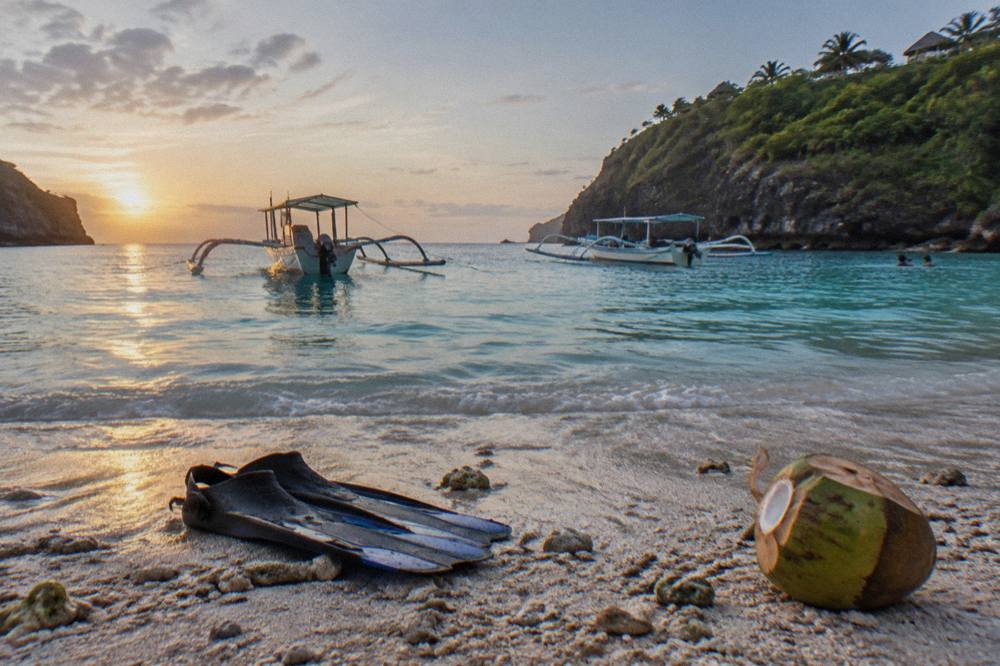
Where swimming and snorkelling are safe, they are genuinely safe, and that distinction is the whole answer. Crystal Bay is sheltered with mild to moderate currents and typically 20 to 30 metres of visibility, calmest from April to September. Gamat Bay is quieter still, sheltered and suitable year-round. The manta sites are managed water: operators report manta sightings year-round with success rates of roughly 85 to 95 percent at Manta Point and 60 to 85 percent at Manta Bay, though no operator guarantees a sighting, and the protected-area rules require snorkelers to stay at least 3 metres from the animals, with no touching, chasing or flash photography.
| Site | Swimming status | Why |
|---|---|---|
| Kelingking Beach | Banned since February 2023 | Strong currents, shore break, no lifeguards |
| Angel's Billabong | Prohibited | Fatal accident February 2023, surge at high tide |
| Diamond Beach | Prohibited | Strong waves and rip currents |
| Broken Beach | No water access | Viewpoint only, the cove is enclosed by the arch |
| Crystal Bay | Snorkelling yes | Sheltered, mild to moderate currents, calmest April to September |
| Gamat Bay | Snorkelling yes | Sheltered, quiet, suitable year-round |
The practical translation: come to Nusa Penida for the views and the manta snorkelling, not for beach swimming. If a swim is part of your plan, put it at Crystal Bay or Gamat Bay with an operator who reads the water, and read the water section of the Nusa Penida snorkeling tours guide before choosing where.
What Are The Biggest Risks In Bali?
For Nusa Penida specifically, the biggest risks rank in this order: rip currents and banned swimming spots, cliff edges and unofficial trails, scooter riding on steep roads, and rough sea crossings in the wet season. The broader Bali risks, traffic chaos and petty theft, matter less on Penida because the island is quieter, but the roads here are harder than Bali's. For a fuller rundown of the banned swim spots, risky cliff paths, and other traps, read the honest avoid-list for Nusa Penida, which also explains what to do instead.
The distinction between Bali and Penida is worth making because most visitors arrive from Bali with a calibration that is slightly wrong. Bali's dangers are diffuse: chaotic traffic, scooter accidents on busy roads, occasional theft. Penida's dangers are concentrated and dramatic. A visitor who has ridden a scooter safely in Canggu can still be caught out by a Penida descent that drops hundreds of metres with loose gravel on the corners, because the two road environments share nothing but the vehicle.
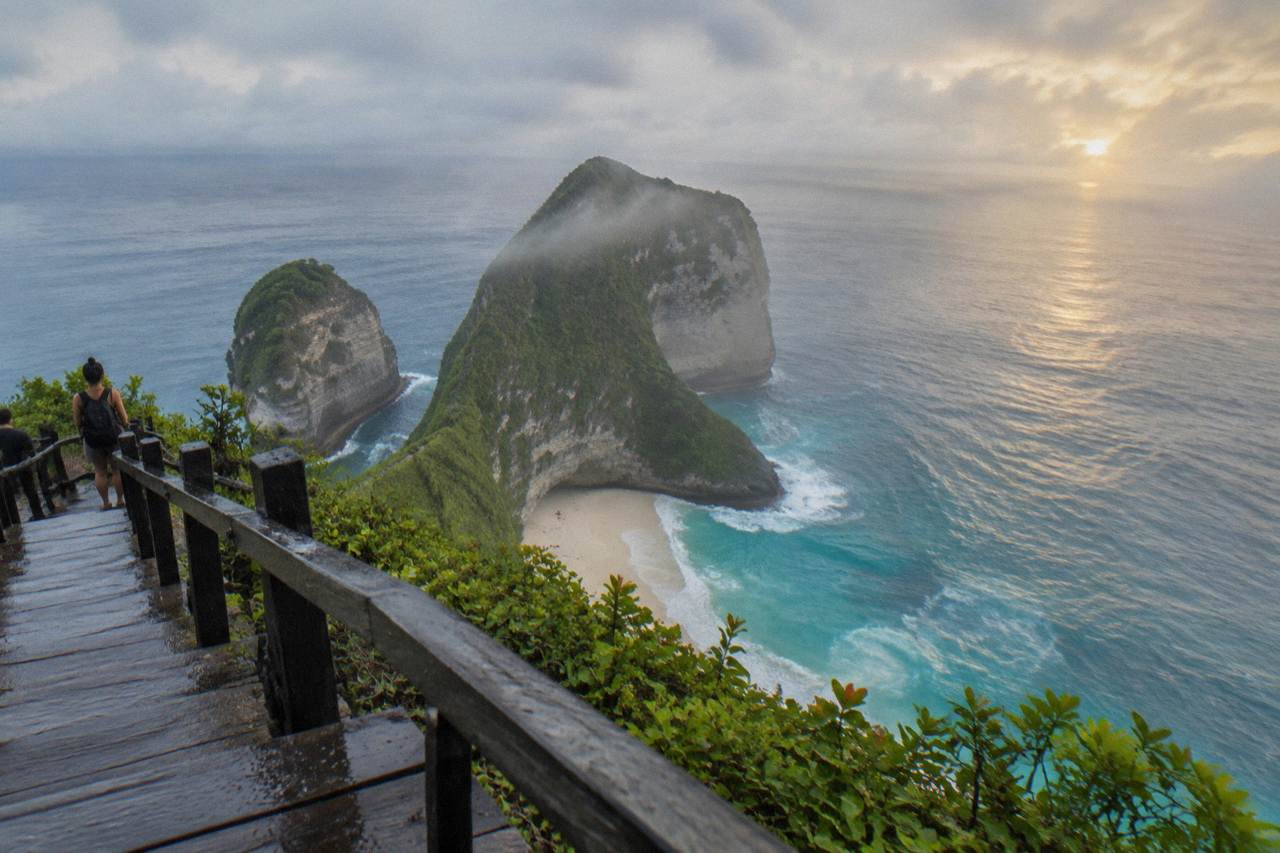
The cliff risk deserves its own sentence in every safety conversation. The verified record is blunt: a tourist died after leaving the marked path at Kelingking, and the pattern is always the same, a step past the rail or the trail for a better photograph. The viewpoint itself, behind the railings, is safe. The trail down to the beach is a real hike, about 20 minutes down and much slower coming back up, with rock, loose sections and a low bamboo handrail in places. The flat grass around the viewpoint is not a cliff-edge playground, and the unofficial paths that cut toward the edge are where the record turns fatal.
Heat is the quiet one. The viewpoints are exposed, the midday sun is direct, and the ascent from Kelingking beach is a sustained climb in exactly those conditions. Most tours on this roster include bottled water, but carry more than you think you need and start the day early, which is what the itineraries already do.
Are The Fast Boats To Nusa Penida Safe?
Generally yes, with one caveat: the crossing is weather-dependent and the record contains a serious incident. On 5 August 2025 the fast boat Bali Dolphin Cruise 2 capsized at the Sanur harbour entrance with three deaths. Operators run 20-plus daily departures from Sanur, the crossing takes 25 to 60 minutes, and the wet season from December to March brings rougher swell and more cancellations.
That capsize is the honest anchor of this answer, and it should not be softened or exaggerated. It happened at the harbour entrance, it killed three people, and it is the reason the crossing deserves the same respect as the cliffs. It is also, so far, the exception rather than a pattern: no verified route-specific accident or suspension has been reported since, and the operators, Maruti Group, Angel Billabong, The Tanis, Arjuna, Starfish, Golden Queen, Sugriwa Express and others, run a dense daily schedule of roughly 07:30 to 17:00 departures.
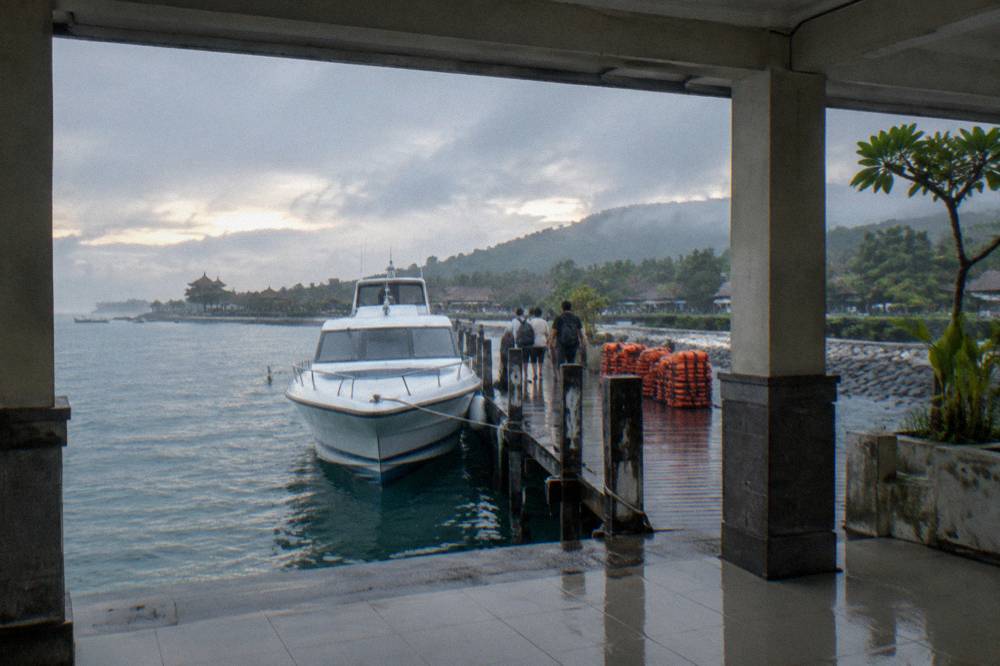
The practical risk management is seasonal and structural. The seas are calmer from April to October and rougher from December to March, when cancellations rise. If your date falls in the wet season, book a tour with free cancellation rather than a fixed boat ticket, because the operator's go or no-go call is the safety mechanism and you want to be able to move with it. The background on fares and schedules is in the Sanur to Nusa Penida fast boat guide.
The structural answer is to buy the crossing as part of a tour rather than as a standalone ticket. Bundled products put the boat choice, the timing and the weather call in the hands of an operator who runs the route daily, and the roster reflects that: the manta snorkel and land tour from Bali, rated 4.9 from 2,660 reviews and from $70, includes round-trip fast boat transfers, full gear, lunch and all marine park entry fees, meeting at Seagrass by the Beach in Sanur.
Is It Safe To Ride A Scooter On Nusa Penida?
For experienced riders, yes with caution. For anyone without solid scooter experience, no, and the honest advice is to not rent one. The island has no public transport, most main roads are now asphalted, but the side and coastal routes are steep, narrow and hilly with potholes and unpaved sections. The safest option for almost everyone is a private driver.
The road facts are specific. The island is about 200 square kilometres with no public transport at all, so you are choosing between a driver, a scooter or a bicycle, and the driver wins on safety every time. Distances that look short on the map take real time: Toyapakeh to Kelingking is about 30 to 60 minutes, Kelingking to Diamond Beach is 1 to 1.5 hours, and the roads between them mix good asphalt with narrow descents where a moment of inattention has consequences. Local guidance on getting around the island is blunt about the same point: the terrain punishes inexperienced riders.
There is also a live roadworks layer. A roughly 2 km upgrade of the Kelingking access road began in July 2026, and a 7.35 km upgrade of the Diamond Beach, Atuh and Peguyangan area roads began in August 2026, which means some sections are construction zones with hotmix, shoulders and retaining walls in progress. Roadworks are a dated fact of visiting now, not a permanent feature, but they add a reason to prefer a driver who drives those roads daily over a first-time rider.
The driver option is cheap relative to the risk it removes. Private car with driver runs about IDR 600,000 to 800,000 per car for a full day, fuel and air-conditioning included, with an extra hour at IDR 70,000 to 100,000 if you stretch the day. On the tour roster the same service appears bundled: the private car hire with driver listing, rated 4.8 from 2,740 reviews and from $27 per person, covers the vehicle, the driver and fuel, and the scooter question simply disappears from your day.
Does A Guided Tour Make Nusa Penida Safer?
Yes, and measurably so, because a tour removes the three risks a visitor is worst equipped to judge: the roads, the water and the timing. A local driver handles the descents you would otherwise ride blind, a guide reads the tides and the swell at the swim sites, and a fixed itinerary puts you at Kelingking in the morning instead of midday heat. The remaining risk, the cliff edge itself, stays yours either way.
This is not a sales line, it is the mechanical truth of how the island works. The full-day products on this roster are built around exactly the exposures this article has listed. The all-inclusive transfers tour bundles hotel pickup, the fast boat, the island vehicle and a local driver, so the two hardest decisions of the day, the boat operator and the road, are made by people who make them daily. The premium private day trip, rated 4.8 from 3,705 reviews and from $94.09, adds lunch and entrance tickets to the same structure. The west private guided tour, rated 4.7 from 57 reviews and from $39.51 per person, includes a guide-driver, all entrance tickets and lunch, with boat transfer from Bali.
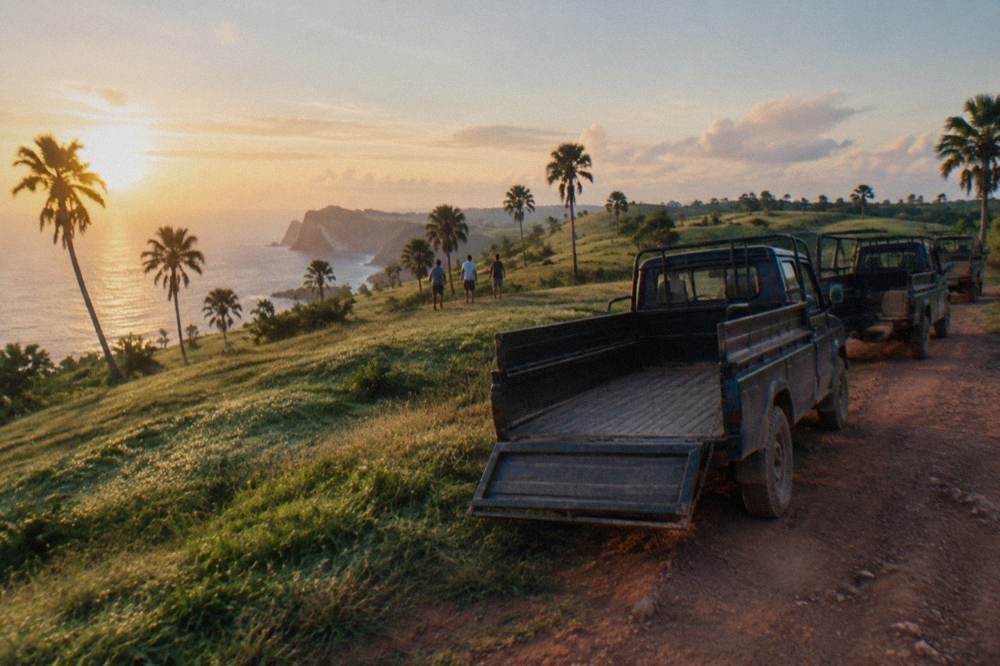
What a tour cannot do is stand between you and the cliff. The viewpoint railings, the marked trail and the swimming bans are the same for a tour group as for a solo traveller, and the recent fatality at Kelingking is a reminder that the last metre of safety is always personal. Guides do help here: they know where the edge is stable, they tell people when a spot is not a viewpoint, and they move groups through before the midday sun. But the guide is a filter, not a fence.
The honest comparison is a table, because the safety difference between touring styles is concrete rather than vibes. Note the review counts: the small pools are named as small pools, per this site's honesty policy, and no listing here is called popular without the numbers to back it.
| Touring style | What it removes | What stays your risk |
|---|---|---|
| All-inclusive day tour with transfers | Roads, boat choice, navigation, timing | Cliff edges, water rules, heat |
| Private guided tour | Roads, navigation, local knowledge, tickets | Cliff edges, water rules, heat |
| Self-drive scooter day | Nothing | Roads, navigation, timing, everything else |
| Independent with driver hire | Roads only | Boat choice, navigation, timing, tickets |
What Can You Do Yourself To Stay Safe?
Five habits carry almost all the safety margin: stay behind the railings and on marked trails, never swim at the three banned sites, start early to beat heat and crowds, wear real shoes on any cliff descent, and book crossings and tours with free cancellation so weather calls cost you nothing. None of these require skill, only restraint.
The restraint list is short enough to memorise. The cliff photographs that look dangerous are dangerous; the viewpoint behind the railing gives the same composition with none of the exposure. The turquoise water at the banned beaches is the same water that produced the bans. The unofficial trail toward the edge is where the record turns fatal, and it always looks like a short step. If you remember one sentence from this article, make it the one about staying on the marked side of the railing.
The gear list is shorter still: closed shoes with grip for any trail, more water than feels reasonable, reef-safe sunscreen applied before the boat rather than at the viewpoint, and a dry bag for the crossing. If you are snorkelling, the 3-metre distance rule for mantas is a regulation of the protected area, not a courtesy, and guides on the rostered tours enforce it because their licence depends on it.
For the full planning picture beyond safety, the Nusa Penida itinerary guide sequences the same sites in an order that naturally avoids the midday heat, and Nusa Penida Tours carries the complete roster if you want to compare the day tours, snorkel trips and private options side by side.
Common Questions About Tourist Safety On Nusa Penida
Is Nusa Penida Safe For Tourists?
Yes, for tourists who follow a short list of hard rules: no swimming at Kelingking, Angel's Billabong or Diamond Beach, no stepping off marked cliff trails, no scooter riding without real experience, and no crossing on a rough-sea day without a flexible booking. The risks are concentrated and well signed rather than scattered and random.
Is Nusa Penida Safe?
Broadly yes. Crime barely registers in the traveller picture, the swimming bans are official and posted, and the main hazards are road design and sea state, both of which a driver and an operator remove. The island economy runs on tourism and the local operators have a direct stake in uneventful days.
How Safe Is Nusa Penida?
Safe at the viewpoints and villages, moderate on the cliff trails with proper footwear, and high risk only in the banned water and on a beginner's scooter. A full day of private car with driver costs about IDR 600,000 to 800,000 per car, or from $27 per person bundled as a tour, and it removes the single most underestimated hazard.
Is Nusa Penida Safe To Swim?
Not at the famous cliff beaches. Kelingking has banned swimming since February 2023, Angel's Billabong prohibits it after a fatal accident that month, and Diamond Beach prohibits it for rip currents. Swimming is safe and managed at the snorkel sites: Crystal Bay, Gamat Bay and the manta areas, ideally with an operator.
What Are The Biggest Risks In Bali?
For Nusa Penida the ranking is rip currents, cliff edges on unofficial trails, scooter descents on steep roads, and rough wet-season crossings. Broader Bali risks like busy traffic and petty theft matter less on Penida, but its roads are harder than Bali's, so the calibration you brought from the mainland needs adjusting.
Are The Fast Boats To Nusa Penida Safe?
Generally yes, with a weather caveat. Operators run 20-plus daily Sanur departures over a 25 to 60 minute crossing, and the record includes one serious incident, the August 2025 capsize at the Sanur harbour entrance with three deaths. Seas are calmer April to October; book free-cancellation options in the December to March wet season.