Is It Safe To Snorkel With Manta Rays In Nusa Penida?
A research-backed answer to whether snorkeling with manta rays in Nusa Penida is safe, covering currents at Manta Point, the 3 m rule, life jackets, guide supervision and which tours suit weaker swimmers.
Is It Safe To Snorkel With Manta Rays In Nusa Penida?
Yes, for the large majority of snorkelers who go with a guided tour and follow the local code of conduct. Manta rays around Nusa Penida are reef mantas, plankton feeders with no sting, no bite and no history of attacking snorkelers. The genuine risks are the sea itself: currents and swell at exposed sites such as Manta Point, cold water, and the gap between a confident swimmer and a nervous one. Guides, life jackets and the protected-area rules close most of that gap. Timing matters too, since sea conditions shift through the year, and our guide to the best months for seeing manta rays in Bali explains which season suits you best.
The question almost everyone asks before booking a manta snorkel is really two questions wearing one coat. The first is whether the animal is dangerous, and the honest answer is no, not in any way that matters at Nusa Penida. The second is whether the water is dangerous, and that answer changes with the season, the site and the swimmer. Operators on the island deal with the second question every single day, which is why the tour structure looks the way it does: briefing, guide in the water, life jacket if you want one, and a strict rule about how close you get.
This article works through both questions using the island's own operator-reported data and the protected-area code, then matches the answers to real bookable products, from the $28 shared Manta Point snorkel to private boats and premium yachts. The short version: the rays are safe, the sea is manageable, and the right tour for your swimming confidence is the real safety decision.
Are Manta Rays Dangerous To Snorkelers?
No, manta rays are not dangerous to snorkelers. Reef mantas at Nusa Penida are plankton filter feeders with no barb, no sting and no mechanism for attacking a person, and there is no record of one doing so. The fear is misplaced, and the risk of harm from these gentle creatures while snorkeling is essentially nonexistent. The tail spine that worries people, by association with stingrays, is vestigial in mantas and never used in defence. The animal's only realistic hazard is its size: an adult wingspan can exceed three metres, and a startled manta swimming past can knock a snorkeler off balance. Every recorded injury at manta sites comes from contact, which is exactly why contact is banned.
The fear usually arrives from confusion with a different animal. Stingrays bury themselves in sand and whip a barbed tail when stepped on; mantas do neither. A manta at Nusa Penida is mid-water, slow, and, if anything, curious. Guides describe them circling cleaning stations while snorkelers float on the surface at a respectful distance. The protected-area rules, which we cover in full further down, exist to protect the mantas from the snorkelers, not the reverse.
What the rules also do, in practice, is protect snorkelers from their own instincts. The urge to swim at a manta, chase it, or reach out and touch it is strong, and it produces exactly the kind of close contact that ends in a collision. The code of conduct published for Nusa Penida's marine protected area is blunt on this: stay at least 3 m away, never touch, never chase, never block the animal's path, and no flash photography. A snorkeler who follows those rules has functionally removed the only mechanism by which a manta can hurt anyone.
The honest summary from the operator side is that in the water with mantas, the most dangerous object is usually a boat propeller, which is why tour boats keep their engines off or in neutral while snorkelers are in the water, and why the guide counts heads before and after every session.
What Are The Currents And Swell Like At Manta Point?
Manta Point sits on Nusa Penida's exposed southwest coast in open-channel water, so swell, surge and currents are real and can change quickly from one day to the next. Because conditions here are so variable, they decide whether boats run at all on a given morning, and divers should expect the sea state to shift even during a single session at the site. In the dry season, April to October, the sea is typically calmer with reported visibility of 15 to 30 m. In the wet season, November to March, swell at the south-coast sites often runs 1 to 3 m or more, visibility drops to a reported 5 to 12 m, and operators reroute or cancel. That is a safety system working, not a failure.
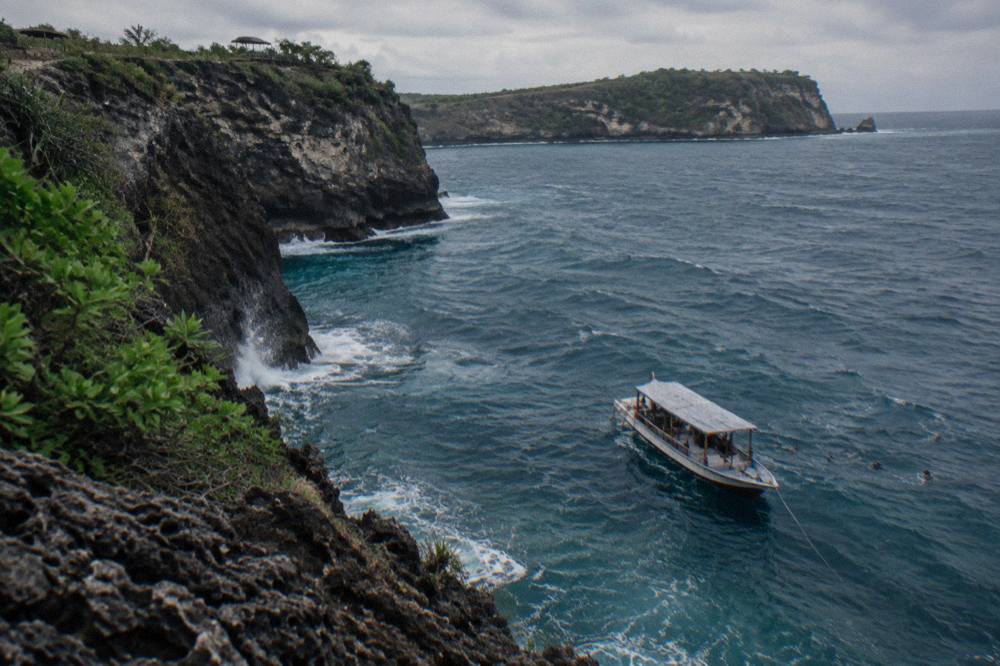
The site itself is a cleaning station. Mantas come to the same rocks to have parasites picked off by small fish, which is why sightings are possible all year with no migration season. But the same open-coast exposure that brings the plankton and the mantas brings the swell. Operators report sighting success of roughly 85 to 95 percent at Manta Point, and those numbers are labelled operator-reported for a reason: they come from local logs, not from a marine census. No operator on this island guarantees a sighting, and any that did would be selling something the sea does not sell.
The practical safety advice for a swimmer of any level is threefold. First, wear the life jacket even if you consider yourself a strong swimmer, because surface swimming against surge tires people faster than pool swimming does. Second, stay with the guide, who reads the current and positions the group on the calm side of the station. Third, if a wet-season booking gets rerouted to Manta Bay, take the reroute, because Manta Bay is the sheltered backup with lower swell, and it holds mantas too.
| Site | Exposure | Typical reported visibility | Swimmer profile it suits |
|---|---|---|---|
| Manta Point | Open southwest coast, swell and surge | 15 to 30 m dry season, 5 to 12 m wet season | Confident swimmers, calm conditions |
| Manta Bay | More sheltered, shallower | Good, lower swell than Manta Point | Most snorkelers, wet-season default |
| Crystal Bay | Sheltered bay | 20 to 30 m reported | Most snorkelers, calmest April to September |
| Gamat Bay | Sheltered, quieter than Crystal Bay | 10 to 20 m and above reported | Snorkelers wanting fewer boats |
The distinction between Manta Point and Manta Bay matters enough that local operators publish comparison guides on it, and the short version is that Manta Bay is the snorkel-friendly site while Manta Point is the deeper, more exposed one. If your swimming confidence is moderate, ask before booking whether the itinerary is anchored at Manta Bay, and check the operator's cancellation policy for rough-day reroutes. Every listing on this site's roster carries free cancellation, which is worth reading carefully when the sea is the variable.
For snorkelers who want the exposure of Manta Point without the crowd of a shared boat, the private option is the one to examine. The Nusa Penida Private Boat Snorkeling Tour With Manta Ray runs 3 to 4 hours with a supervised experience, a private boat, gear and GoPro photos included, from $65 per person, rating 4.6 from 516 reviews. A private boat means the guide's attention is not split across a dozen guests, which for a nervous swimmer is a safety feature in itself.
Is Nusa Penida Safe To Swim?
Yes, swimming in Nusa Penida is generally safe, but only in specific spots. The island is not really a swimming destination, and its famous cliff beaches often carry dangerous waves and currents. The safe places to enter the water are the sheltered snorkel bays and the guided manta sites, where conditions are calmer and supervision is available. Kelingking Beach has banned swimming since February 2023 because of its shore break and currents. Diamond Beach prohibits swimming for the same reason. Angel's Billabong has prohibited swimming since a fatal accident. Broken Beach is a viewpoint with no water access at all. The swimming that Nusa Penida does offer is the kind with a boat, a guide and a life jacket.
That list of prohibitions reads alarming until you notice the pattern: every ban is at a cliff-bound beach on the exposed coast, and every one exists because the waves there are genuinely dangerous, not because of any incident pattern with animals. The water on the sheltered side of the island is a different story. Crystal Bay is a calm, protected bay with reported visibility of 20 to 30 m, turtles and healthy coral, and it is the site most often used for first-time snorkelers. Gamat Bay is quieter still.
For snorkelers, the practical takeaway is that the guided manta experience is actually one of the safer ways to get wet on Nusa Penida. You enter from a boat or a sheltered bay, you float on the surface with a flotation device, and a guide whose job is to watch the water is watching you. Compare that with walking down the Kelingking stairs to a beach where swimming is banned, and the risk ranking inverts: the manta session is the conservative choice.
The one honest caveat is cold water. Sea temperature around Nusa Penida runs from about 26.2 C in August to about 29.4 C in December, and dry-season thermoclines can feel sharply cool at depth. It is not a danger for most people, but it surprises snorkelers who expected bathtub water, and a surprise gasp in a mask is unpleasant. A short wetsuit top or a rash guard solves it.
What Are The Rules For Snorkeling With Manta Rays?
The Nusa Penida marine protected area code requires snorkelers to stay at least 3 m from mantas, never touch, chase or block their path, avoid flash photography, move slowly, and stay outside the cleaning stations, with guide supervision required on tours. These rules protect the mantas' feeding and cleaning behaviour, and in doing so they also remove the only realistic contact hazard for the snorkeler.
The 3 m rule deserves a plain explanation, because it sounds arbitrary and is not. Mantas at cleaning stations are paying small fish to remove parasites; a snorkeler who swims into the station breaks the transaction, and the manta leaves. A manta that keeps getting interrupted stops using the station, which harms the animal and, over time, harms the sightings everyone came for. So the rule is ecological, but it doubles as the snorkeler-safety rule: at 3 m, an animal with a three-metre wingspan cannot collide with you even if it turns quickly.
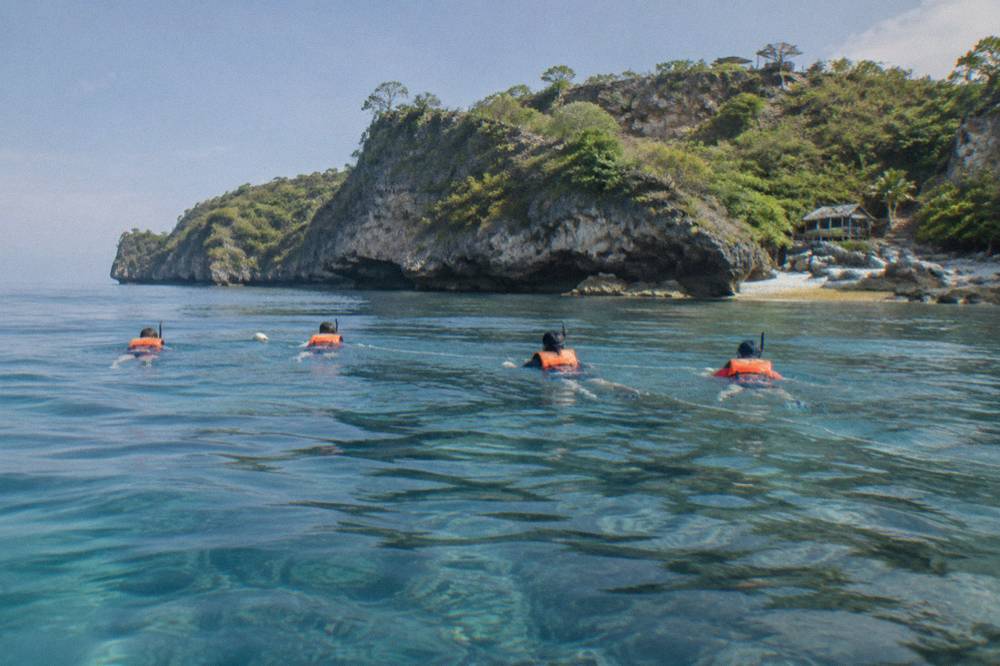
The supervision requirement is the other half of the safety picture. Tours in the protected area run with guides in the water, and the guide's role is not just to find mantas but to manage the group: holding position upcurrent, counting heads, and pulling snorkelers back if they drift toward the station or the boat. This is why the roster's guided products list a professional guide and full snorkel gear as inclusions rather than extras, and it is why the cheapest safe way to do this is a guided shared tour, not a rented mask and a rented scooter.
A good reference for the full code, written for snorkelers rather than lawyers, is the manta ray code of conduct for Nusa Penida published by a local dive operator. The protected area itself covers roughly 20,000 hectares around the island's coast, established in the 2010s, and the code applies across it.
Are Manta Rays Rare To See?
No, manta rays are not rare at Nusa Penida, and that is the island's whole draw. Mantas are resident year-round with no migration season, because the cleaning stations and the plankton supply are permanent features of the coast rather than a seasonal event, so divers and snorkelers can encounter them on almost any trip. Operator-reported sighting rates run about 85 to 95 percent at Manta Point and about 60 to 85 percent at Manta Bay, with local logs noting the higher Manta Bay figures in October to December. Those numbers are operator-reported, not guaranteed, and no tour on this island promises a sighting, but the base rate is unusually high for a wild-animal encounter. Of course, mantas are not the only large marine life you might wonder about before getting in the water, and if sharks are on your mind, our guide to shark sightings around Nusa Penida covers what the local records actually show.
The reason is structural rather than lucky. Manta Point and Manta Bay are cleaning stations: fixed locations the mantas revisit, so the boats know where to go rather than searching open water. The plankton that mantas feed on is pushed toward Nusa Penida's coast by the currents through the channel between the island and Bali, so the food supply does not switch off in any month. Snorkelers sometimes assume rays are a seasonal animal like the mola mola, which does have a July-to-October window at Crystal Bay, and they are not.
What the season changes is comfort and certainty, not presence. In the dry season the swell at exposed Manta Point is calmer, the visibility is at its reported best, and the crossing from Sanur is smoother. In the wet season the mantas are still there, often in numbers because plankton blooms, but the swell decides whether the boat can put snorkelers in the water at the exposed site or reroutes to the sheltered bay. Booking in either season is reasonable; booking with a flexible, guided product is what makes it safe.
For planning around the season, the island's month-by-month weather picture is covered in the Nusa Penida Weather And Best Time To Go guide, and the wider snorkel-site picture, including where mola mola fit in, is in the Nusa Penida Snorkeling Tours guide.
Who Should Choose A Sheltered Bay Or A Private Boat?
Weaker swimmers, first-time snorkelers, families with older children and anyone anxious in open water should pick either a sheltered-bay itinerary or a private boat with dedicated supervision, and should say so to the operator before booking rather than on the boat. Guest reviews of the guided products on this roster repeatedly single out life jackets and patient guides as the things that made the session possible for less confident swimmers. The sea does not grade on effort, so choose the format that matches your swimming, not your optimism.
The decision is really between three formats. A shared group tour is the cheapest and most social, and it suits confident swimmers fine. A private boat, like the private manta snorkel product mentioned above, gives the guide's full attention to one party, which matters when one member of the family is nervous. A premium yacht product adds comfort, a smaller ratio and often a beachfront lunch, which suits mixed groups where some people snorkel and some would rather watch from the deck.
The tour that best embodies the sheltered-and-supervised approach on this roster is the Nusa Penida Manta Snorkeling & Land Tour from Bali. It runs about 8 hours, includes round-trip fast boat transfers between Bali and Nusa Penida, a professional guide, full snorkel gear rental, lunch, and all marine park entry fees and attraction tickets, from $70, rating 4.9 from 2,660 reviews. The fee coverage matters for safety planning: nothing to negotiate on a boat, no cash on a beach, and the guide handles the logistics while the snorkeler handles the swimming.
At the premium end, the Premium Yacht Nusa Penida Manta Snorkeling & Land Tour runs 9 to 10 hours on a yacht with a professional snorkeling guide, premium gear, unlimited water, soft drinks, fruit and a beachfront lunch, from $100 per person, rating 4.9 from 1,683 reviews. For a group where the snorkel is the highlight but not the whole day, it is the comfortable answer, and the smaller ratio is a quiet safety feature.
What Does A Safe Manta Snorkel Actually Cost?
Safe guided manta snorkels on this roster cost between $28 and $108 per person, with the higher prices buying private boats, smaller swimmer-to-guide ratios, meals, and coverage of marine park fees rather than any better chance of seeing mantas themselves. The mantas are the same animals regardless of what you pay; the variable is supervision, comfort and what is included in the listing. Every listing in the table below carries free cancellation, which is the practical safety valve when the sea makes the call on the day.
| Tour | Rating and reviews | Price from | Duration | What the price buys |
|---|---|---|---|---|
| Manta Point Snorkeling & West Coast Tour | 4.6 from 1,674 reviews | $28 per person | 3 to 9 hours | Shared snorkel with gear and island tour option |
| Private Boat Snorkeling Tour With Manta Ray | 4.6 from 516 reviews | $65 per person | 3 to 4 hours | Private boat, supervised snorkel, GoPro photos |
| Manta Snorkeling & Land Tour from Bali | 4.9 from 2,660 reviews | $70 | 8 hours | Guide, gear, lunch, boat transfers, all entry fees |
| Premium Yacht Manta Snorkeling & Land Tour | 4.9 from 1,683 reviews | $100 per person | 9 to 10 hours | Yacht, premium gear, lunch, small-group comfort |
| Private Snorkeling, Manta Rays & Land Tour | 4.9 from 2,971 reviews | $108 per person | 9 to 10 hours | Private fast boat, private guide, GoPro, lunch |
The pattern in that table is worth reading twice. The cheapest product, from $28, is a shared snorkel with a west-coast island tour, and it is a perfectly safe choice for a confident swimmer in the dry season. The mid-priced private boat at $65 per person buys supervision focus. The two 4.9-rated products at $70 and $108 buy the full guided stack: fees covered, meals included, and a guide whose only job is the water. None of them buys a guarantee, because no honest listing sells one.
For a fuller cost breakdown across every tour type on the island, including the day tours and private car options, see How Much Does A Nusa Penida Tour Cost, and for the wider safety picture beyond the water, Is Nusa Penida Safe For Tourists covers roads, boats and the island's general incident picture. The site's Nusa Penida Tours roster also lets you compare all the manta and snorkel products side by side.
Is It Safe To Snorkel With Manta Rays?
Yes, snorkeling with manta rays is generally safe: reef mantas cannot sting or bite, and following the protected-area code that prohibits touching them removes contact risk. The only real danger is the open sea itself, and that is managed by joining guided tours that provide life jackets and in-water supervision throughout the experience. The honest caveat is conditional, not controversial. If you are a weak swimmer, go with a guide and wear the jacket. If you travel in the wet season, accept the reroute to the sheltered bay. If a tour promises a guaranteed sighting, book a different tour, because the guarantee is a signal about the operator, not the mantas.
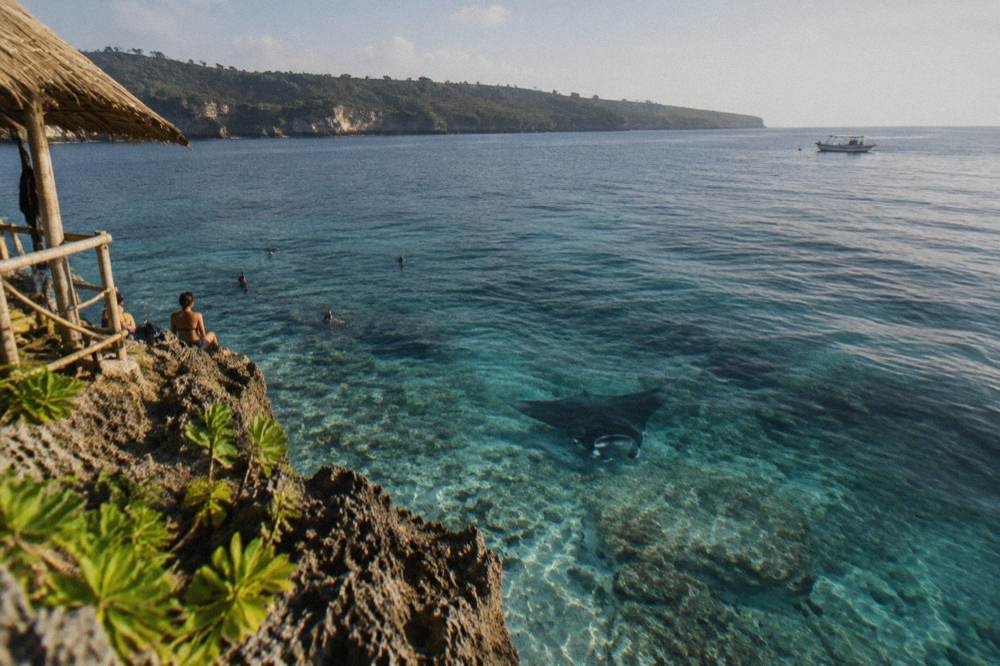
Put the two risk halves side by side and the ranking is clear. On the animal side: no barb, no aggression, a 3 m rule that makes contact essentially impossible, and a code of conduct every licensed tour briefs before the water. On the sea side: swell and surge at exposed sites, cold thermoclines, and tired arms, all mitigated by life jackets, guides and honest operators who cancel or reroute when the swell is wrong. The thing that actually injures snorkelers at manta sites is almost never the manta.
The choice architecture is therefore simple. Confident swimmers can take the shared products from $28 and be fine. Anyone with doubts about the swimming should spend the difference on supervision: the private boat from $65 per person, or the fully inclusive guided tour from $70 with a 4.9 rating across 2,660 reviews. The premium yacht tier from $100 per person is comfort rather than safety, though smaller ratios never hurt. Free cancellation across the roster means the sea gets a vote without costing you the booking.
One last planning note that belongs to the water, not the rays: the crossing from Sanur to Nusa Penida takes roughly 25 to 60 minutes depending on operator and conditions, and the wet season makes it rougher. If sea motion is part of your safety question, plan the crossing as carefully as the snorkel, and the details are in the Fast Boat To Nusa Penida guide.
Common Questions About Snorkeling With Manta Rays
Is It Safe To Snorkel With Manta Rays?
Yes, for most snorkelers who go guided. Reef mantas are plankton feeders with no sting or bite, the 3 m distance rule removes contact risk, and the real hazards, swell and currents at exposed sites, are managed by life jackets, in-water guides and operators who reroute or cancel when conditions are poor.
Are Manta Rays Rare To See?
No. Mantas are resident at Nusa Penida year-round with no migration season, because the cleaning stations and plankton supply are permanent. Operator-reported sighting rates run about 85 to 95 percent at Manta Point and about 60 to 85 percent at Manta Bay, but no tour guarantees a sighting.
Is Nusa Penida Safe To Swim?
In the right places, yes. The sheltered snorkel bays and guided manta sites are safe for most swimmers, while the famous cliff beaches are not for swimming: Kelingking has banned it since February 2023, Diamond Beach prohibits it, and Angel's Billabong prohibits it after a fatal accident. Swim where the boats and guides are.
Do I Need To Be A Strong Swimmer To Snorkel With Mantas?
No, but you need a life jacket and a guide. Guest reviews of the guided tours on this roster repeatedly credit life jackets and patient guides with making the session work for less confident swimmers. If swimming confidence is a real concern, a private boat product gives the guide's full attention to your group.
What Happens If The Sea Is Too Rough On The Day?
Operators reroute to the more sheltered Manta Bay, swap to a protected site such as Crystal Bay or Gamat Bay, or cancel. Every manta and snorkel listing on this roster carries free cancellation, so a weather call costs the operator the day, not you the booking. Wet season, November to March, sees more of these calls than the dry season.
Can I Touch A Manta Ray If It Swims Close To Me?
No. The protected-area code bans touching, chasing, blocking a manta's path and flash photography, and requires snorkelers to stay at least 3 m away and outside the cleaning stations. The rules protect the manta's feeding and cleaning behaviour, and they also remove the only realistic way a manta can injure a snorkeler, which is accidental contact.