Is It Safe To Travel To Bali Right Now?
An honest look at safety in Bali and Nusa Penida right now: the verified fast boat record, swimming bans, cliff safety, manta snorkeling rules, and how guided tours reduce risk.
Is It Safe To Travel To Bali Right Now?
For the overwhelming majority of visitors, yes. Bali and Nusa Penida receive large tourist volumes every month, and the serious incidents that make the news are a small fraction of that flow. The real risks here are specific and avoidable: open-water swimming at beaches with bans in place, cliff edges off marked paths, and fast boat crossings with operators that cut corners. This page does not issue travel advisories; check your own government's advisory before you book. Since safe fast boat crossings are one of the main concerns, our guide to getting from Bali to Nusa Penida by fast boat covers which departure points and operators to look at.
This site covers Nusa Penida, so that is where the lens points. The island is a day-trip and overnight destination reached by fast boat from Sanur, and most of its safety story is about water, cliffs and roads rather than crime or unrest. Violent crime against tourists is rare across Bali by every account that reaches us, and the practical hazards on Penida are well documented and well signposted. For a broader destination-level treatment, the companion piece on tourist safety across Nusa Penida works through the same questions at island scale.
What follows is the verified picture. Where a figure is confirmed, it is printed. Where something is single-source or unconfirmed, it is labeled as reported or left out entirely. The point is not to scare anyone off, it is to show exactly where the risk sits so you can make your own call. A reader who finishes this article should know which three hazards actually matter, which beaches are closed to swimming, and why a structured tour removes most of the improvisation that gets people into trouble.
For most travellers the single biggest risk-reducer is simply booking a structured day tour instead of improvising. The Bali: Nusa Penida All-Inclusive Full-Day Tour with Transfers, 4.6 from 2,310 reviews and from $42 per person, puts the boat ticket, the island driving and the attraction stops in the hands of one operator with a review trail, and free cancellation applies.
Is It Still Safe To Travel To Bali Now?
Yes, in the ordinary sense that millions of visits happen each year without incident, and the island's safety infrastructure continues to tighten rather than loosen. Indonesia tightened general ferry safety rules in September 2026, requiring self-inspections and drills, and real-time AIS tracking for Klungkung-Nusa Penida boats was reported in the same month. None of that makes risk zero, but the trend is toward more oversight, not less. If the island's ferry crossings still make you uneasy, the truth about the Nusa Penida curse rumours explains what local superstitions actually mean for visitors.
The Bali-level context matters for anyone landing at Denpasar and heading to the coast. Foreign visitors pay the Bali tourist levy of IDR 150,000 once per trip, paid online at the official Love Bali portal or at airport and port counters, and the QR voucher is checked at checkpoints. It is a small administrative step, not a safety question, but it comes up on every arrival so it belongs here.
On Nusa Penida itself, the island charges a separate retribution of IDR 25,000 per adult and IDR 15,000 per child aged 4 to 13, infants free, paid through the official retribution portal with a QR voucher scanned at the harbour. It applies to all visitors, domestic and foreign, and one voucher covers Kelingking, Broken Beach and Angel's Billabong on the same day.
The structural answer to "is it still safe" is that the island's danger points are known, mapped and mostly fenced or signed. Kelingking Beach has banned swimming since February 2023. Angel's Billabong has banned swimming after a fatal accident. Diamond Beach prohibits swimming outright. The failures that still happen are almost always someone leaving a marked path or ignoring a red flag, and no tour or rule can fully protect against that. The table below puts the swimming rules in one place, because this is the single most common way visitors get the island wrong.
| Site | Swimming status | Why |
|---|---|---|
| Kelingking Beach | Banned since February 2023 | Strong currents, heavy shore break, no lifeguards |
| Diamond Beach | Prohibited | Strong waves and rip currents, several drownings recorded |
| Angel's Billabong | Prohibited after a fatal accident | Waves surge at high tide |
| Broken Beach | No water access | Viewpoint only, natural arch |
| Crystal Bay | Allowed, sheltered | Mild to moderate currents, calmest April to September |
| Gamat Bay | Allowed, sheltered | Quiet, suitable year-round |
If your question is really about booking flexibility, note that every listing on this roster carries free cancellation, including the shared East & West Highlights Full-Day Tour, 4.7 from 8,370 reviews and from $33 per person. That matters when weather turns: operators reroute or cancel exposed sites in rough swell, and a refundable booking costs you nothing if they do.
Is Bali Safer Than Thailand?
There is no honest single-number answer, because neither destination publishes comparable tourist-safety statistics in a form that supports a ranking. Both are heavily visited, both have road-safety problems, and both have water hazards that catch tourists off guard. What can be said is that Bali's specific risk profile, fast boats, cliff viewpoints, surf currents, is well understood and manageable with ordinary care, and the same is true of Thailand's islands.
Anyone comparing the two is usually weighing a beach holiday against another beach holiday. The differences that matter are practical. Bali's fast boat network is dense, with 20-plus departures a day from Sanur alone and one-way fares of IDR 150,000 to 250,000, and it is the segment where Bali's worst recent incident occurred, covered below. Thailand's equivalent risk sits with its own ferry and speedboat routes, and its own headlines over the years look broadly similar in kind.
The fair comparison for Nusa Penida specifically is not "Bali vs Thailand" but "guided vs self-guided". A visitor who books the private Nusa Penida All-Inclusive Day Trip, 4.8 from 3,705 reviews and from $94.09, gets a private car, a named driver-guide, entrance tickets and the boat crossing bundled, which removes the two riskiest self-guided activities on the island: riding a scooter on unfamiliar roads, and buying a boat ticket from an unknown counter. Neither of those risks is unique to Indonesia. What is unique is how cheaply and easily both can be removed with a single booking.
How Many People Died In The Bali Boat Tragedy?
The verified incident is the capsize of the fast boat Bali Dolphin Cruise 2 at the Sanur harbour entrance, in which three people died. It remains the reference point for fast boat safety on this route, and it is the reason the September 2026 AIS tracking report and Indonesia's tightened ferry safety rules drew attention. No comparable incident has been verified on the Sanur to Nusa Penida route since. If you're weighing whether speed or safety matters more for your crossing, our fast boat versus ferry comparison for the Bali to Nusa Penida route lays out the differences plainly.
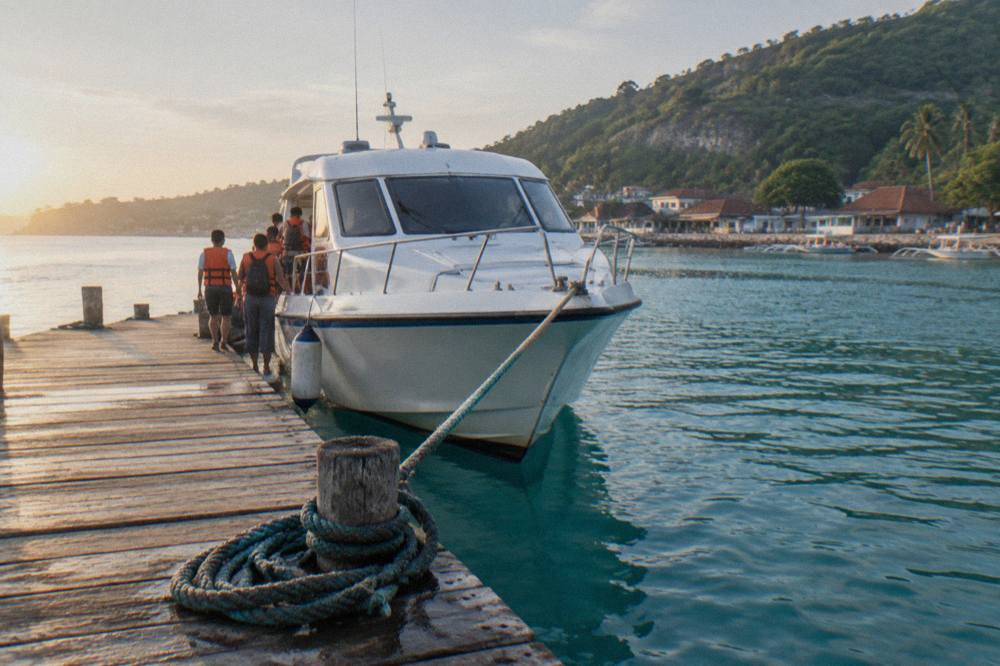
The crossing itself is short. Sanur to Nusa Penida takes roughly 25 to 60 minutes depending on operator and sea state, often 30 to 45. The practical lessons from the capsize are unglamorous but real: book with an operator that has a review history rather than the cheapest counter at the dock, wear the life jacket rather than using it as a seat cushion, and take the sea state seriously in the wet season, when December to March swell brings more cancellations.
Most day tours already handle this for you. The all-inclusive products bundle the fast boat ticket into the package, so the boat operator is chosen by a company with a reputation to protect, not by you at a kiosk. The Trip Gotik all-inclusive tour, for example, includes the round-trip fast boat ticket as an option alongside shared hotel pickup from south Bali. That structure also means the return leg is pre-booked, so nobody is racing the last sailing of the day back to Sanur, which is a quieter safety factor than it sounds.
What Are The Main Safety Risks On Nusa Penida?
Three things, in order: water, cliff edges, and roads. Swimming is banned at Kelingking, Diamond Beach and Angel's Billabong for documented reasons, strong currents and shore break with no lifeguards. The cliff viewpoints are safe behind railings and lethal off the marked path. And the island has no public transport, so every visitor either rides as a passenger or drives something, and the steep side roads punish inexperienced riders.
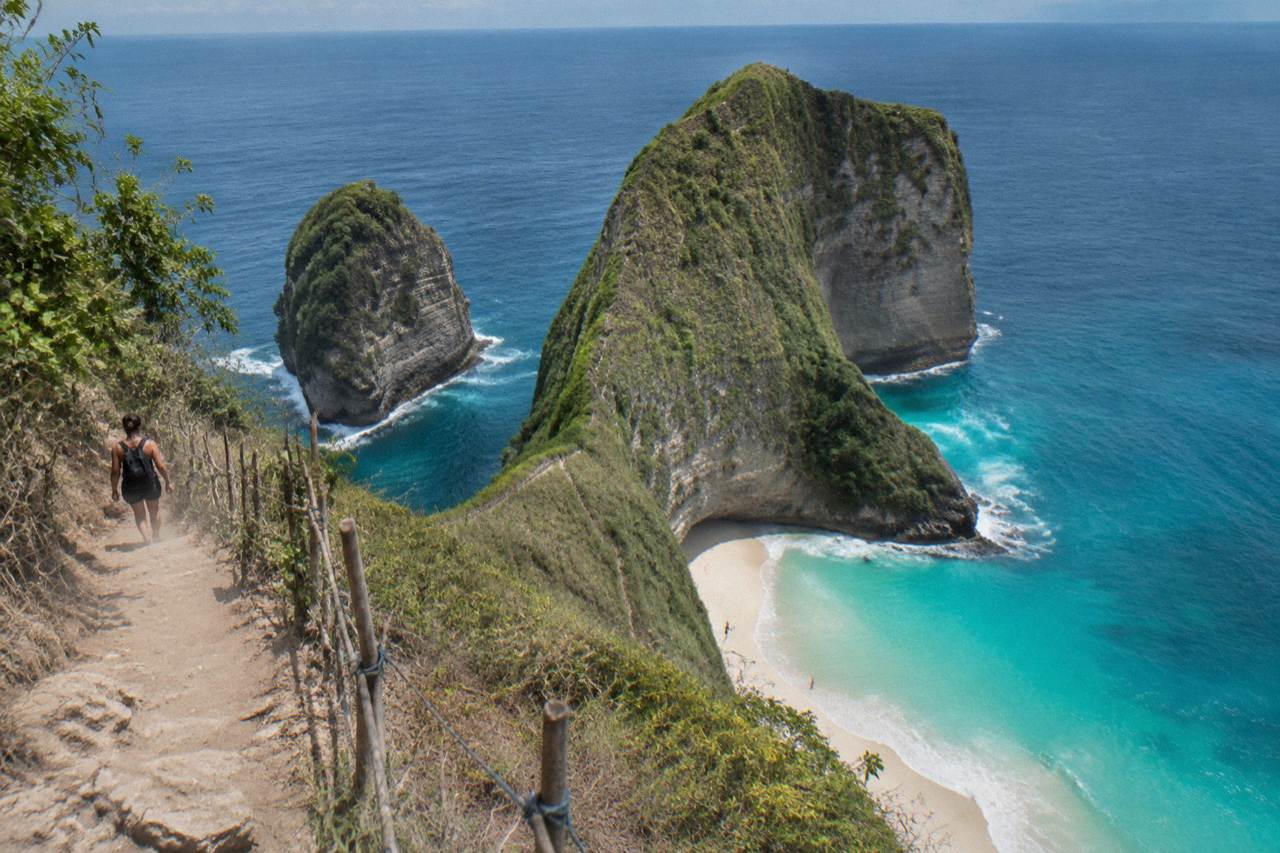
Start with the cliffs, because they generate the headlines. Kelingking Beach is the island's signature viewpoint, and the descent to the beach itself is on foot only: built steps at the top, then rock and trail with a low bamboo handrail below. Reaching the sand takes about 20 minutes down, and the climb back up takes far longer. The viewpoint above is fenced and safe; the danger is leaving the trail, and the September 2026 death of a tourist who left the path is the standing example. Independent reporting on the Kelingking cliff and the halted lift covers the details. The full walk-through, including what the trail is actually like underfoot, is in the guide to the Kelingking stairs and the lift question.
The unfinished lift structure is still standing at the cliff face, and it is worth being blunt: there is no lift, no opening date and no ticket, and this site will not pretend otherwise. The viewpoint is a viewpoint. If a seller or a social post tells you an elevator is coming, treat it as noise.
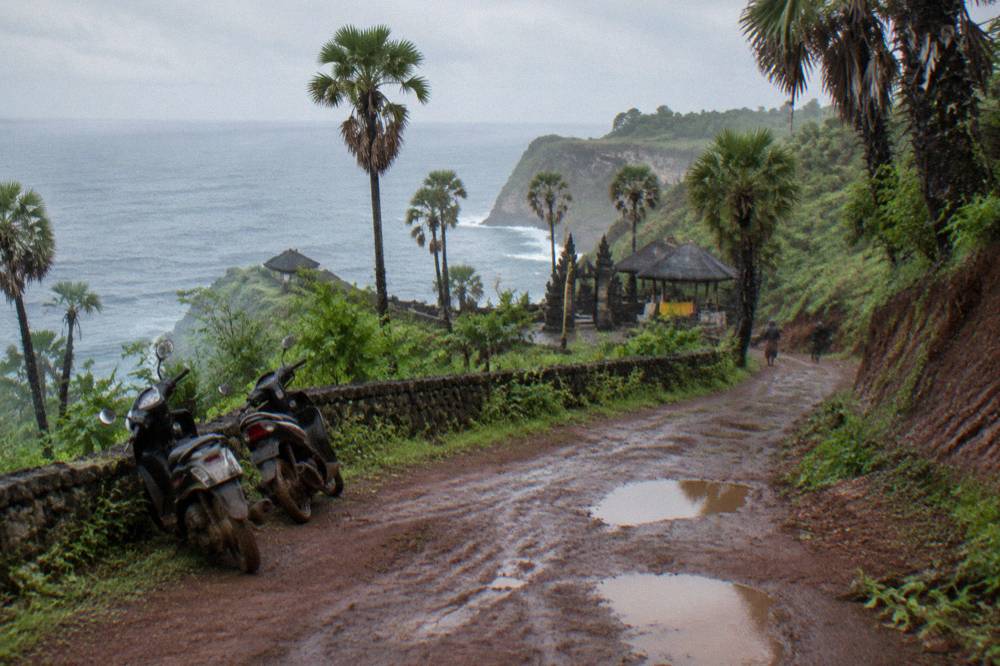
Roads are the quieter risk. The main loop roads are largely asphalted now, and the 2026 upgrade works on the Kelingking access road and the Diamond Beach and Atuh corridor are actively improving the worst stretches. But side and coastal routes remain narrow, steep and potholed in places, which is why local guidance recommends a driver over self-drive for anyone without real scooter experience. A private car with driver runs about IDR 600,000 to 800,000 per car for a full day if you arrange it on the island; on this roster, the bookable equivalent is the Private Car Hire with Driver, 4.8 from 2,740 reviews and from $27 per person.
Is It Safe To Swim At The Famous Beaches?
At Kelingking, Diamond Beach and Angel's Billabong, no, and it is not a suggestion: swimming is formally banned at all three. Kelingking's ban dates to February 2023, driven by strong currents, a heavy shore break and no lifeguards. Angel's Billabong banned swimming after a fatal accident, and Diamond Beach prohibits it because of waves and rip currents that have drowned swimmers since borders reopened.
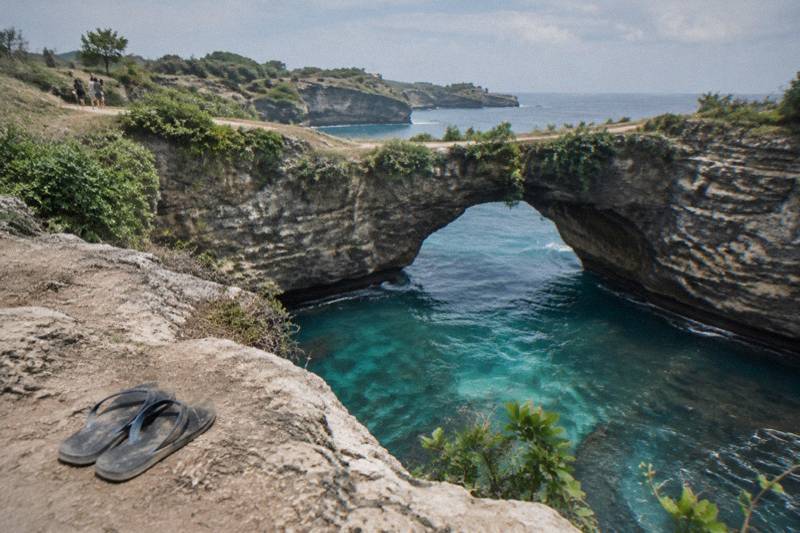
The pattern confuses first-time visitors because the beaches look postcard-perfect from above. Looks are the trap. The south coast of Nusa Penida faces open Indian Ocean swell, and the water at the base of those photogenic cliffs is exactly where the energy concentrates. Broken Beach, the arch, has no water access at all; it is a viewpoint only.
There is safe water on the island, it is just not at the famous cliffs. Crystal Bay is sheltered, with mild to moderate currents and reported visibility of 20 to 30 m in good conditions, calmest April to September. Gamat Bay is quieter still, sheltered and suitable year-round. Both are standard stops on snorkel-focussed tours rather than something you swim out to alone.
The honest planning advice is to treat swimming as something you do with an operator at a site they have chosen for the day's conditions, not something you do spontaneously at whatever beach the itinerary stops at. The shared Manta Point Snorkeling & West Coast Tour, 4.6 from 1,674 reviews and from $28 per person, is the budget-format example: gear, guide and boat included, land tour optional.
Is It Safe To Snorkel With Manta Rays?
Yes, with the standard caveats, and the rays themselves are the least of the risk. Manta rays at Nusa Penida are filter feeders, not aggressive animals, and the protected-area rules are simple: stay at least 3 m away, never touch or chase, no flash photography, and stay with a guide. The genuine risks are sea state and crowding, which is why operators reroute or cancel exposed sites in rough swell rather than push through. If you're wondering about larger marine life in the same waters, the guide to sharks around Nusa Penida covers what divers and snorkelers actually encounter there.
Sightings are year-round; there is no migration season, because the mantas stay near their cleaning stations and plankton supply. Operator-reported sighting rates run about 85 to 95 percent at Manta Point and 60 to 85 percent at Manta Bay, and those numbers are operator-reported, not independent. No listing on this roster guarantees a sighting or a swim, and any operator that promises one is overpromising.
The water is worth knowing about too. Sea temperature around Nusa Penida runs roughly 26 to 29 degrees across the year, with cooler thermoclines in the dry season, and visibility in good conditions is 15 to 30 m. The dry season, April to October, brings calmer seas; the wet season, November to March, brings rougher swell, lower visibility and a higher chance an exposed site gets swapped for a sheltered one. The seasonal split is summarized below, because it drives both the snorkeling plan and the boat plan.
| Season | Months | Sea state | Reported visibility | What it means for tours |
|---|---|---|---|---|
| Dry | April to October | Calmer, smoother Sanur crossings | 15 to 30 m | Best window for exposed sites like Manta Point |
| Wet | November to March | Rougher swell, often 1 to 3 m at south sites | 5 to 12 m | More reroutes and cancellations, Manta Bay preferred |
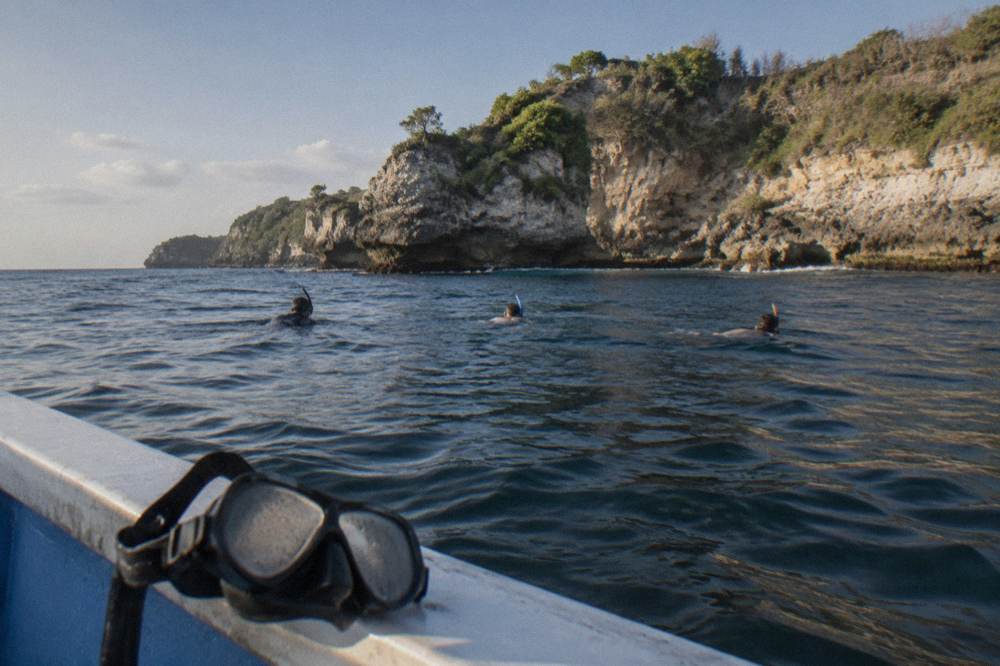
For the manta experience specifically, the published code of conduct for manta encounters is the rulebook every reputable operator follows. On this roster, the formats run from the shared manta snorkel and land tour, 4.9 from 2,660 reviews and from $70, up to the private boat trip with a GoPro included, 4.6 from 516 reviews and from $65 per person, and the premium yacht version, 4.9 from 1,683 reviews and from $100 per person.
How Do You Reduce Risk On A Nusa Penida Day Trip?
Book a tour instead of improvising, and pick one that bundles the boat, the driving and the tickets. That single decision addresses the three biggest hazards at once: a vetted fast boat, a local driver on the steep roads, and entrance logistics handled so nobody rushes a cliff viewpoint to make a sailing. Free cancellation on every listing here keeps the weather call reversible.
The comparison that matters is not between tour companies, it is between being driven and driving yourself. Every full-day product on this roster includes an air-conditioned vehicle and a local driver or guide on the island. The shared East & West Highlights tour covers entrance fees to Diamond Beach, Kelingking and Angel's Billabong in its listing. The private all-inclusive adds lunch and a dedicated car. The premium yacht product replaces the land segment with a boat-based itinerary, which removes road exposure almost entirely.
Two practical notes finish the picture. First, the sea crossing is the one leg where schedules and safety genuinely interact: the first Sanur departures are around 06:30 to 07:30 and the last around 17:00, and early boats get you ahead of the midday crowd at the viewpoints, which is itself a safety factor at narrow cliff paths. Second, temple dress, a sarong and sash, is a respect requirement at sites like Goa Giri Putri rather than a safety rule, but tours that include temple stops brief you on it.
None of this is exotic. It is the same risk arithmetic as any coastal destination: choose operators with review trails, respect the signs, wear the gear, and keep the bookings reversible. Nusa Penida's version of that arithmetic is simply more visible than most, because its hazards come with fences, red flags and, increasingly, QR codes. This is the approach Nusa Penida Tours takes across every guide on the site: print what is verified, label what is reported, and leave the rest out.
Common Questions About Travel Safety In Bali And Nusa Penida
Is It Safe To Travel To Bali Right Now?
For the vast majority of visitors, yes. The serious risks are specific and avoidable: open-water swimming at beaches with bans, cliff edges off marked paths, and fast boats booked without checking the operator. This site does not issue travel advisories, so confirm the current status with your own government's advisory before booking.
Is It Still Safe To Travel To Bali Now?
Yes. Indonesia tightened general ferry safety rules in September 2026, and real-time AIS tracking for the Klungkung to Nusa Penida boats was reported the same month. The island's hazard points, including the swimming bans at Kelingking, Diamond Beach and Angel's Billabong, are signed and enforced.
Is Bali Safer Than Thailand?
There is no honest single-number answer, because neither destination publishes comparable tourist-safety statistics. Both are heavily visited with manageable, well-documented risk profiles. For Nusa Penida specifically, the meaningful comparison is guided versus self-guided, and guided wins on roads and boats.
How Many People Died In The Bali Boat Tragedy?
The verified incident is the capsize of the fast boat Bali Dolphin Cruise 2 at the Sanur harbour entrance, in which three people died. No comparable incident has been verified on the Sanur to Nusa Penida route since.
Is It Safe To Swim At Kelingking Beach?
No. Swimming has been banned at Kelingking since February 2023 because of strong currents, a heavy shore break and no lifeguards. The viewpoint above the beach is fenced and safe; the danger is in the water and off the marked trail.
Is It Safe To Snorkel With Manta Rays In Nusa Penida?
Yes, with a guide and the protected-area rules: stay at least 3 m from the rays, never touch or chase, and no flash photography. Sightings are year-round and operator-reported rates run about 85 to 95 percent at Manta Point, but no operator guarantees a sighting.