Where Is The Best Place To Snorkel With Manta Rays?
Manta Point, Manta Bay or Crystal Bay: where manta sightings are most reliable around Nusa Penida, who each site suits, and which snorkel tours actually go there.
Where Is The Best Place To Snorkel With Manta Rays?
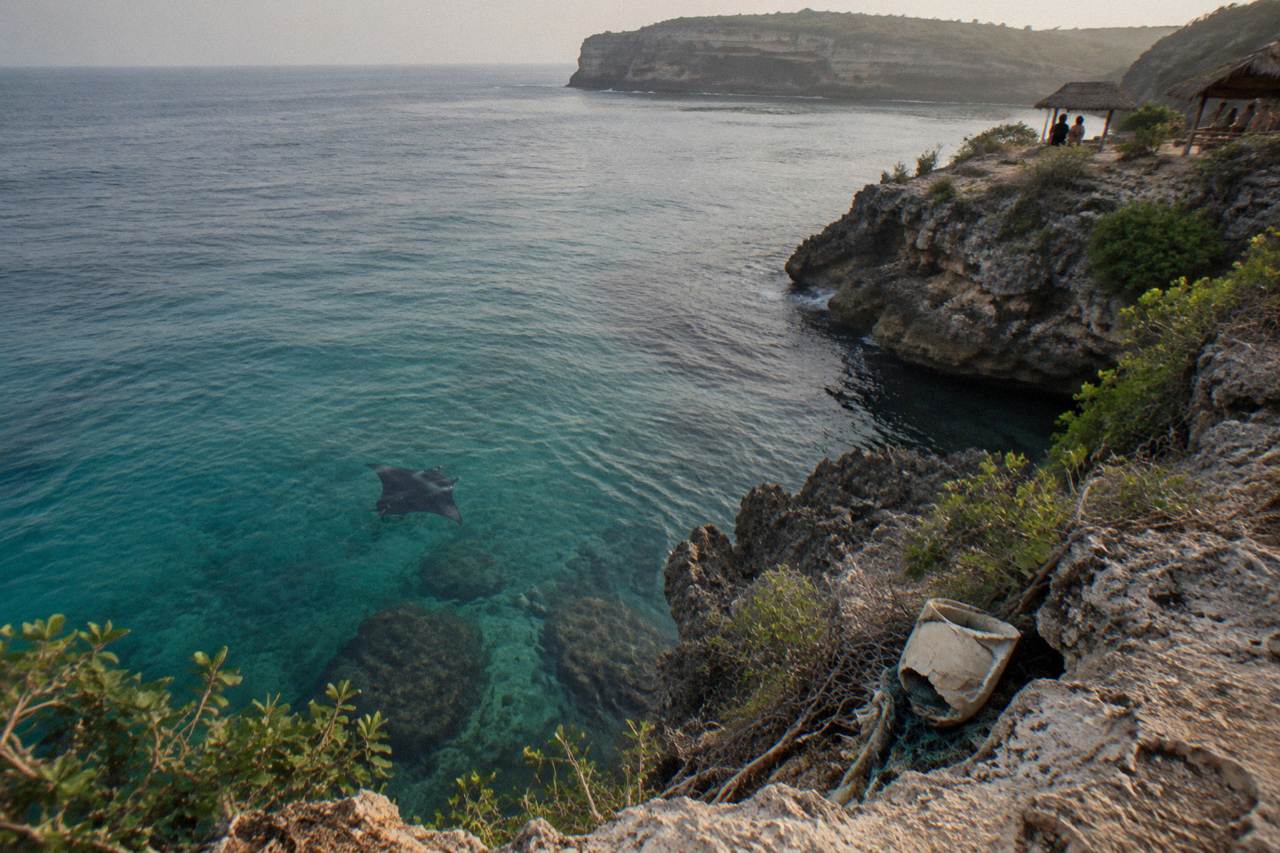
Manta Point, on Nusa Penida's exposed southwest coast, is the single most reliable place to snorkel with manta rays anywhere in Bali. Local operators report sighting success there in the range of 85 to 95 percent, against 60 to 85 percent at the shallower, more sheltered Manta Bay. The trade is simple: Manta Point is rougher and gets cancelled more often, Manta Bay is calmer and easier, and Crystal Bay is the sheltered fallback that occasionally delivers mantas alongside turtles and coral. If you're wondering what else shares those waters, the guide to sharks around Nusa Penida explains what marine life you can realistically expect to encounter.
That is the short answer. The longer one depends on the season you travel, the sea state on the day, and whether you want a dedicated snorkel boat or a combined trip that stacks the mantas against Kelingking Beach and Broken Beach in a single day. This article works through all three sites, names the tours on this roster that go to each, and explains the rules in the water that keep both you and the rays safe.
Where Is The Best Place To Snorkel With Manta Rays?
For most travellers booking from Bali, the best place is Manta Point on Nusa Penida's exposed southwest coast, with Manta Bay as the calmer alternative when the swell is up. Manta Point's cleaning stations draw resident reef mantas year-round, and operator-reported sighting rates run about 85 to 95 percent there, against 60 to 85 percent at the shallower Manta Bay. Neither site guarantees anything, and no honest listing will claim it does.
Three things decide which of the two is "best" on your particular morning. The first is the sea state: Manta Point faces open Indian Ocean swell, and in the wet season from November to March boats reroute to Manta Bay or cancel outright. The second is your confidence in the water: Manta Point means dropping into deeper, choppier water, while Manta Bay's shallows suit nervous swimmers and first-timers. The third is what else you want from the day, because several of the best-value listings pair the manta stop with a land tour of the west coast.
If you are choosing a tour before you know the conditions, pick one that names both sites in its itinerary. The manta snorkeling and land tour run by Indo Compass, rated 4.9 from 2,660 reviews and from $70, includes the fast boat from Sanur, full gear and lunch, and its guides make the Point-or-Bay call on the water. The private boat snorkeling tour from Nice Trip Nusa Penida, 4.6 from 516 reviews and from $65 per person, gives a smaller group the same flexibility in a three to four hour window. Both carry free cancellation.
The trio above spans the three formats worth considering: a shared-group snorkel and land day, a short private boat focused purely on the mantas, and a manta swim that can be paired with an optional lunch and kayak. Price is not the differentiator here, from $65 to $73.87 at the entry points; comfort, group size and how much of the island you also see is. A reader planning a first Nusa Penida trip may also want the wider picture in the site's guide to Nusa Penida snorkeling tours, which covers non-manta sites too.
Can You See Manta Rays In Nusa Penida?
Yes, and year-round, which is what sets this island apart from most manta destinations in Asia. The reef mantas do not migrate: the cleaning stations at Manta Point and Manta Bay, plus a steady plankton supply, give them everything they need on one small patch of coast. Operators report sightings in every month, about 85 to 95 percent at Manta Point and 60 to 85 percent at Manta Bay, and those figures are operator-reported, not independent.
The reason the animals stay is well understood. Cleaning stations are fixed spots where small fish pick parasites off the mantas' skin, and the rays return to them the way commuters return to a barber they trust. Add the upwelling of plankton along the southwest coast and the roughly 20,000 hectare marine protected area established around the island, and the south coast of Nusa Penida functions as permanent manta habitat rather than a seasonal corridor. The practical consequence for a snorkeler is that your odds in, say, February are lower than in August but never zero. If you're weighing which month to book, the month-by-month breakdown of Bali's manta season explains how the dry and wet seasons change both your odds and the conditions on the water.
What varies by month is not the mantas but the ocean. The dry season from April to October brings calmer seas and reported visibility of 15 to 30 metres; the wet season from November to March brings rougher swell, reported visibility of 5 to 12 metres, and a much higher chance that the boat skips Manta Point for Manta Bay. Sea temperatures run from about 26.2 to 29.4 degrees across the year, and the cooler dry-season thermoclines actually concentrate plankton, which is why the big feeding gatherings tend to happen in the middle of the year.
For the planning side, the site's Nusa Penida travel guide covers the rest of the island, and the question of how many days to give the island has its own answer in How Many Days In Nusa Penida Is Enough. The short version for manta-focused visitors: a single well-chosen day trip covers the snorkel and the headline viewpoints, but a second day buys you a retry if the swell cancels your first attempt.
Is Manta Point Worth It?
Yes, if the sea allows it, because Manta Point is the region's highest-probability manta snorkel and the site most listings build their itinerary around. It is the deeper, more exposed of the two sites, which is why the big animals favour it, and operator-reported sighting rates of 85 to 95 percent are the strongest on the island. The cost of that reliability is a longer, bumpier boat ride and real cancellation risk in the wet season.
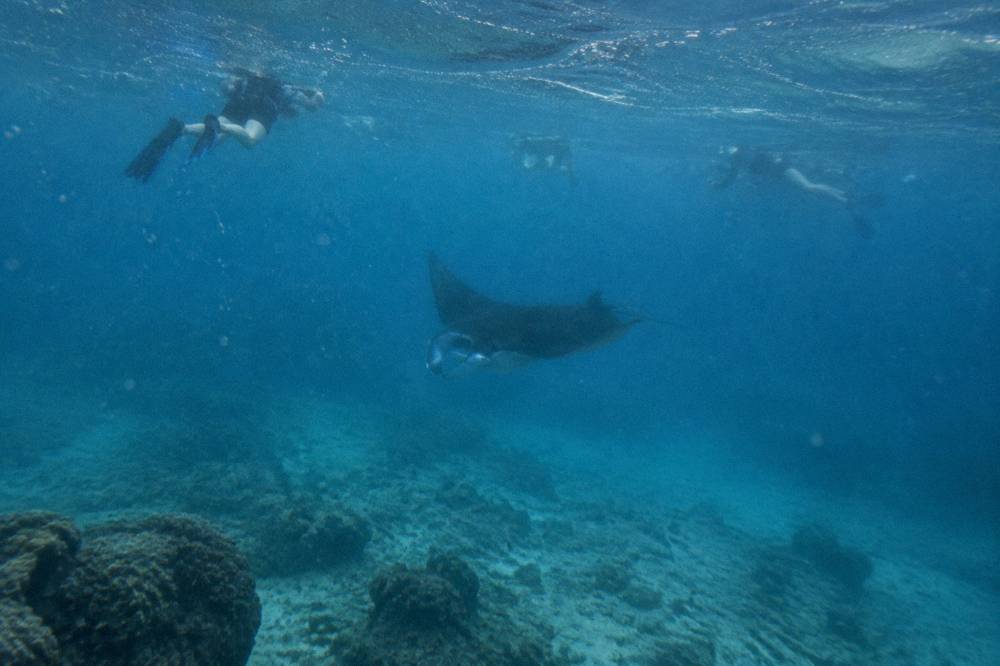
Worth-it also depends on what you are comparing it against. If your alternative is staying on the boat, it is worth it. If your alternative is Manta Bay on a day when Manta Point is being cancelled anyway, the bay is the worthier choice because it is the one you can actually swim. The mistake to avoid is treating the two as rivals: every experienced operator on this roster treats Manta Bay as the designed backup for Manta Point, and the better listings say so plainly rather than promising the Point regardless of conditions. Going with a guide at the Point is standard practice, not an optional extra.
Two roster listings put Manta Point in their name. The Manta Point Snorkeling and West Coast Tour from CV Wonderland Manta Penida, 4.6 from 1,674 reviews and from $28 per person, is the budget entry point and can be extended into a private-car land tour of the west coast if you select the island tour option. The 3 Fun Dives product from Bali Legends Dive Center, 4.8 but from a small pool of 31 reviews and from $248 per person, is the scuba version for certified divers, since Manta Point's depth suits tanks better than snorkels. Neither guarantees a sighting, and both say so.
For readers weighing the whole west coast rather than one site, the site's Nusa Penida West Tour guide maps how a manta stop fits between Kelingking and Broken Beach, and the practical question of whether the combined day works is covered in Can Nusa Penida Be Done In One Day. Since Kelingking doubles as the island's most photographed shoreline, the guide to Bali's prettiest beach explains what that famous cliff view actually looks like up close.
What Is The Best Time To See Manta Rays?
Any month can produce mantas, but April to October combines the highest sighting odds with the calmest water, and July to October adds the chance of mola mola sunfish at Crystal Bay. The dry season's calmer seas mean more days when Manta Point is visitable, and reported visibility of 15 to 30 metres beats the wet season's 5 to 12. Peak crowds land in July and August, so May, June and September deliver similar conditions with fewer boats.
The month-by-month pattern, as synthesised from local operator data, looks like this: January to March brings rough seas, lower visibility and fair manta odds; April to June and September to October bring calm conditions and excellent odds; July and August are moderate and good; November and December sit in between, with Manta Bay favoured as the swell builds. None of this is a guarantee, and a single storm can flip any month's odds. What the pattern does tell you is when to book a retry day, which is the single most useful manta planning tactic there is.
Set against the island's long-term rainfall and sea temperature averages, the pattern holds together neatly: the months with the least rain and the coolest water are exactly the months when the south coast calm down.
| Months | Sea state | Manta odds (operator pattern) | Rainfall (long-term average) | Sea temperature |
|---|---|---|---|---|
| January to March | Rough swell, most reroutes | Fair | 193 to 288 mm, 17 to 20 rainy days | 28.4 to 29.2 C |
| April to June | Calm, excellent visibility | Excellent | 47 to 123 mm, 6 to 12 rainy days | 27.8 to 28.9 C |
| July to August | Moderate, good visibility | Good | 35 to 43 mm, 1 to 3 rainy days | 26.2 to 26.8 C |
| September to October | Calm, excellent visibility | Excellent | 47 to 67 mm, 1 to 3 rainy days | 26.5 to 27.7 C |
| November to December | Moderate to rough, swell building | Good to fair | 137 to 254 mm, 9 to 16 rainy days | 28.7 to 29.4 C |
Timing also matters within the day. Morning departures get to the manta sites before the midday wind picks up, which is why nearly every listing on this roster leaves Sanur between about 06:30 and 08:00. The premium yacht products make a virtue of this: the Premium Day trip from Bluuu Tours, 4.9 from 10,655 reviews and from $73.87, runs a round-trip boat transit with a certified snorkel guide and complimentary GoPro footage, and its early start is part of why its review pool is the largest on the whole site. The Golden Horizon yacht version, 4.9 from 1,683 reviews and from $100 per person, adds fruit, soft drinks and a beachfront lunch to the same logic.
Is Manta Bay Better For Snorkelers Than Manta Point?
For most snorkelers, yes, on the days when both are open, because Manta Bay is shallower, more sheltered and easier to swim in, at the cost of slightly lower sighting odds. The bay sits inside the protection of the coastline, so the swell that shuts down Manta Point arrives here much reduced. Operator-reported success runs 60 to 85 percent, with peaks reported around October to December. Nervous swimmers will prefer it.
The honest comparison is about failure modes. At Manta Point the likely disappointment is a cancelled or rerouted trip; at Manta Bay it is a swim without mantas. Neither is a bad outcome, and the reroute from Point to Bay is so routine that several listings simply write both names into the itinerary and let the boat decide. The 3 Point Snorkeling trip with Manta Bay and land tour from Bali Tour Organizer, 4.3 from 435 reviews and from $54.93, is built exactly this way, stacking three snorkel stops with Manta Bay as the manta candidate and a lunch and land tour around them.
Depth is the other differentiator. Manta Bay's shallows suit surface snorkeling, which is what most visitors actually want: the animals pass below you at a few metres, close enough to see clearly without diving. Manta Point's deeper water suits the rays' cleaning behaviour, which is why divers often prefer it, and why the scuba listings on the roster, like the try-scuba beginner product from Sanctum Dive at 4.7 from a small pool of 40 reviews and from $114.53 per person, target the same stretch of coast with tanks. Snorkelers lose little by choosing the bay; divers gain more at the point.
Side by side, the four sites that carry a Nusa Penida snorkel day separate cleanly:
| Site | Character | Manta odds (operator-reported) | Visibility (reported) | Best suited to |
|---|---|---|---|---|
| Manta Point | Deep, exposed, open-ocean swell | 85 to 95 percent | 15 to 30 m dry season, 5 to 12 m wet | Confident snorkelers, divers, best-odds seekers |
| Manta Bay | Shallow, sheltered inside the coast | 60 to 85 percent, peaking October to December | Calmer surface; the standard reroute | First-timers, nervous swimmers, wet-season trips |
| Crystal Bay | Sheltered, beach-backed | Possible on combined itineraries; not the primary manta stop | 20 to 30 m at its best | All-conditions swimming, mola mola season July to October |
| Gamat Bay | Sheltered, quiet | Not a primary manta stop | 10 to 20 m plus | Snorkelers avoiding Crystal Bay crowds, year-round |
Read that table as a decision path rather than a ranking: start at Manta Point, drop to Manta Bay when the swell says so, and let Crystal or Gamat fill the rest of the day.
Can You Snorkel With Mantas At Crystal Bay?
You can snorkel at Crystal Bay, and mantas do appear there, but it is not a dedicated manta site: it is the sheltered all-conditions bay with turtles, coral and the island's famous mola mola season. Visibility is reported at 20 to 30 metres at its best, the bay is at its calmest April to September, and the sunfish window runs July to October, peaking August to September. Treat mantas here as a bonus, not the plan.
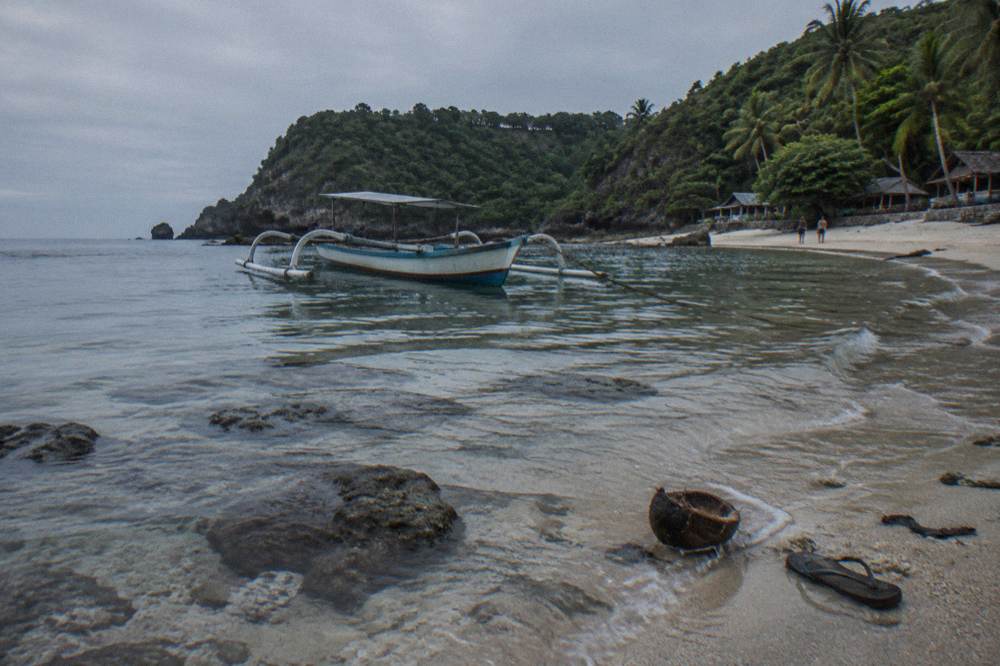
Where Crystal Bay earns its place in a manta article is as the third leg of a three-stop day. Because it faces northwest and sits inside the island's shoulder, it stays swimmable when the south coast sites are blowing out, which is why so many combined itineraries pair it with Manta Bay and Gamat Bay. The West with Snorkeling day from Smile Nusa Penida, 4.5 from 597 reviews and from $66.96, uses exactly this logic, putting snorkeling inside a private-car west coast tour that also covers the land viewpoints. The private snorkeling product from Bali Golden Tour covering Manta Bay, Gamat and the wall, 4.9 from 270 reviews and from $130, adds a GoPro in the water and an all-fees-included structure.
Gamat Bay deserves its own mention here because it is the quiet sibling. It is sheltered, holds good visibility, suits year-round swimming, and sees noticeably fewer boats than Crystal Bay, with healthy coral, turtles and seagrass in the shallows. If your day includes Gamat, you are on one of the more thoughtful itineraries on the roster. The site's dedicated Crystal Bay Nusa Penida guide covers the bay's swimming conditions and its role in the wider day.
Which Tours Actually Take You To The Manta Sites?
Six listings on this roster name manta sites in their itinerary, spanning shared groups, private boats and premium yachts, from $28 to $130 at the entry points. The differentiator is not whether you see mantas, since all of them target the same two bays, but group size, boat type and how much of the island you also get. Every one of them carries free cancellation, and none guarantees a sighting.
| Listing | Format | Rating and reviews | From | Manta site logic |
|---|---|---|---|---|
| Manta Point Snorkeling & West Coast Tour | Shared snorkel, optional land tour | 4.6 from 1,674 reviews | $28 per person | Manta Point focus, west coast add-on |
| Swim with Manta Rays, Optional Lunch & Kayak | Shared boat from Sanur | 4.4 from 2,518 reviews | $52 per person | Manta stop with kayak and lunch options |
| Private Boat Snorkeling Tour With Manta Ray | Private boat, 3 to 4 hours | 4.6 from 516 reviews | $65 per person | Private group, guide-supervised snorkel |
| Manta Snorkeling & Land Tour from Bali | Shared group with land tour | 4.9 from 2,660 reviews | $70 | Point or Bay decided on the day |
| Private Snorkeling, Manta Rays & Land Tour | Private, fast boat and land day | 4.9 from 2,971 reviews | $108 per person | Private boat, GoPro photos, lunch |
| Private Snorkeling (Manta Bay, Gamat, Wall) | Private, three stops | 4.9 from 270 reviews | $130 | Manta Bay plus two sheltered backups |
The pattern in that table is worth reading rather than skimming. The two 4.9-rated private products, from Indo Compass at from $108 per person and Bali Golden Tour at from $130, both earn their ratings on the same combination: a small group, a guide in the water with you, and sheltered backup stops so the day delivers something even if the mantas do not. The budget end, from $28 per person at CV Wonderland Manta Penida, trades privacy for price and still puts you at the same cleaning stations. A guest review on the live listings for the private Indo Compass day repeatedly singles out the guide's in-water supervision as the difference between seeing mantas for ten seconds and staying with them.
The kayak-and-lunch product from Lembongan Water Sport, 4.4 from 2,518 reviews and from $52 per person, is the odd one out: it runs from Sanur via Nusa Lembongan and suits travellers staying in the southern beach areas who want the manta swim bundled with a relaxed water-sports day rather than a land tour. Its pickup covers Nusa Dua, Jimbaran, Kuta, Legian, Seminyak and Sanur if the option is selected.
Is It Safe To Snorkel With Manta Rays?
Yes, reef mantas are entirely safe to snorkel with: they are filter feeders with no sting, no barbs and no aggression toward humans, and the real risks are the sea conditions and crowding, not the animals. The protected-area rules exist to protect the mantas from snorkelers, not the reverse. Stay at least 3 metres away, never touch or chase, never block their path and no flash photography. Every listing here supplies a guide.
The code of conduct is published by the marine operators around the island and is summarised by the manta ray code of conduct for Nusa Penida: keep the 3 metre distance, stay outside the cleaning stations, and let the animals come to you, which they frequently do out of curiosity. A manta choosing to pass close to a still snorkeler is a common report on the live listings. What the code prevents is the behaviour that drives the rays off the stations, chasing and touching, which ruins the site for the boats behind you and stresses the animals.
The honest safety note is about the ocean, not the wildlife. Currents at Manta Point can be real even on a calm-looking day, the swell on the south coast is what cancels trips, and this is the reason every listing on this page supplies life jackets and a guide in the water. Readers with broader safety questions about the island will find them handled in Is Nusa Penida Safe For Tourists, and the in-water question has its own dedicated piece in Is It Safe To Snorkel With Manta Rays. If you are a nervous swimmer, say so when booking: the private listings in the table above will keep the group tight and the guide close.
What If The Swell Cancels Your Manta Snorkel?
Have a second snorkel site and, ideally, a second day, because the swell on Nusa Penida's south coast is the one force no operator can book around. In the wet season, exposed Manta Point is the first casualty and boats reroute to Manta Bay, Gamat Bay or Crystal Bay, each of which stays swimmable in conditions that close the Point. Every listing here carries free cancellation, so a weather call-off costs the day, not the money.
The practical playbook is short. Book a listing whose itinerary names both manta sites, so the reroute is built in rather than improvised. Check the cancellation terms, which on this roster are uniformly free. And if the mantas are the whole point of your trip, give the island two days, a tactic expanded in How Many Days In Nusa Penida Is Enough. The two-day trip with accommodation and meals from PT Favotrip Bali Tour, 4.9 from a small pool of 34 reviews and from $102 per person, is the roster's built-in answer: one night on the island means a failed first attempt at Manta Point gets a second try the next morning instead of a ferry home.
Even a fully rerouted day is rarely a loss. Gamat Bay's turtles and coral, Crystal Bay's sheltered swimming and the west coast's cliff viewpoints between them fill a day that the mantas decline to join, and the land legs of the combined tours, Kelingking, Broken Beach, Angel's Billabong, are the island's other headline act. The site's Nusa Penida itinerary guide shows how those pieces fit when the ocean makes the decision for you.
One more consideration for readers who want the mantas with the smallest possible group: the private snorkeling day from Indo Compass above, 4.9 from 2,971 reviews and from $108 per person, is the roster's most-reviewed private manta product, and its structure, private fast boat, guide, GoPro photos and lunch included, is the closest thing to a dedicated manta charter without chartering a boat yourself. Nusa Penida Tours covers the full roster, including the yacht and dive options, on the homepage comparison.
Common Questions About Snorkeling With Mantas
Where Is The Best Place To Snorkel With Manta Rays?
Manta Point on Nusa Penida's southwest coast, with operator-reported sighting rates of about 85 to 95 percent, is the most reliable manta snorkel in the Bali region. Manta Bay is the shallower, more sheltered alternative at reported rates of 60 to 85 percent, and Crystal Bay is the sheltered fallback that occasionally produces mantas. Book a tour that names both manta sites so the boat can reroute when the swell decides.
Can You See Manta Rays In Nusa Penida?
Yes, year-round. The reef mantas around Nusa Penida do not migrate, because the cleaning stations and plankton supply on the southwest coast keep them resident in every month. Odds are highest in the dry season from April to October, when calmer seas also mean more days when Manta Point is actually visitable, but sightings are reported in all twelve months.
Is Manta Point Worth It?
Yes, when the sea allows it. It is the deeper, more exposed site with the island's best sighting odds, and it is the site most snorkel and dive itineraries are built around. The trade is a longer, bumpier ride and real cancellation risk in the wet season, with Manta Bay as the standard reroute. Go with a guided listing, since supervision is required in the protected area.
What Is The Best Time To See Manta Rays?
April to October combines the calmest seas, reported visibility of 15 to 30 metres and the highest sighting odds, with July to October adding the mola mola season at Crystal Bay. July and August bring peak crowds, so May, June and September deliver similar conditions with fewer boats. Morning departures reach the manta sites before the midday wind builds.
Is It Safe To Snorkel With Manta Rays?
Yes. Reef mantas are filter feeders with no sting or aggression toward humans, and the protected-area rules, a 3 metre minimum distance, no touching, no chasing, no flash, exist to protect the rays from snorkelers. The genuine risks are sea conditions and crowding, which is why every listing on this roster supplies a guide and life jackets.
Do Any Tours Guarantee A Manta Sighting?
No, and treat any listing that promises one with suspicion. The best operator-reported success rate on the island is about 85 to 95 percent at Manta Point, which is excellent but not a guarantee. The strongest tactic is a tour that names both manta sites, free cancellation, and, if the mantas are the point of the trip, a second day on the island as a retry.